The Dramatic Lives of Classical Composers

Behind some of history’s greatest masterpieces were lives marked by hardship and personal struggles.

Some composers created timeless music, but their own lives were far from peaceful. Many faced illness, poverty, heartbreak, family conflict, or other personal struggles throughout their lives.

Here are some well-known classical composers whose lives were filled with drama.

Antonio Vivaldi (1678 to 1741)

Vivaldi was ordained as a Catholic priest but rarely celebrated Mass because of ongoing health problems, likely asthma. He became one of Europe’s most successful composers, but his fortunes changed over time. After losing the support of important patrons, he moved to Vienna, where he died in relative poverty.

Wolfgang Amadeus Mozart (1756 to 1791)

Mozart amazed Europe as a child prodigy, but adulthood was much harder. He struggled with debt, uncertain income, and the pressure of supporting his family. He died unexpectedly at just 35 while still working on his Requiem. His sudden death gave rise to many legends, including the false claim that he was poisoned.

Ludwig van Beethoven (1770 to 1827)

Beethoven grew up with a strict and often abusive father. As an adult, he slowly lost his hearing while his career was reaching new heights. Even after becoming almost completely deaf, he continued writing music. He also faced poor health, family conflict, and disappointment in love.

Niccolo Paganini (1782 to 1840)

Paganini’s astonishing violin technique and gaunt appearance led many people to believe he had made a pact with the devil. Away from the stage, he battled illness, gambling problems, financial difficulties, and public scandal.

Franz Schubert (1797 to 1828)

Schubert lived modestly and relied on friends for support. Although respected by fellow musicians, he never became widely famous during his lifetime. He died at only 31 after years of poor health. Only later did the world fully appreciate the greatness of his music.

Hector Berlioz (1803 to 1869)

Berlioz became deeply obsessed with an actress after seeing her perform, even though they had never met. His obsession inspired Symphonie fantastique, one of the most original works of its time. They eventually married, but the relationship became unhappy and ended in separation.

Frederic Chopin (1810 to 1849)

Chopin spent much of his life battling illness, widely believed to have been tuberculosis. He also lived far from his homeland of Poland and never returned. His long relationship with the writer George Sand ended painfully before his death at the age of 39.

Robert Schumann (1810 to 1856)

Schumann dreamed of becoming a concert pianist until a hand injury ended that goal. He devoted himself to composing instead, but as the years passed, he developed serious mental illness. After attempting suicide, he spent his final years in an asylum, where he died.

Pyotr Ilyich Tchaikovsky (1840 to 1893)

Tchaikovsky lived with deep personal struggles and constant pressure from society. His brief marriage left him emotionally shaken. His emotional struggles are often reflected in works such as the Pathetique Symphony.

Gustav Mahler (1860 to 1911)

Mahler experienced many losses throughout his life. Several of his siblings died during childhood, and later he lost one of his daughters. He also learned he had a serious heart condition and faced difficulties in his marriage. These experiences shaped the emotional world of his symphonies.

For these composers, life’s hardest moments became part of their story. In many cases, they also became part of the music they left behind.

Classical Haze • Darem Placer

⌨ ᴛʸᵖⁱⁿᵍ ᴏᵘᵗ ᵒᶠ ᵗʰᵉ ʙˡᵘᵉ ᵈᵃʳᵉᵐ ᵐᵘˢⁱᶜ ᵇˡᵒᵍ

Knowledge and Creativity Do Not Expire

Public Domain Day frees knowledge and creativity.

Public Domain Day • January 1

For those who’d rather listen.

Knowledge and creativity do not disappear with time. Some works simply return to everyone.

Public domain means a creative or intellectual work is no longer protected by copyright. Anyone can use it freely. No permission. No payment. No limits. This applies to books, music, films, photographs, artworks, and educational materials.

How does a work become public domain? Most of the time, it happens automatically.

1. The copyright term ends

Copyright lasts for a fixed number of years. In many countries, including the Philippines, the common rule is life of the author plus 50 years. In other countries, such as the United States and much of Europe, the rule is life plus 70 years. Once this period ends, the work enters the public domain automatically. January 1 is the switch.

A clear example is Beethoven’s Symphony No. 5. Beethoven died in 1827, and his music is now fully in the public domain. Anyone can study it, perform it, record it, or use it freely.

2. The work was never copyrighted

Some works were never protected by copyright at all. This includes certain government publications, official documents, and very old works created before modern copyright laws existed. These materials belong to the public from the start and are widely used for education, research, and reference.

3. The creator releases it

Some creators choose to place their work directly into the public domain. By doing so, they allow anyone to use, share, or build upon the work without restrictions.

Once a work is in the public domain, it becomes a shared resource. It can be copied, shared, translated, adapted, taught, archived, or reused in new ways. It supports learning as much as it supports creativity.

My album There Was a Time features five tracks based on music by Bach, Pachelbel, Debussy, Mozart, and Beethoven. These compositions are in the public domain, which allows them to be freely studied, performed, and reinterpreted in new recordings. Check it out on Bandcamp.
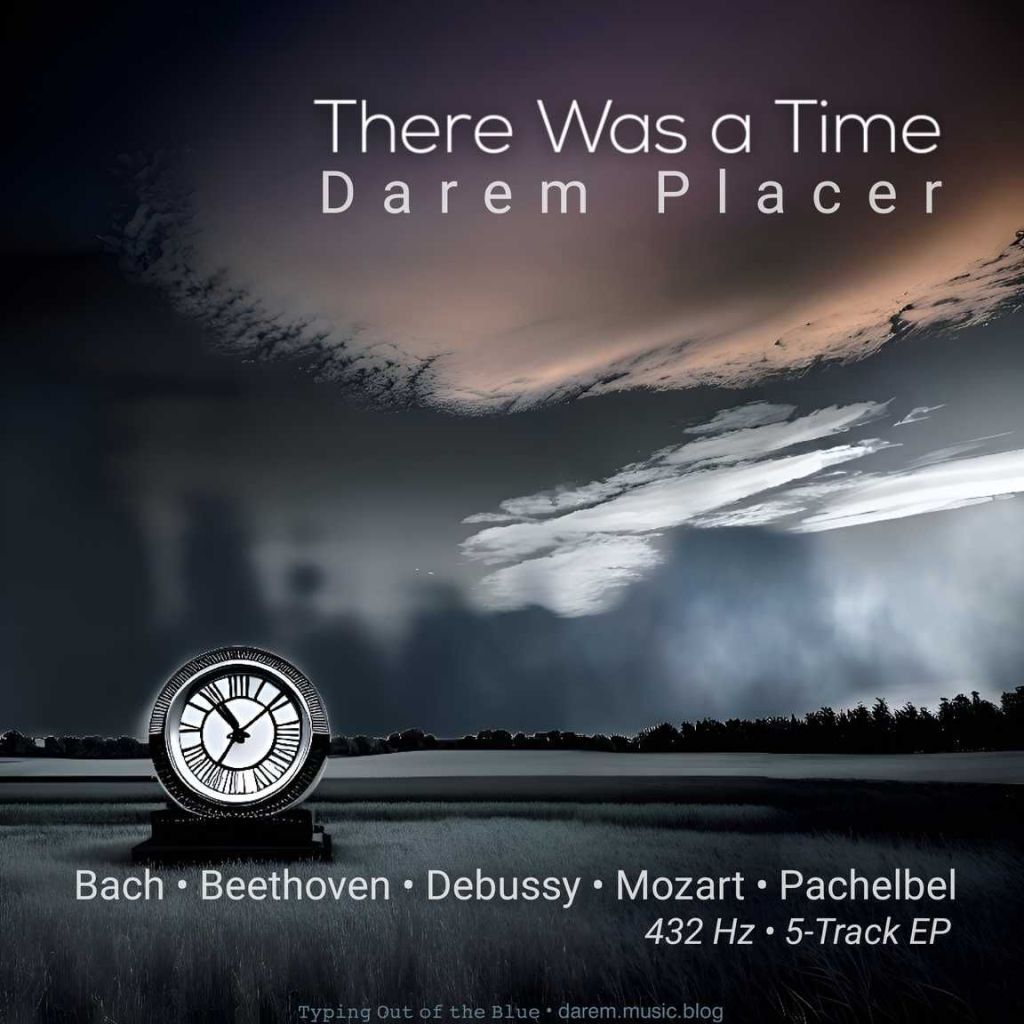
Fifth Symphony (Beethoven) • Darem Placer
There Was a Time includes Fifth Symphony

⌨ ᴛʸᵖⁱⁿᵍ ᴏᵘᵗ ᵒᶠ ᵗʰᵉ ʙˡᵘᵉ ᵈᵃʳᵉᵐ ᵐᵘˢⁱᶜ ᵇˡᵒᵍ