
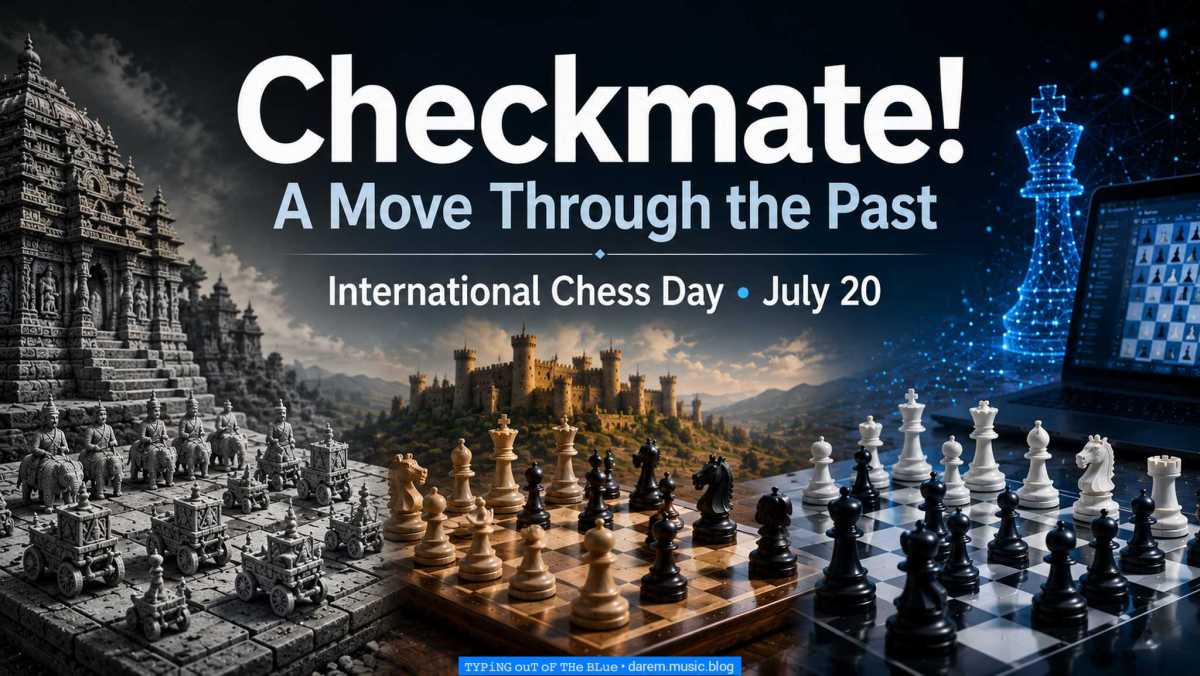
The earliest widely accepted ancestor of modern chess is Chaturanga, a strategy game that appeared in India around the 6th century. Inspired by warfare, its pieces represented infantry, cavalry, elephants, and chariots. These eventually developed into the pawns, knights, bishops, and rooks of modern chess.
The game spread to Persia, where a related form became known as Shatranj. It later traveled across the Islamic world and reached Europe through several routes, including Spain and the Mediterranean.
By the Middle Ages, chess had become popular in Europe, especially among royalty and the nobility. In the late 15th century, major rule changes transformed the game: the queen gained its powerful modern movement, bishops became long-range pieces, and play became faster and more dynamic.
Chess has its own rhythm and tempo, much like music. A good player knows when to attack, when to wait, and when one quiet move can change the whole game.
By the 18th and 19th centuries, chess clubs, books, and organized competitions had become more common. In 1886, Wilhelm Steinitz defeated Johannes Zukertort in a match generally recognized as the first official World Chess Championship.
In 1924, the International Chess Federation, better known as FIDE, was founded in Paris. It later became the main international governing body for competitive chess.
Then came the machines. In 1997, IBM’s Deep Blue defeated reigning World Champion Garry Kasparov in a six-game rematch, a landmark moment in chess and computer science.
The next chapter came with more advanced chess engines and artificial intelligence. In 2017, DeepMind’s AlphaZero showed how a system trained largely through self-play could develop a powerful and unconventional approach to chess. Today, AI has changed how players study and understand the game, but the final move still belongs to the human sitting at the board.
⌨ ᴛʸᵖⁱⁿᵍ ᴏᵘᵗ ᵒᶠ ᵗʰᵉ ʙˡᵘᵉ ᵈᵃʳᵉᵐ ᵐᵘˢⁱᶜ ᵇˡᵒᵍ