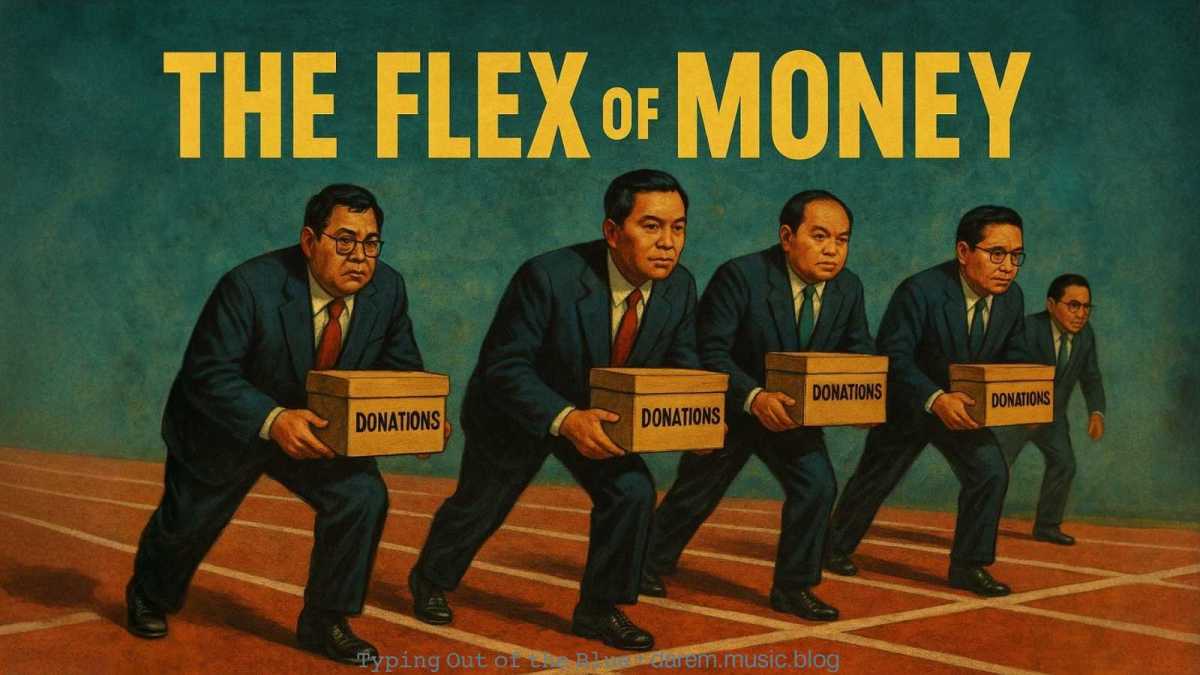
The Flex of Money

Different worlds play different games, but money is always the prize. What happens when the rules are flipped?

The rich play their game—show the newest car, the biggest house, the shiny watch. They act like it’s not a contest, but it always is.

The poor have their version too. One Christmas I heard beggar kids outside a 7-Eleven, laughing as they compared who got the biggest alms in a short time. I was shocked—their take easily outdid what many workers earn in a day.

And the scavengers? Their game is the trash. Who can find the most valuable thing, who can claim the best prize from what others throw away.

Different worlds, same story. Money as medal, money as crown. Rich or poor, everyone shows off—only the props change.

But here’s a better challenge: what if the rich changed their game? Not who owns the flashiest toy, but who gives the most to a cause that helps people—feeding the hungry, teaching the poor, healing the sick, saving lives. A monthly charity challenge, where the score is measured by help, not by wealth.

And about those rich posts on social media—yes, people say it’s wrong to give with a camera on, then post it for the world to see. But I say fine, go ahead. If that’s what it takes to challenge the next rich guy to give, then keep the cameras rolling. Call it “keeping up with the… Jonas Brothers? I mean, Joneses. 😁” Not perfect, but better than keeping up with the ugly comments on social media. 😁

Because if money stays at the center, life becomes poorer. But if giving takes the center, both rich and poor can finally be rich in what truly lasts.

ᴛʸᵖⁱⁿᵍ ᴏᵘᵗ ᵒᶠ ᵗʰᵉ ʙˡᵘᵉ ᵈᵃʳᵉᵐ ᵐᵘˢⁱᶜ ᵇˡᵒᵍ
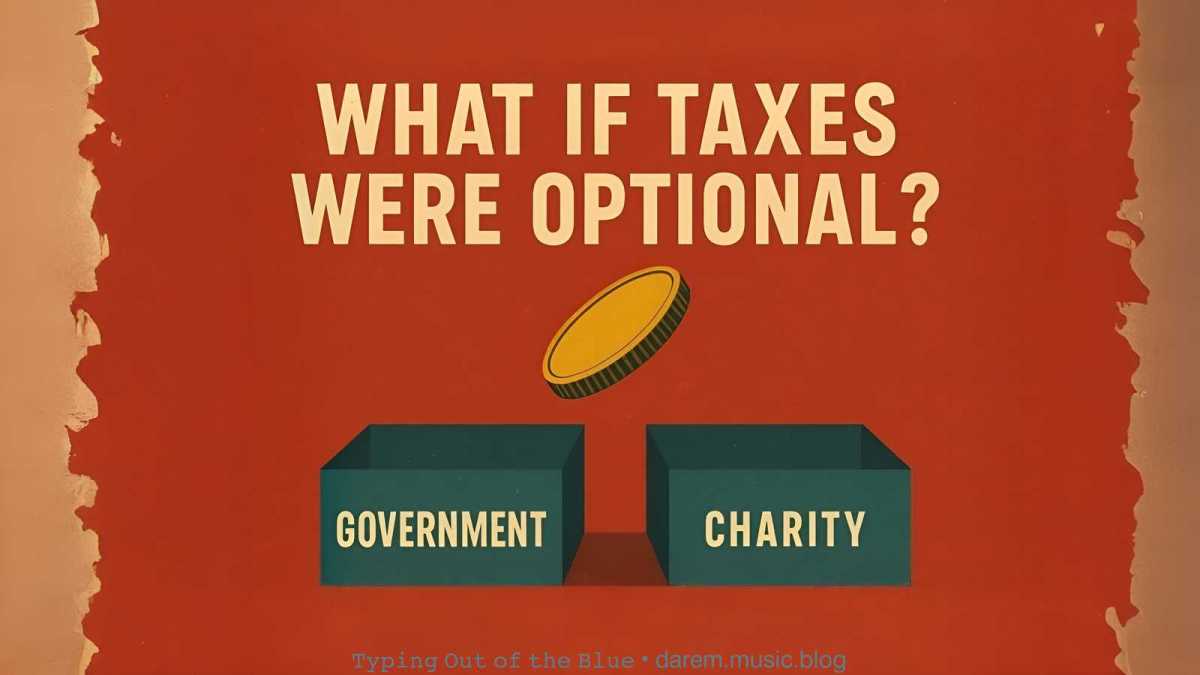
What If Taxes Were Optional?

When trust in the system fades, even the most basic duty starts to feel like a burden.

Sometimes I wonder—what if taxes came with an option? Either pay the government or donate the same amount to charity.

Of course, I know why taxes exist. That’s how a country runs: roads, hospitals, schools, the entire framework of daily life. But here in the Philippines, it often isn’t visible. What you see instead are broken streets, underfunded hospitals, and overcrowded classrooms—while scandals keep surfacing.

So people end up asking: Where did my tax go? That’s when the thought feels tempting: maybe it would make more sense to just give it directly to a cause, where the impact is clear and real.

Another thought: what if people could actually choose where their tax goes? If your community drainage needs fixing, you direct it to public works. If schools need support, you channel it there. But in the present situation, it feels more realistic to just save the money and build your own drainage system at home.

That’s why people become more self-reliant—because their taxes don’t seem to have any real effect on the order of life around them.

It’s not charity that competes with taxes—it’s trust.

ᴛʸᵖⁱⁿᵍ ᴏᵘᵗ ᵒᶠ ᵗʰᵉ ʙˡᵘᵉ ᵈᵃʳᵉᵐ ᵐᵘˢⁱᶜ ᵇˡᵒᵍ
Nothing to Fix • Darem Placer

Listen to Unbroken Pieces of a Tangled Mind on Apple Music, Apple Music Classical, and YouTube Music

Unbroken Pieces of a Tangled Mind includes Nothing to Fix