Fragile

A broken piggy bank can reveal something deeper than money and why security is more fragile than we think.

Money looks powerful until the day you break the piggy bank and realize the problem is still bigger than what’s inside.

You count the coins slowly while ceramic pieces sit on the table beside them. Months or years of saving suddenly feel small.

Then comes the strange regret.

“I shouldn’t have broken it.”

Not because the piggy bank was expensive. Because before it broke, it still felt like security.

Maybe that’s why there’s something sad about piggy banks when you really think about them.

You spend so much time protecting something fragile because it helps you feel safe. Then one difficult season arrives and suddenly survival asks you to destroy the very thing you protected.

Relationships can feel like that too.

Some people spend years building trust, memories, and routines together, only for one painful chapter to crack everything open.

And maybe money belongs in the same fragile category as everything else we try to protect.

We treat it like absolute security. But there are moments in life where even all your savings together cannot fully protect you from loss, sickness, fear, or loneliness.

That’s probably why some people with little money still survive difficult seasons better than others with full bank accounts.

Because at some point, security stops being just financial.

Sometimes real security is the person who stays after the breakdown. The person who shares a meal with you. The person who listens while your life feels shattered on the table like broken ceramic pieces.

Maybe that’s what makes life fragile.

Not the fact that things break.

But the fact that we keep loving, protecting, and depending on breakable things anyway.

Fragile • Darem Placer

⌨ ᴛʸᵖⁱⁿᵍ ᴏᵘᵗ ᵒᶠ ᵗʰᵉ ʙˡᵘᵉ ᵈᵃʳᵉᵐ ᵐᵘˢⁱᶜ ᵇˡᵒᵍ
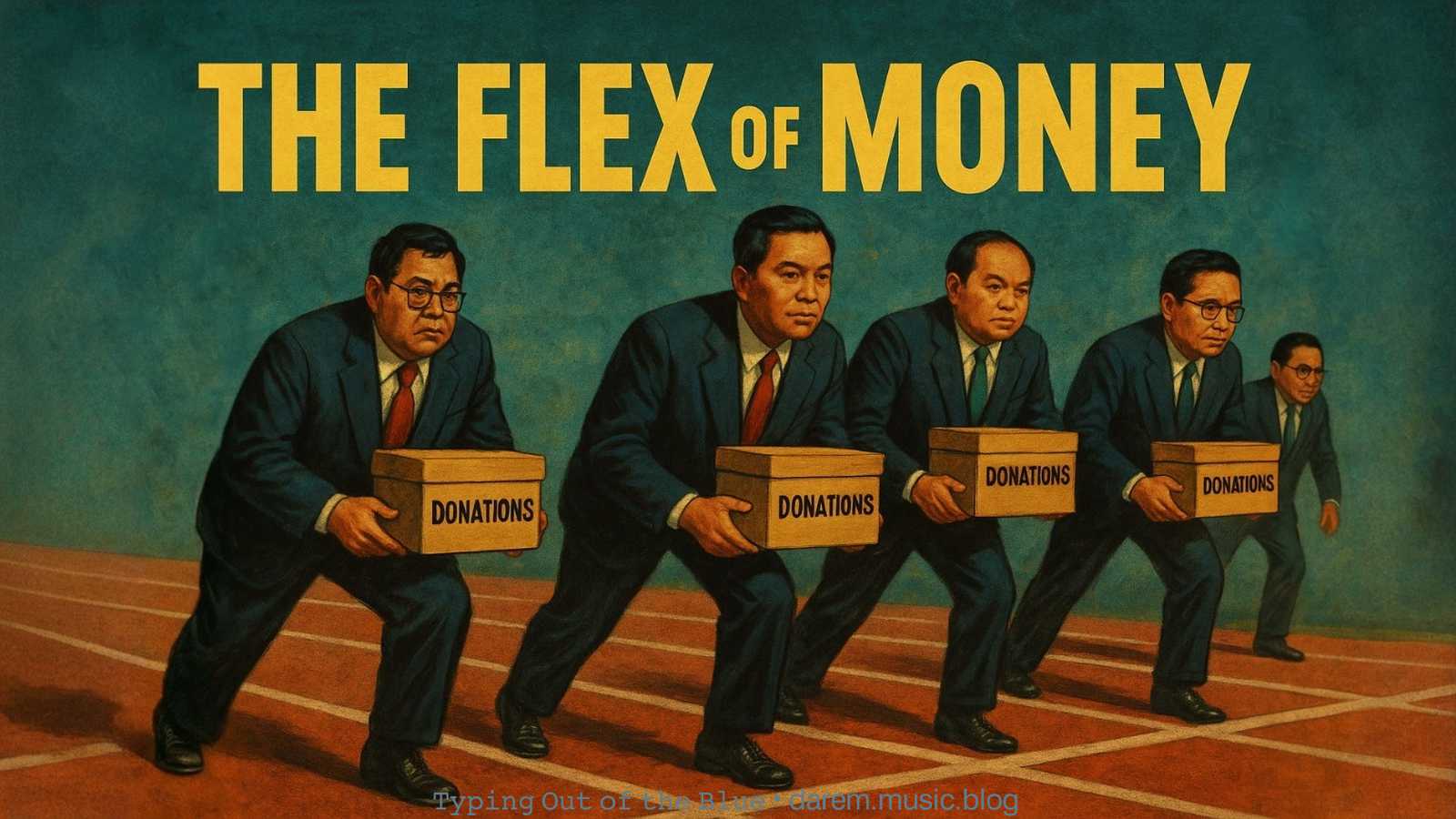
The Flex of Money

Different worlds play different games, but money is always the prize. What happens when the rules are flipped?

The rich play their game—show the newest car, the biggest house, the shiny watch. They act like it’s not a contest, but it always is.

The poor have their version too. One Christmas I heard beggar kids outside a 7-Eleven, laughing as they compared who got the biggest alms in a short time. I was shocked—their take easily outdid what many workers earn in a day.

And the scavengers? Their game is the trash. Who can find the most valuable thing, who can claim the best prize from what others throw away.

Different worlds, same story. Money as medal, money as crown. Rich or poor, everyone shows off—only the props change.

But here’s a better challenge: what if the rich changed their game? Not who owns the flashiest toy, but who gives the most to a cause that helps people—feeding the hungry, teaching the poor, healing the sick, saving lives. A monthly charity challenge, where the score is measured by help, not by wealth.

And about those rich posts on social media—yes, people say it’s wrong to give with a camera on, then post it for the world to see. But I say fine, go ahead. If that’s what it takes to challenge the next rich guy to give, then keep the cameras rolling. Call it “keeping up with the… Jonas Brothers? I mean, Joneses. 😁” Not perfect, but better than keeping up with the ugly comments on social media. 😁

Because if money stays at the center, life becomes poorer. But if giving takes the center, both rich and poor can finally be rich in what truly lasts.

ᴛʸᵖⁱⁿᵍ ᴏᵘᵗ ᵒᶠ ᵗʰᵉ ʙˡᵘᵉ ᵈᵃʳᵉᵐ ᵐᵘˢⁱᶜ ᵇˡᵒᵍ