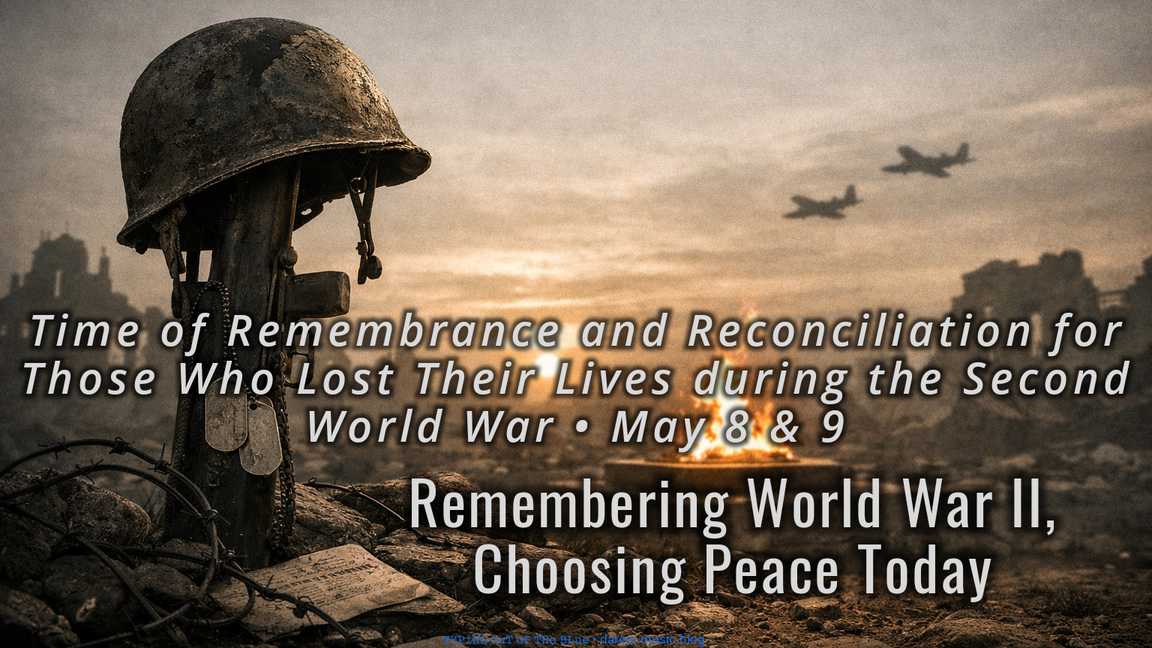
Remembering World War II, Choosing Peace Today

A day that breathes in silence—honoring lives once lost, and whispering the promise of peace we must choose again.

Every year on May 8 and 9, the world pauses. Not loudly. Not with fireworks. Just a quiet, collective breath.

This observance, recognized by the United Nations, honors the millions who died during World War II. Soldiers, civilians, families, entire cities—names known and unknown, stories finished too soon.

War reduces people into numbers. Remembrance restores them as human: a father who never came home, a child who never grew up, a mother who waited by the door until silence answered her.

Reconciliation is harder. It asks former enemies to sit at the same table—not to erase the past, but to choose a different future. No revenge. No rewriting. Just truth, and the decision not to repeat what once broke the world.

Today, we don’t carry rifles. But we carry choices:

•Reject hate even when it’s easy
•Listen instead of divide
•Build instead of burn

Peace is not dramatic. It doesn’t trend. And it isn’t always quiet. Sometimes it needs protest, resistance, and loud voices to keep it alive.

So this day stands as a marker in time. Not to trap us in the past, but to remind us: the cost of war is too high, and we already paid for it.

And if we remember clearly—without shortcuts—maybe we won’t have to pay again.
⌨ ᴛʸᵖⁱⁿᵍ ᴏᵘᵗ ᵒᶠ ᵗʰᵉ ʙˡᵘᵉ ᵈᵃʳᵉᵐ ᵐᵘˢⁱᶜ ᵇˡᵒᵍ
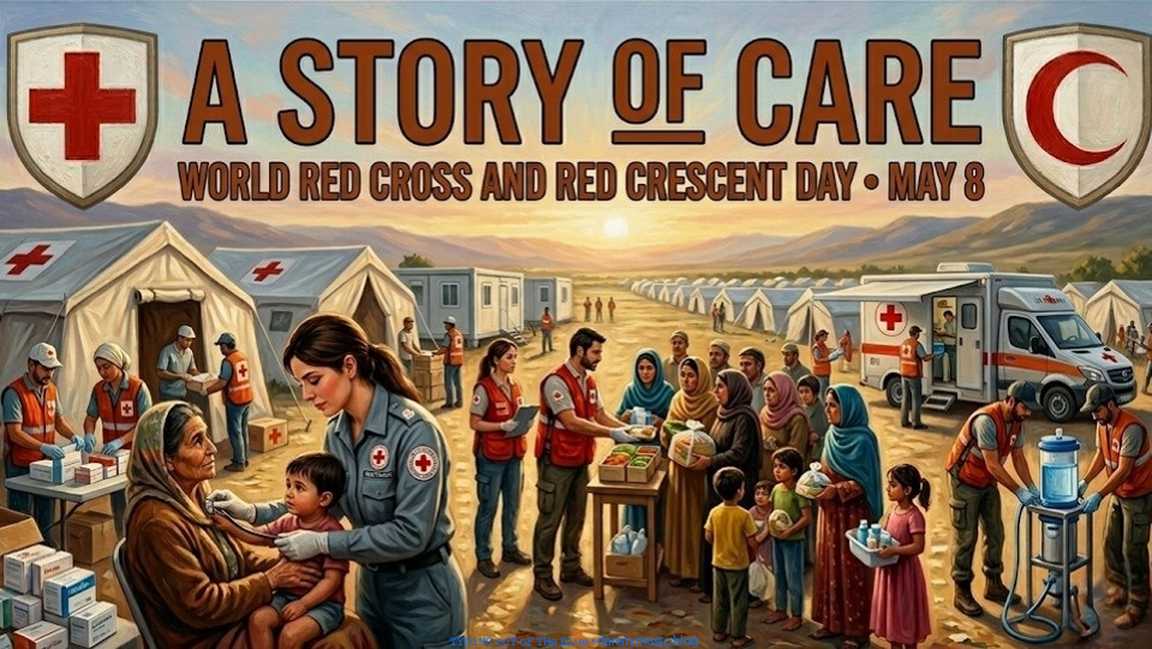
A Story of Care

A simple act of compassion grew into a global movement of care and solidarity.

World Red Cross and Red Crescent Day • May 8

In the middle of a battlefield in 1859, a Swiss man named Henry Dunant saw soldiers left wounded and alone. He could not turn away. He gathered villagers, gave water, food, and comfort, and treated everyone without asking which side they fought for. That simple act of compassion planted the seed of what would become the Red Cross.

From that moment, the idea grew into a worldwide movement. Today it is known as the Red Cross and Red Crescent, a global network that unites millions of volunteers. The two symbols—the cross and the crescent—are used in different countries, but both stand for the same mission: neutral aid and humanity in times of need.

These volunteers respond to disasters, give medical care, and support communities every day. Their work shows how compassion can change lives.

Dunant’s vision was so powerful that in 1901, he was honored as one of the very first recipients of the Nobel Peace Prize. His legacy is not just in history books—it lives on in every volunteer who chooses to help.

What began with one man’s response to suffering has grown into a movement that proves compassion can move the world.

⌨ ᴛʸᵖⁱⁿᵍ ᴏᵘᵗ ᵒᶠ ᵗʰᵉ ʙˡᵘᵉ ᵈᵃʳᵉᵐ ᵐᵘˢⁱᶜ ᵇˡᵒᵍ