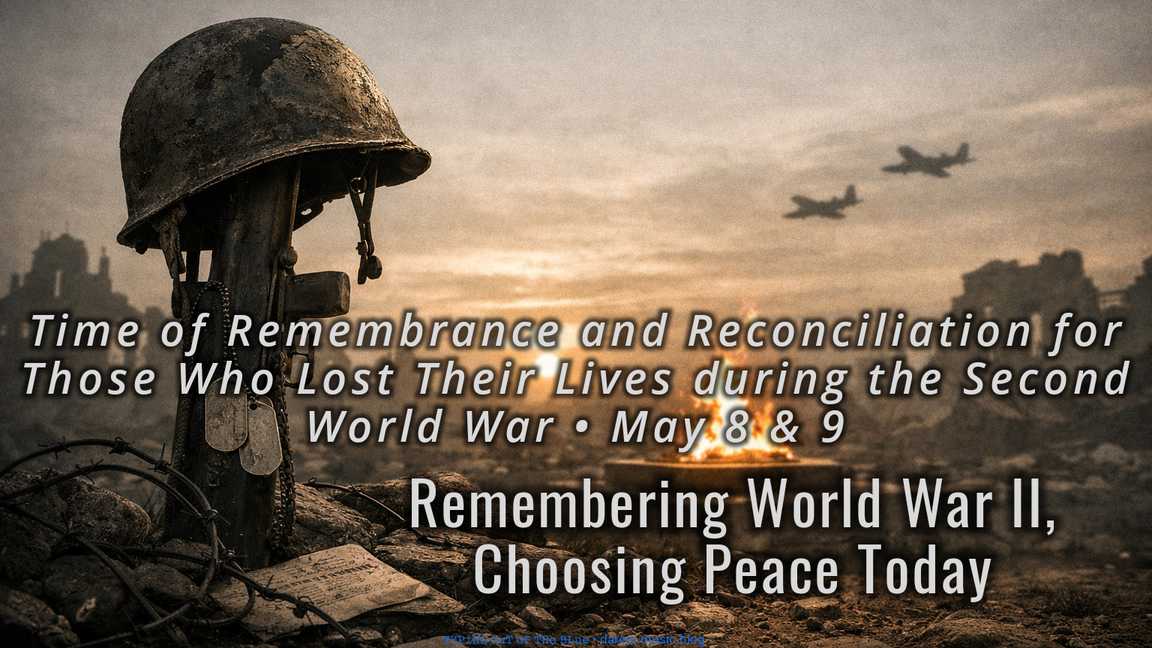
Remembering World War II, Choosing Peace Today

A day that breathes in silence—honoring lives once lost, and whispering the promise of peace we must choose again.

Every year on May 8 and 9, the world pauses. Not loudly. Not with fireworks. Just a quiet, collective breath.

This observance, recognized by the United Nations, honors the millions who died during World War II. Soldiers, civilians, families, entire cities—names known and unknown, stories finished too soon.

War reduces people into numbers. Remembrance restores them as human: a father who never came home, a child who never grew up, a mother who waited by the door until silence answered her.

Reconciliation is harder. It asks former enemies to sit at the same table—not to erase the past, but to choose a different future. No revenge. No rewriting. Just truth, and the decision not to repeat what once broke the world.

Today, we don’t carry rifles. But we carry choices:

•Reject hate even when it’s easy
•Listen instead of divide
•Build instead of burn

Peace is not dramatic. It doesn’t trend. And it isn’t always quiet. Sometimes it needs protest, resistance, and loud voices to keep it alive.

So this day stands as a marker in time. Not to trap us in the past, but to remind us: the cost of war is too high, and we already paid for it.

And if we remember clearly—without shortcuts—maybe we won’t have to pay again.
⌨ ᴛʸᵖⁱⁿᵍ ᴏᵘᵗ ᵒᶠ ᵗʰᵉ ʙˡᵘᵉ ᵈᵃʳᵉᵐ ᵐᵘˢⁱᶜ ᵇˡᵒᵍ
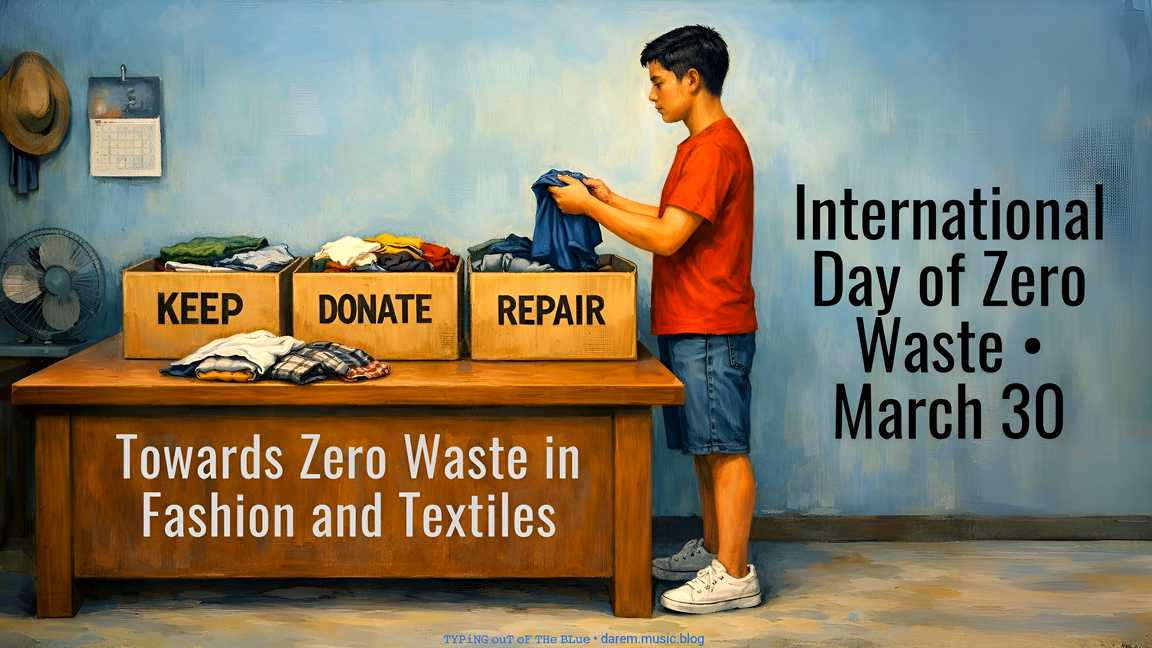
Towards Zero Waste in Fashion and Textiles

It was yesterday—but some things are still worth keeping. What we wear can also become what we waste.

International Day of Zero Waste • March 30

Today is already March 31. International Day of Zero Waste was yesterday. Still, it feels like something worth keeping—rather than letting it go to waste.

Because waste, in any form, adds up.

Waste is not only about messy streets or full trash bins. It affects land, water, air, climate, and human health. The world now generates around 2.1 to 2.3 billion tonnes of municipal solid waste each year, and without urgent action, that number could rise much higher in the coming decades.

This year’s theme turns attention to fashion and textiles—one of the largest sources of waste today. Behind every piece of clothing are resources used and often wasted: water, fabric, energy, and chemicals.

The message is practical:
• buy less, choose better 
• reuse, repair, donate 
• avoid one-time outfit culture 
• support longer-lasting clothes 

The fashion industry produces massive waste, from overproduction to discarded garments that end up in landfills.

The idea is simple. Not everything new is needed. And not everything old is finished.

⌨ ᴛʸᵖⁱⁿᵍ ᴏᵘᵗ ᵒᶠ ᵗʰᵉ ʙˡᵘᵉ ᵈᵃʳᵉᵐ ᵐᵘˢⁱᶜ ᵇˡᵒᵍ

Darem Placer on YouTube Music