April Fools’ Day: How It Really Started

April Fools’ Day did not begin in one clear moment. But its strange path through history makes the tradition more interesting.

Every April 1, people expect jokes, pranks, and small tricks. Some laugh. Some get caught. Some pretend they saw it coming.

But where did this even begin?

There’s no single clear origin. No exact moment where someone decided to create a day for pranks. It formed slowly across places and years until it became what we know today.

One of the strongest explanations goes back to Europe in the late 1500s. In 1582, France adopted the Gregorian calendar, moving New Year to January 1. Before that, many parts of Europe celebrated the New Year around late March, ending on April 1.

Not everyone adjusted right away. Some continued celebrating in April. Others began to tease them, calling them “fools,” and playing small tricks on them for being out of sync.

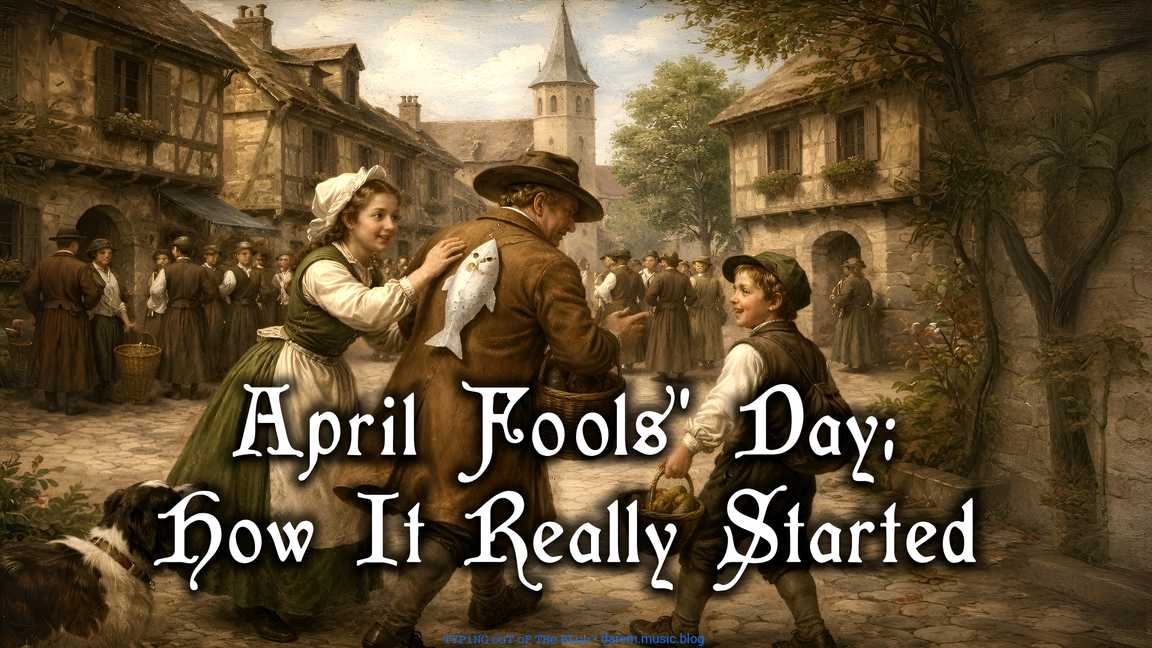
By the 1600s, still in France, this had already led to playful traditions. One became known as “Poisson d’Avril,” or April Fish. People would secretly place paper fish on someone’s back. If you didn’t notice, you were the easy catch.

There’s also a simpler explanation. Spring itself feels unpredictable. The weather shifts without warning—bright in the morning, rain by afternoon, warm then suddenly cold. Some believe the day reflects that same pattern.

By the 1700s, pranks were already being recorded in England and Scotland. People were sent on fake errands or given impossible tasks, just for the joke. The tradition kept evolving.

In 1957, the BBC aired a segment showing people harvesting spaghetti from trees. Many viewers believed it.

That moment proved something simple. April Fools’ Day works because people trust what they see and hear.

And maybe that’s the real point. It’s not about making people look stupid. It’s about breaking the habit of taking everything too seriously.

For one day, things are allowed to be a little off. A little unexpected. A little lighter.

And if you get fooled? It just means, for a moment, you believed something good enough to be true.

⌨ ᴛʸᵖⁱⁿᵍ ᴏᵘᵗ ᵒᶠ ᵗʰᵉ ʙˡᵘᵉ ᵈᵃʳᵉᵐ ᵐᵘˢⁱᶜ ᵇˡᵒᵍ

There Was a Time • Darem Placer

Sister Margaret Mary Alacoque and the Sacred Heart of Jesus

When love is ignored, hearts harden. She showed that mercy can still burn brighter than pain.

She was twelve when her heart already burned for something bigger than her quiet French town. Born in 1647, Sister Margaret Mary grew up fragile, sickly, but full of longing—like her soul was tuned to Heaven’s frequency.

When she entered the Visitation convent in Paray-le-Monial, silence became her world. But in that stillness, something eternal broke through. One night, she said Jesus appeared to her—His Heart surrounded by thorns, glowing with love. Not the kind of love people post about, but the kind that bleeds, forgives, and keeps loving even when the world turns away.

Christ’s message to her was simple yet deep:

Love Me in return for My love.

• Make reparation for the coldness and indifference of souls.

• Honor My Heart through prayer and the First Friday Communions.

It wasn’t easy. Some sisters thought she was too emotional. Others said she imagined it. But she kept going. Because once you’ve seen love that real, you can’t unsee it.

From her quiet yes began one of the most powerful devotions in faith’s history—the Sacred Heart of Jesus. Through her, the Church learned that love must never harden, that mercy must never fade.

Saint Margaret Mary Alacoque died in 1690, but her message still whispers: if you can’t change the whole world, start by softening one heart—yours.

⌨ ᴛʸᵖⁱⁿᵍ ᴏᵘᵗ ᵒᶠ ᵗʰᵉ ʙˡᵘᵉ ᵈᵃʳᵉᵐ ᵐᵘˢⁱᶜ ᵇˡᵒᵍ
Traces of courage, silence, and sacrifice—this is Saints.

Listen on Apple Music, Apple Music Classical, and YouTube Music