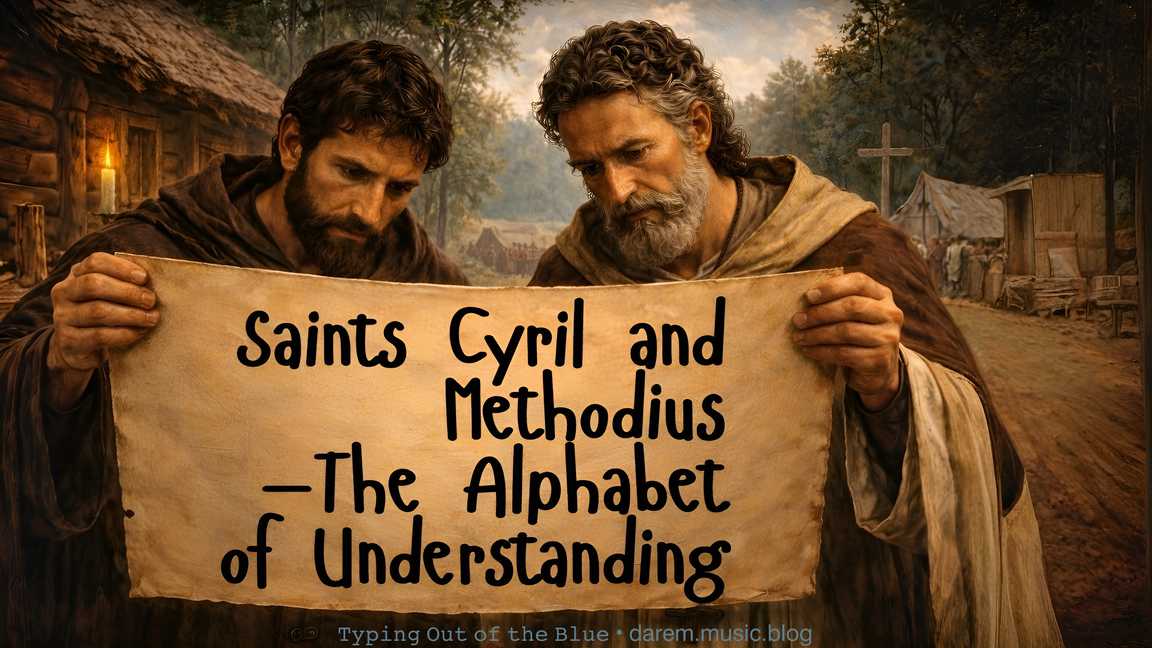
Saints Cyril and Methodius—The Alphabet of Understanding

They did not just translate the Gospel. They created letters so people could finally understand it.

Most missionaries translated words.
Cyril changed the alphabet.

In 863, he and his brother Methodius were sent to preach to the Slavs, people living in Central Europe, especially in what is now Slovakia and the Czech Republic. The people had a spoken language but no proper writing system for Scripture. So Cyril built one. Letter by letter. Sounds shaped into symbols. The Gospel stopped being something distant and became something they could truly understand.

That move caused tension. Some church leaders preferred Latin only. But the brothers insisted: faith must be understood, not just performed.

When Cyril died in 869, Methodius did not stop. He continued the mission alone. He kept translating. He kept teaching. Even when he faced opposition and imprisonment, he did not abandon the work.

Today, the problem is different but similar. We talk in jargon. In church language. In academic tone. In corporate buzzwords. People nod, but they don’t get it. Some people use hifalutin (showy) words just to impress. Do we even understand them?

Cyril would probably ask: why are you speaking in a language no one lives in?

Their story is not just about inventing letters. It’s about removing distance.

Sometimes the most radical act is making things understandable.

Let’s keep learning the saints’ way—day by day.

⌨ ᴛʸᵖⁱⁿᵍ ᴏᵘᵗ ᵒᶠ ᵗʰᵉ ʙˡᵘᵉ ᵈᵃʳᵉᵐ ᵐᵘˢⁱᶜ ᵇˡᵒᵍ

Saint Valentine—Faith Before Flowers

Long before cards and flowers, a quiet act of courage shaped the meaning of February 14.

Valentine lived in Rome during the 3rd century of the Roman Empire. He was a Christian priest at a time when Christianity was not legally protected. To follow Christ openly required courage.

During the reign of Emperor Claudius II, Christians were viewed with suspicion because they refused to worship the Roman gods or the emperor. One traditional account says the emperor banned young men from marrying, believing unmarried men made better soldiers. Father Valentine continued to perform Christian marriages in secret. This act of obedience to his faith placed him in direct conflict with imperial authority.

He was arrested and imprisoned. While in prison, another tradition says he befriended the jailer’s daughter and may have healed her. Before his execution, he is said to have written her a note signed, “From your Valentine.” This later became associated with the custom of sending Valentine’s cards.

He was executed in the 3rd century, traditionally associated with February 14.

The association of February 14 with romantic love developed much later. In medieval England, writers such as Geoffrey Chaucer connected the day with courtly love in poetry. Over time, cultural traditions grew around it, including the exchange of cards, flowers, and gifts.

Although February 14 is now celebrated as a day of romance, Saint Valentine was not executed for love stories or flowers. He was executed for his Christian faith and his refusal to obey imperial orders.

Let’s keep learning the saints’ way—day by day.

⌨ ᴛʸᵖⁱⁿᵍ ᴏᵘᵗ ᵒᶠ ᵗʰᵉ ʙˡᵘᵉ ᵈᵃʳᵉᵐ ᵐᵘˢⁱᶜ ᵇˡᵒᵍ

È bello dare amore a San Valentino.