
Saint Valentine—Faith Before Flowers

Long before cards and flowers, a quiet act of courage shaped the meaning of February 14.

Valentine lived in Rome during the 3rd century of the Roman Empire. He was a Christian priest at a time when Christianity was not legally protected. To follow Christ openly required courage.

During the reign of Emperor Claudius II, Christians were viewed with suspicion because they refused to worship the Roman gods or the emperor. One traditional account says the emperor banned young men from marrying, believing unmarried men made better soldiers. Father Valentine continued to perform Christian marriages in secret. This act of obedience to his faith placed him in direct conflict with imperial authority.

He was arrested and imprisoned. While in prison, another tradition says he befriended the jailer’s daughter and may have healed her. Before his execution, he is said to have written her a note signed, “From your Valentine.” This later became associated with the custom of sending Valentine’s cards.

He was executed in the 3rd century, traditionally associated with February 14.

The association of February 14 with romantic love developed much later. In medieval England, writers such as Geoffrey Chaucer connected the day with courtly love in poetry. Over time, cultural traditions grew around it, including the exchange of cards, flowers, and gifts.

Although February 14 is now celebrated as a day of romance, Saint Valentine was not executed for love stories or flowers. He was executed for his Christian faith and his refusal to obey imperial orders.

Let’s keep learning the saints’ way—day by day.

⌨ ᴛʸᵖⁱⁿᵍ ᴏᵘᵗ ᵒᶠ ᵗʰᵉ ʙˡᵘᵉ ᵈᵃʳᵉᵐ ᵐᵘˢⁱᶜ ᵇˡᵒᵍ

È bello dare amore a San Valentino.

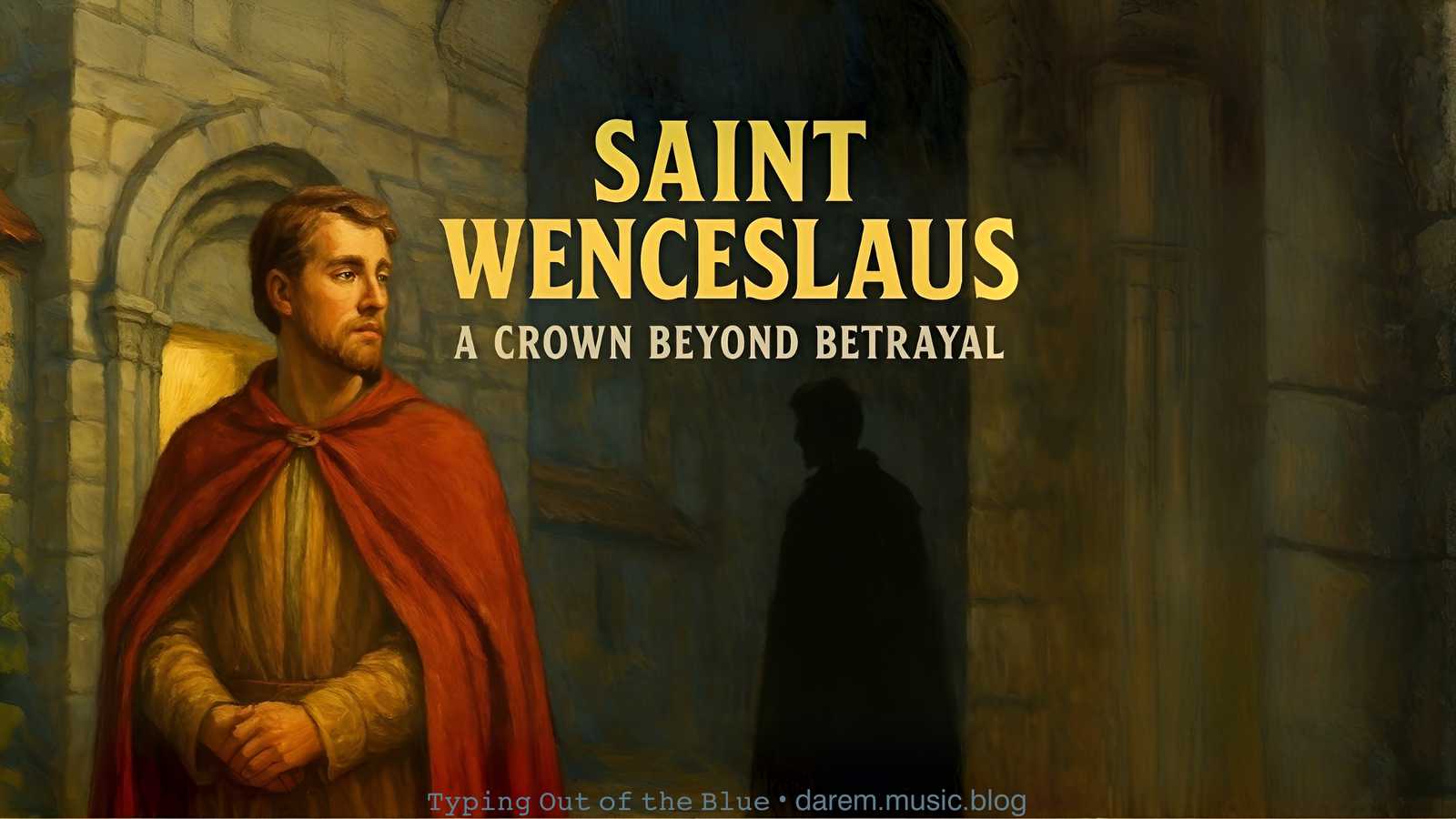
Saint Wenceslaus • A Crown Beyond Betrayal

A duke betrayed by his own brother shows the clash between worldly power and God’s eternal kingdom.

Prince Wenceslaus was born around 907 in Bohemia, a region in Central Europe that is now part of the Czech Republic. He was raised in the Christian faith by his grandmother, Saint Ludmila, who taught him to live differently from the power-hungry nobles around him. From a young age, he showed unusual devotion: feeding the poor, caring for orphans, and learning that true strength came from faith.

When he took the throne as Duke of Bohemia, Wenceslaus carried those lessons into leadership. He ruled with mercy instead of fear, promoted peace with Christian neighbors, and gave support to the Church. But this put him at odds with many pagan nobles who preferred the old ways of power and revenge. To them, his compassion looked like weakness.

The greatest threat came from within his own family. His younger brother, Boleslaus I—later remembered as Boleslaus the Cruel—wanted the throne. Backed by nobles who despised the Christian direction of Bohemia, Boleslaus plotted his death. On September 28, 935, as Duke Wenceslaus went to Mass in the town of Stará Boleslav, his brother’s men attacked him at the church door. Boleslaus himself stabbed him, delivering the fatal wound.

The world at the time called it politics. The Church called it martyrdom. And history now calls him Saint Wenceslaus, patron of the Czech people. His death exposed the clash of two worlds—one that glorifies power at any cost, and one that lives for God’s truth. The same choice confronts us today. Many people chase “goodness” that is really self-serving: loyalty for gain, generosity for image, kindness only when convenient. It is the same spirit that destroyed Wenceslaus—love for the wrong “world.”

Saint Wenceslaus lost his throne, but kept the only kingdom that lasts.

ᴛʸᵖⁱⁿᵍ ᴏᵘᵗ ᵒᶠ ᵗʰᵉ ʙˡᵘᵉ ᵈᵃʳᵉᵐ ᵐᵘˢⁱᶜ ᵇˡᵒᵍ
Traces of courage, silence, and sacrifice—this is Saints.

Listen on Apple Music, Apple Music Classical, and YouTube Music