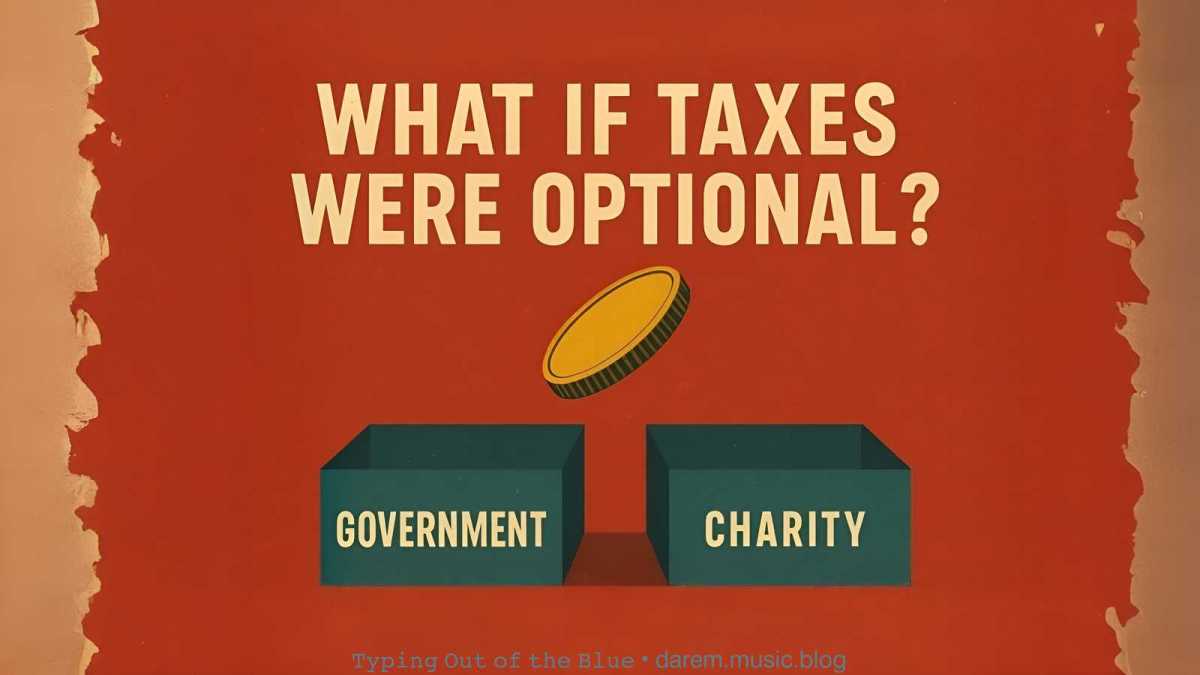
What If Taxes Were Optional?

When trust in the system fades, even the most basic duty starts to feel like a burden.

Sometimes I wonder—what if taxes came with an option? Either pay the government or donate the same amount to charity.

Of course, I know why taxes exist. That’s how a country runs: roads, hospitals, schools, the entire framework of daily life. But here in the Philippines, it often isn’t visible. What you see instead are broken streets, underfunded hospitals, and overcrowded classrooms—while scandals keep surfacing.

So people end up asking: Where did my tax go? That’s when the thought feels tempting: maybe it would make more sense to just give it directly to a cause, where the impact is clear and real.

Another thought: what if people could actually choose where their tax goes? If your community drainage needs fixing, you direct it to public works. If schools need support, you channel it there. But in the present situation, it feels more realistic to just save the money and build your own drainage system at home.

That’s why people become more self-reliant—because their taxes don’t seem to have any real effect on the order of life around them.

It’s not charity that competes with taxes—it’s trust.

ᴛʸᵖⁱⁿᵍ ᴏᵘᵗ ᵒᶠ ᵗʰᵉ ʙˡᵘᵉ ᵈᵃʳᵉᵐ ᵐᵘˢⁱᶜ ᵇˡᵒᵍ

Nothing to Fix • Darem Placer

Listen to Unbroken Pieces of a Tangled Mind on Apple Music, Apple Music Classical, and YouTube Music
Unbroken Pieces of a Tangled Mind includes Nothing to Fix

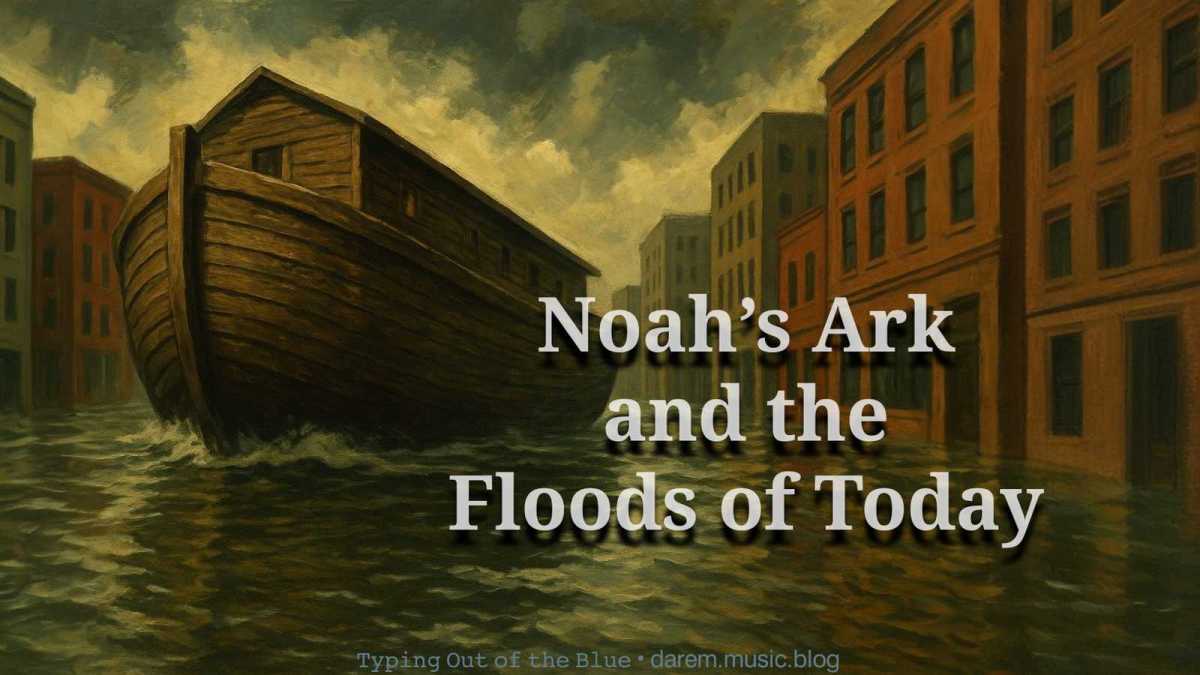
Noah’s Ark and the Floods of Today

Floods keep coming—not just from rain, but from corruption that weakens the walls meant to keep us safe.

Noah’s Ark is one of the oldest warnings in human history. A world drowned not just in water but in corruption. People were violent, greedy, and careless. God told Noah to build an ark, and while others laughed, he obeyed. When the flood came, the ark floated—not because it was magic, but because it was built right.

Fast forward to today. The flood is back—not in the same way, but just as destructive. Climate change makes storms stronger, rains heavier, and floods deadlier. And what do we do? We build our “arks”—dikes, drainage systems, pumping stations. But unlike Noah, we cut corners. Money disappears, projects are left unfinished, walls are weak. Corruption eats the very structures meant to protect us.

History repeats itself. Before, the corruption was in human hearts. Now, it’s in flood control budgets and contracts. Same root: greed. Same result: destruction.

Noah’s story is more than a Bible tale. It’s a mirror. It tells us survival isn’t just about escaping the flood, but about doing what’s right before the flood even comes. If we keep choosing corruption, then every rainfall becomes our judgment day.

The rainbow still hangs in the sky—a sign of mercy, a promise of life. But it also asks a question: Will we finally learn, or will we keep building broken arks until we drown ourselves?

ᴛʸᵖⁱⁿᵍ ᴏᵘᵗ ᵒᶠ ᵗʰᵉ ʙˡᵘᵉ ᵈᵃʳᵉᵐ ᵐᵘˢⁱᶜ ᵇˡᵒᵍ