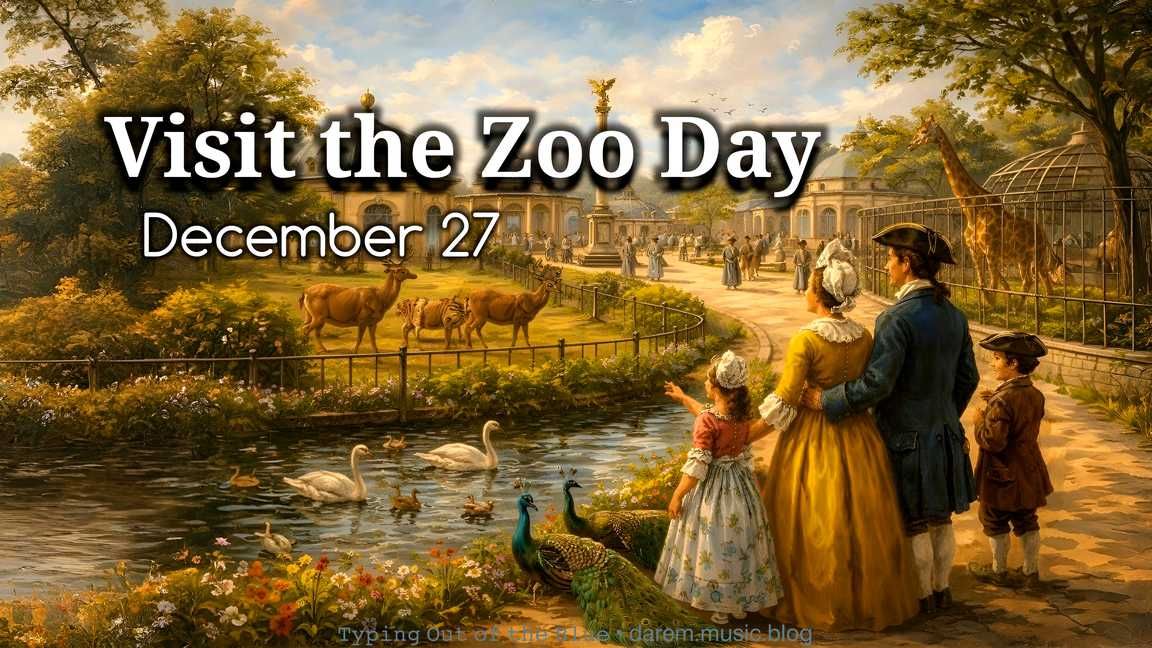
December 27
The idea of a public zoo did not start as entertainment. It started as access.
In 1752, the world’s first true public zoo opened in Vienna: Tiergarten Schönbrunn. For the first time, animals were no longer kept only for kings and palaces. Ordinary people could enter, observe, and learn. Even then, the zoo housed rare animals like giant pandas, Asian elephants, big cats, and other species already disappearing from the wild. What’s remarkable is this: that same zoo still exists today. Same grounds. Same mission. Centuries later, still open.
The idea crossed oceans.
In the Philippines, the first public zoo was Manila Zoo, opened in 1959. Located in Malate, Manila, it became a place where city kids saw animals not from books, but in real life. Like many old institutions, it went through decline, criticism, and change. Today, it stands restored and open again, showing that care for animals is a responsibility that lasts longer than trends.
If you want to live out Visit the Zoo Day, these zoos in the Philippines are currently open to the public.
• Manila Zoo
Malate, Manila
Open daily, usually around 9:00 AM–8:00 PM
• Avilon Zoo
Rodriguez (Montalban), Rizal
Open daily, around 8:00 AM–5:00 PM
• Zoobic Safari
Subic Bay Freeport Zone, Zambales
Open daily, morning to mid-afternoon (safari schedules vary)
• Cebu Safari and Adventure Park
Carmen, Cebu
Open daily, around 8:00 AM–5:00 PM
Zoos are not perfect spaces. They never were. But at their best, they pull us out of routine, screens, and noise.
So if you go, go slowly.
Pause.
Look closer.
And remember we share this planet.
⌨ ᴛʸᵖⁱⁿᵍ ᴏᵘᵗ ᵒᶠ ᵗʰᵉ ʙˡᵘᵉ ᵈᵃʳᵉᵐ ᵐᵘˢⁱᶜ ᵇˡᵒᵍ