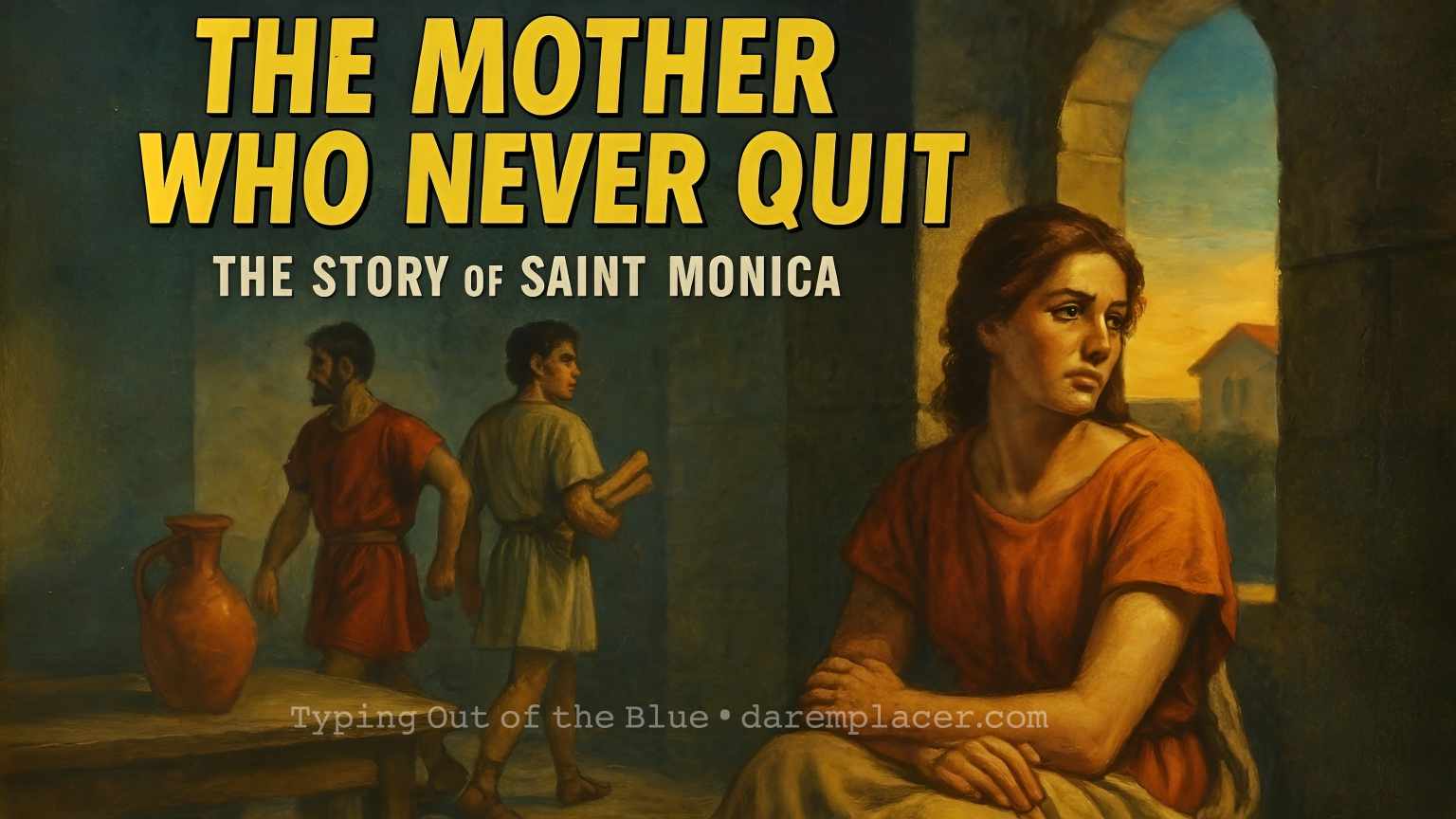
The Story of Saint Monica
Picture a family today.
The dad is barely home—quick-tempered, unfaithful, chasing his own pleasures. The son is smart, but wasted on parties, hookups, and his own ego. He thinks he’s above faith, above rules, and too brilliant to listen. The mom? She’s the glue, stuck holding it all together, crying at night, praying for change that never seems to come.
That family sounds modern. But it already happened more than 1,600 years ago.
In 331 AD, in Tagaste, North Africa, there was a woman named Monica. Her marriage was heavy. Her husband, Patricius, was a pagan with a violent temper and wandering eyes. Most wives would have shouted back, or walked away. Monica didn’t. She stayed patient, answered his rage with calm, and lived her faith right in front of him. Over time, her quiet strength broke through his pride. Before he died, Patricius finally turned to Christ.
But her son, Augustine, was an even bigger battle. A brilliant mind wasted on pleasures. He lived with a partner outside of marriage, had a child, and joined a false religion that excused his lifestyle. How did Monica handle him? Not by nagging, not by force—but by refusing to disappear. She followed him across cities, begged priests and bishops to guide him, and cried when words failed. Her love became a shadow he could never outrun.
Years passed. Then the breakthrough came. The same son who once mocked faith, who argued against his mother’s tears, finally surrendered to God. And not just as a believer—he became Saint Augustine, one of the greatest saints and thinkers the Church has ever known.
Saint Monica’s life began as a story of betrayal, anger, and disappointment. But it ended with redemption, not just for her family but for the world. Her story shows that no family is too broken, no heart too far, no story too ruined—if love refuses to quit. Every year on August 27, the Church remembers her faith.
𝚃𝚢𝚙𝚒𝚗𝚐 𝙾𝚞𝚝 𝚘𝚏 𝚝𝚑𝚎 𝙱𝚕𝚞𝚎
𝚍𝚊𝚛𝚎𝚖𝚙𝚕𝚊𝚌𝚎𝚛.𝚌𝚘𝚖
The Mother Who Never Quit
A mother’s patience changed history. Saint Monica endured betrayal, anger, and disappointment—yet never gave up on her husband or her son. Her faith turned a broken family into a story of redemption, remembered every August 27.