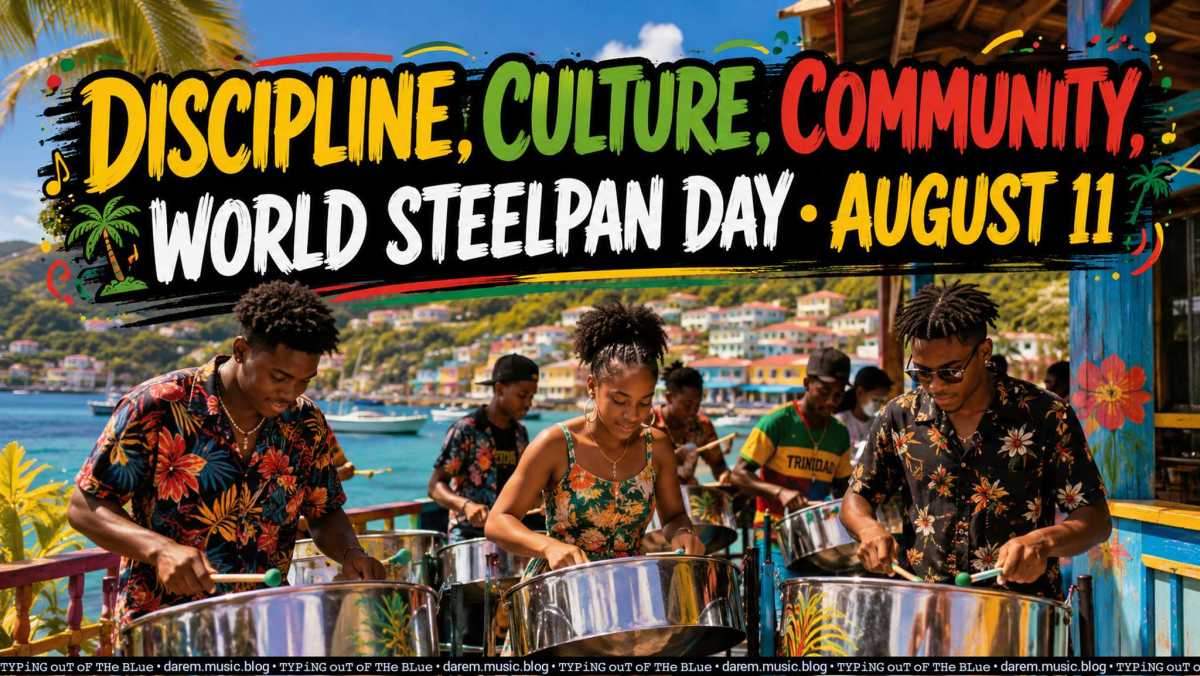
World Steelpan Day • August 11
The steelpan emerged in Trinidad and Tobago from a long history of Carnival, African musical traditions, and community adaptation. In the late 19th century, authorities restricted percussion during Carnival, leading communities to develop tamboo bamboo, which became part of Carnival music from 1884 through the 1930s. By the late 1930s, musicians were experimenting with metal containers, shaping and tuning the steel to produce different notes. The instrument developed into the steelpan, with its first public Carnival appearance in 1940.
Today, steelpan is played in schools, communities, competitions, concert stages, and mainstream music worldwide. Its sound has found a place in pop, jazz, classical, reggae, rock, film, and commercial recordings. Learning the instrument requires listening, coordination, patience, and teamwork. For young people, it can build confidence and responsibility while keeping cultural knowledge alive.
Its influence extends beyond music. Steelpan supports education, tourism, creative industries, and community development, creating opportunities for youth empowerment and more inclusive, sustainable livelihoods.
⌨ ᴛʸᵖⁱⁿᵍ ᴏᵘᵗ ᵒᶠ ᵗʰᵉ ʙˡᵘᵉ ᵈᵃʳᵉᵐ ᵐᵘˢⁱᶜ ᵇˡᵒᵍ