
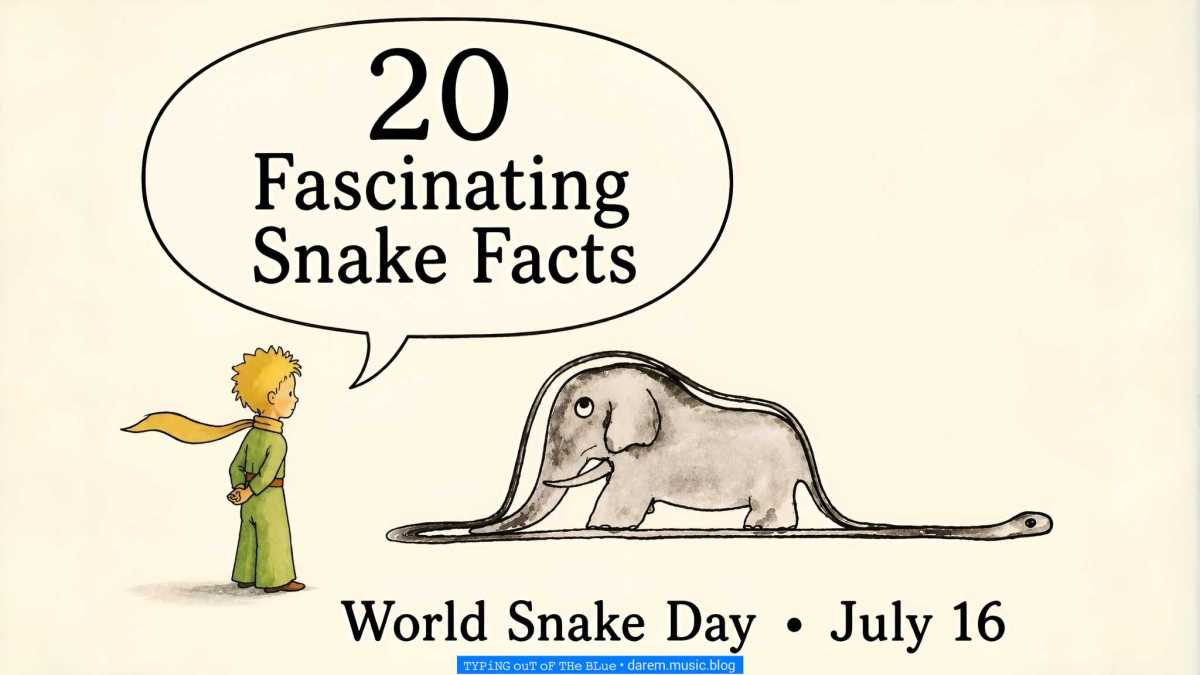
Think you know snakes? Think again! 🐍 From tiny snakes no bigger than an earthworm to giants that were longer than a school bus, these incredible reptiles are full of surprises. Here are 20 amazing facts that might change the way you see them.
1. There Are More Than 4,000 Kinds of Snakes
Scientists have discovered over 4,000 kinds of snakes around the world.
2. They Live Almost Everywhere
Snakes live in forests, deserts, mountains, rivers, grasslands, and even the ocean. The only continent without native snakes is Antarctica.
3. Most Snakes Are Not Dangerous to People
Many people think all snakes are dangerous, but that’s not true. Most snakes would rather stay away from people than fight or bite.
4. Snakes Smell With Their Tongues
When a snake flicks its tongue, it collects tiny scent particles from the air. A special organ inside its mouth helps it find food, avoid danger, and locate other snakes.
5. Some Snakes Can Sense Heat
Some snakes can even detect the body heat of nearby animals. This helps them hunt in the dark.
6. Snakes Never Blink
Snakes do not have eyelids like people do. Instead, each eye is covered by a clear protective scale, making them look as if they are always staring.
7. Their Long Bodies Are Built to Bend
People have 33 bones in their backbone, but many snakes have 200 to 400. This gives them the flexibility to twist, curl, climb, and slither in many different ways.
8. They Can Swallow Big Meals
A snake’s jaws can stretch much wider than you might expect, allowing it to swallow animals much bigger than its head.
9. They Can Skip Meals for Months
After eating one large meal, some snakes can go for weeks or even months before eating again because their bodies use energy very slowly.
10. Not All Snakes Lay Eggs
Some snakes hatch from eggs, while others give birth to live babies. It depends on the kind of snake.
11. Snakes Wear New Skin
As snakes grow, they shed their old skin and reveal a fresh new layer underneath. Young snakes usually do this more often because they grow faster.
12. Some Snakes Can Glide
The paradise tree snake can launch itself from one tree to another by flattening its body. It cannot truly fly, but it can glide through the air.
13. Sea Snakes Are Excellent Swimmers
Many sea snakes spend almost their entire lives in the ocean. Some come ashore to lay eggs, while others never leave the water at all.
14. Snakes Help Farmers
Many snakes eat rats and mice that damage crops and stored food. By keeping these animals under control, snakes help protect farms and gardens.
15. Venom Is Different From Poison
A venomous snake injects venom through its fangs. A poisonous animal is harmful if you touch it or eat it. They are not the same thing.
16. Snake Venom Can Help Save Lives
Scientists use special substances from snake venom to develop medicines that help treat heart disease, high blood pressure, and other health problems.
17. The King Cobra Is the Longest Venomous Snake
The king cobra can grow to more than 5.5 meters (18 feet) long, making it the longest venomous snake in the world.
18. The Smallest Snake Is Tiny
The Barbados threadsnake is only about 10 centimeters (4 inches) long, making it the world’s smallest known snake.
19. The Biggest Snake Ever Was a Giant
Millions of years ago, a giant snake called Titanoboa lived on Earth. It could grow to about 13 meters (43 feet) long, making it the largest snake ever discovered.
20. Some Snakes Can Live for Decades
Some snakes can live for more than 20 to 30 years, especially when they are well cared for.
Snake Myths vs. Facts
Myth: All snakes are venomous.
Fact: Most snakes do not have venom.
Myth: Snakes like to chase people.
Fact: They usually try to escape instead.
Myth: Baby snakes are harmless.
Fact: Some baby venomous snakes can still deliver dangerous bites.
Myth: Snakes dance to music.
Fact: Snakes cannot hear music the way people do. They react to the movement of the flute and the snake charmer, not the tune.
Snakes may seem scary at first, but they help keep nature in balance. By controlling pests and becoming food for other animals, they play an important role in the natural world. The more we learn about them, the more we discover that snakes deserve respect, not fear.
⌨ ᴛʸᵖⁱⁿᵍ ᴏᵘᵗ ᵒᶠ ᵗʰᵉ ʙˡᵘᵉ ᵈᵃʳᵉᵐ ᵐᵘˢⁱᶜ ᵇˡᵒᵍ