
When People Think AI Has a Mind

Do you think AI thinks the way you think—or just thinks you think it does? 😏

Some people still think AI can think or decide like a human. But everything it does is based on data—patterns already fed into it by people.

If you ask an AI what color to paint your house, it won’t invent a color that doesn’t exist. It will choose from what it knows—maybe suggest a mix of real colors and call it “coloreal.” But still, it’s built from what’s already in its data. It might even ask you about your fence or your neighbor’s wall, then base its answer on what most people prefer.

Think of it like a wall full of switches. You only need to turn on the light, but you don’t press them all. You could—but it’s a waste of time, and you might even hit the wrong one. So you ask the AI to press the right switch for you. But if that switch doesn’t exist yet—like a new light never wired in—then no matter what it does, it won’t light up.

That’s just how AI works. If it only knows 1 + 1 = 2, don’t expect it to solve 2 + 2 unless someone already taught it that too. It doesn’t create from nothing—it connects what’s already there.

So when AI plans or gives advice, remember—it’s not guessing with feelings, it’s matching with memory.

And what truly makes it powerful isn’t its “mind,” but the human minds that shaped its world.

PQR (Predictive Quantum Research) • Darem Placer
Generation Alpha Bets includes PQR. Soon on Bandcamp.

⌨ ᴛʸᵖⁱⁿᵍ ᴏᵘᵗ ᵒᶠ ᵗʰᵉ ʙˡᵘᵉ ᵈᵃʳᵉᵐ ᵐᵘˢⁱᶜ ᵇˡᵒᵍ
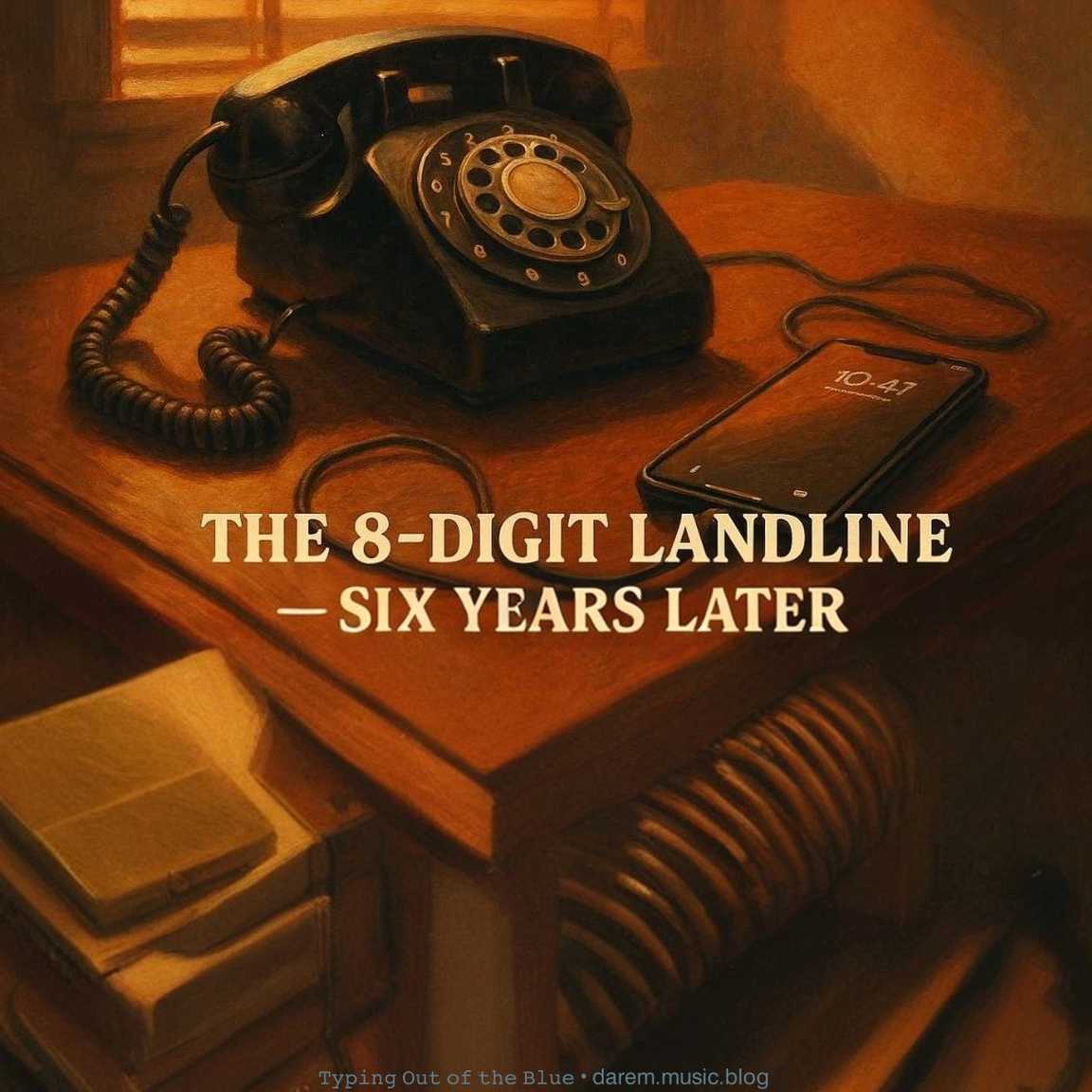
The 8-Digit Landline—Six Years Later

What was meant to expand our connection now feels like a relic—proof that even numbers can outgrow their purpose.

On October 6, 2019, the Philippines made all Metro Manila landline numbers 8 digits long. It felt huge at the time—one more digit to dial, one more thing to memorize. But the goal was clear: make room for the future.

The Pros Back Then

• More number capacity so telcos wouldn’t run out of lines.
• Clearer ID of which company a number belongs to.
• Future-proofing—extra space for fiber phones, business PBX, and new tech.

It was a logical move. The system was stretched wide and ready for growth.

The Cons That Stayed

Six years later, we ask: was it worth it?

• Landline use has faded, making the “expansion” feel empty.
• Harder to remember and dial when most people already live on mobile.
• Businesses spent money updating systems and printed materials.
• Some hotlines lost their simple, easy-to-recall charm.

The Hidden Cost

The shift wasn’t free. Telcos had to reprogram networks, upgrade exchanges, and update billing systems. Companies changed signs, cards, and call directories. No exact total was published, but millions were quietly spent—on something that slowly lost value.

The Confusion by Telco

Not everyone added the same digit.
PLDT used 8, Globe/Innove used 7, BayanTel used 3, Eastern Telecom used 5, and so on. So you couldn’t just “add 8” to every old number—you had to know which telco owned it. The rule made sense for network management, but it made remembering harder for everyone else.

The One-Sided Convenience

It made life easier for telcos and regulators, not for the people. They solved a supply problem—“We’re running out of numbers!”—but missed the bigger truth: demand was already falling. Landlines were slowly being replaced by mobile, chat, and fiber-based calls.

It’s like buying a ten-socket extension cord when almost everything’s already wireless. Technically smart, practically late.

The Modern Irony

Back then, prefixes mattered. The added digit told you which company owned a number. But today, because of mobile number porting, even that logic collapsed. A 0917 might be Smart, a 0920 might be DITO—nobody really knows.

The 8-digit landline tried to bring order.

Portability blurred it all again.

And maybe that’s where we are now, in a world where numbers no longer define where you belong, only who you connect with.

ᴛʸᵖⁱⁿᵍ ᴏᵘᵗ ᵒᶠ ᵗʰᵉ ʙˡᵘᵉ ᵈᵃʳᵉᵐ ᵐᵘˢⁱᶜ ᵇˡᵒᵍ

People… we forget how to communicate, but never stop trying.

Soon on Bandcamp