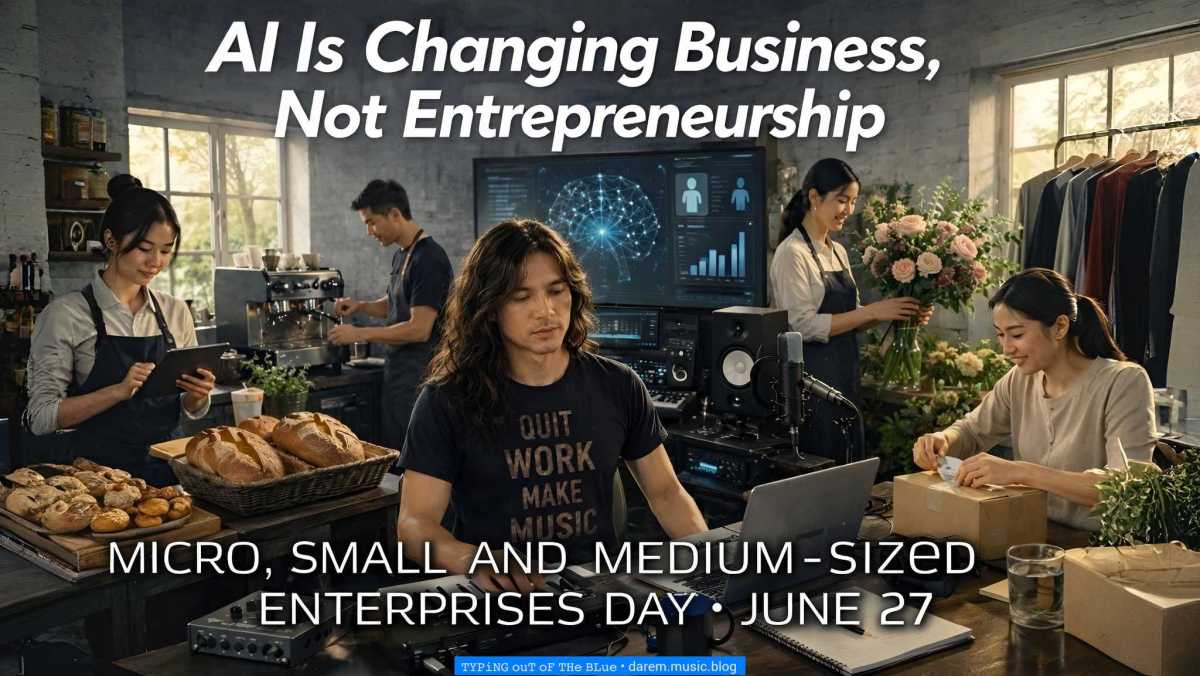
Artificial intelligence is changing the way businesses work. A neighborhood bakery can predict how much bread to bake each morning. A small coffee shop can automate online orders. A family-owned hardware store can track inventory in real time. An independent clothing brand can create product mockups in minutes. Musicians can use AI to organize recordings, assist with mixing, generate promotional materials, and reach listeners around the world more efficiently. Even a home-based seller can use AI to write product descriptions, translate messages, or answer common customer questions.
For micro, small, and medium-sized enterprises, these tools open doors that once belonged only to large corporations.
Yet the success of a business has never depended on technology alone.
People still choose the bakery because the bread tastes like home. They return to the coffee shop because the owner remembers their usual order. They trust the repair shop because it stands behind every service. They recommend the local florist because every arrangement is made with care. They follow a musician because behind every melody is a person who has loved, lost, hoped, wondered, and lived. Those experiences give music a meaning that technology can assist, but not originate on its own.
The most successful entrepreneurs will not compete against AI or ignore it. They will learn how to work alongside it. Let AI handle repetitive tasks, organize information, and speed up daily operations while people focus on what matters most: making good decisions, solving real problems, building trust, and creating experiences customers remember.
Whether it is a sari-sari store, a bicycle repair shop, a freelance graphic designer, an independent musician, a neighborhood restaurant, an online craft business, or a small software startup, every enterprise grows for the same reason. Behind every product sold and every service offered is a person with an idea, a purpose, and the determination to turn both into something that benefits others.
Technology may reshape how businesses operate, but it is people who give businesses their direction.
⌨ ᴛʸᵖⁱⁿᵍ ᴏᵘᵗ ᵒᶠ ᵗʰᵉ ʙˡᵘᵉ ᵈᵃʳᵉᵐ ᵐᵘˢⁱᶜ ᵇˡᵒᵍ