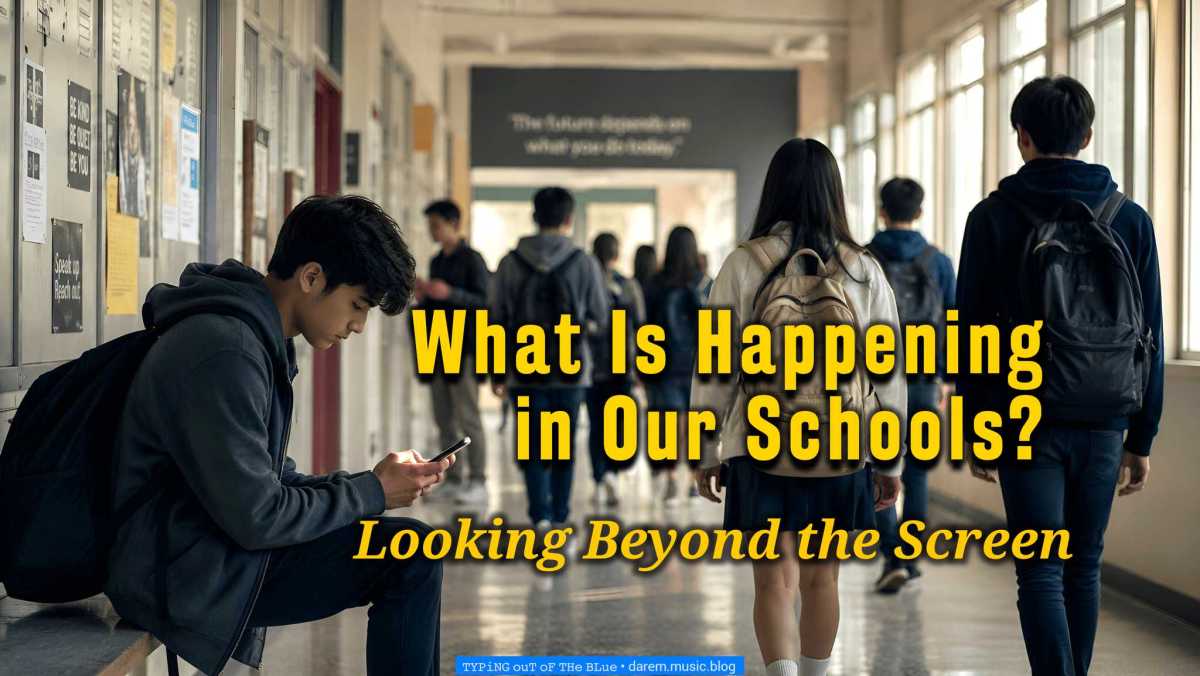
What Is Happening in Our Schools?

From social media to online games, technology is often blamed for school violence. But the roots of these incidents may run much deeper.

Whenever a violent incident happens in a school, the comment section quickly finds a suspect.

Sometimes it is Roblox. Sometimes it is TikTok. Sometimes it is social media, video games, smartphones, or the internet itself.

But is it really that simple?

School violence cannot be explained by a single app, game, or platform. If it were that easy, the solution would be easy too. Delete the app, and the problem disappears.

Real life is rarely that simple.

Millions of young people use social media, play online games, watch videos, and spend time online every day without becoming violent.

That does not mean technology is risk-free. It can expose young people to toxic behavior, harmful content, online pressure, scams, and unhealthy screen habits.

But sometimes it is easier to blame a screen than to look at the harder questions.

Stress. Loneliness. Family problems. Mental health struggles. Bullying. Pressure at school.

The quiet notes beneath the noise.

Things that do not show up on a screen.

An important question is what kids are using.

An even bigger question is what they are carrying when the screen goes dark.

⌨ ᴛʸᵖⁱⁿᵍ ᴏᵘᵗ ᵒᶠ ᵗʰᵉ ʙˡᵘᵉ ᵈᵃʳᵉᵐ ᵐᵘˢⁱᶜ ᵇˡᵒᵍ
Underplayground • Darem Placer • Full album. Press play.

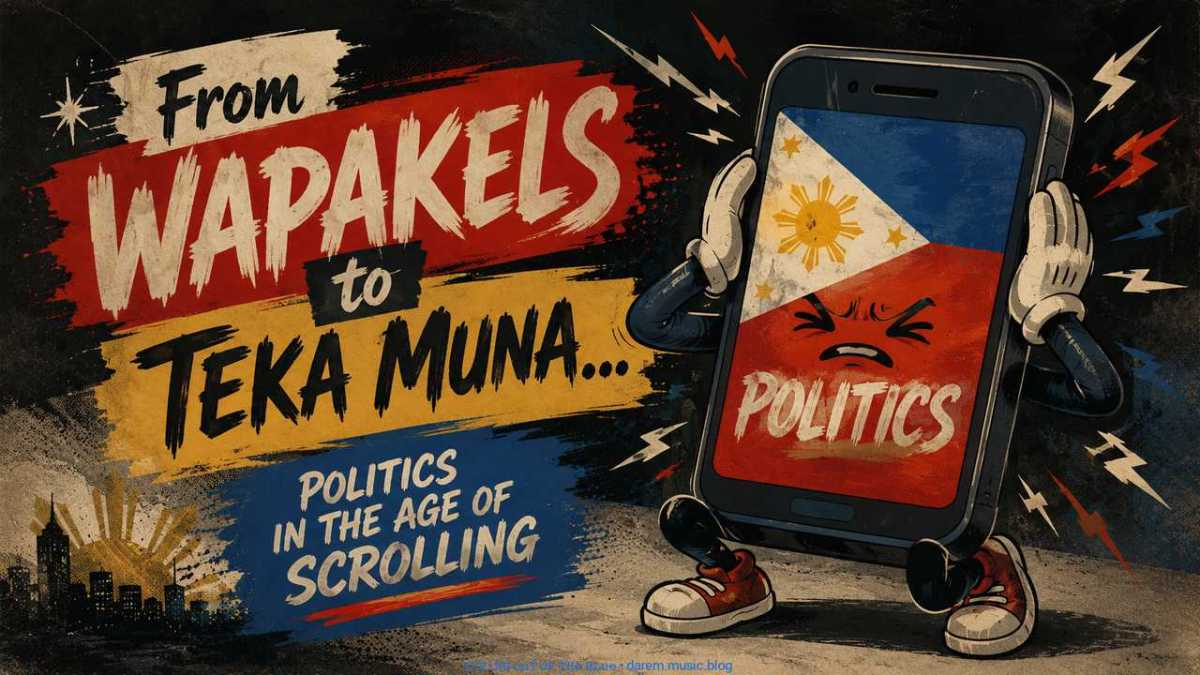
From Wapakels to “Teka Muna…”

Somewhere between memes, senate hearings, and endless scrolling, more people started saying, “Wait…”

Politics used to feel distant. Parang radyo sa kabilang room. You hear it, but you do not really pay attention to it. A lot of people used to stay wapakels about politics while life moved on with work, school, bills, music, heartbreaks, and everyday survival.

But now, iba na ang rhythm.

Because of social media, public issues suddenly became part of daily scrolling. One swipe shows a senate hearing. Next swipe, a meme. Then a budget issue. Then a dancing cat. 😁

Messy sometimes. But interesting too.

Even people who used to scroll past everything are now learning how to pause and say, “Teka muna…”

“What exactly does the Senate do?”
“Why are there hearings?”
“Where do taxes go?”
“Why does government have so many branches?”

And honestly, that is a healthy sign.

Nobody needs to become a political expert overnight. Hindi need maging walking encyclopedia ng constitution. But it matters when ordinary people slowly start understanding how the country moves, where public money goes, and why accountability exists in the first place.

Social media opened that door.

Yun nga lang, sabay ring pumasok ang ingay.

Fake quotes. Cropped videos. Old clips reposted like they happened yesterday. Rage bait designed to make people angry before they even verify anything. Sometimes the internet feels like every instrument is playing at full volume while nobody is sure which melody is real. 😅

That is why learning how to check sources matters now more than ever. Viral does not always mean true. Dramatic does not automatically mean accurate.

Still, something good is happening underneath all the chaos.

People are slowly becoming more aware of how the country works.

Not perfectly. Minsan magulo parang sabay-sabay tumutugtog ang iba’t ibang banda sa iisang kanto. But at least more people are awake now. More people are paying attention instead of ignoring everything completely.

And maybe that matters more than we realize.

Because a country slowly changes the moment ordinary people stop treating politics like background noise.

Full album. Press play.

⌨ ᴛʸᵖⁱⁿᵍ ᴏᵘᵗ ᵒᶠ ᵗʰᵉ ʙˡᵘᵉ ᵈᵃʳᵉᵐ ᵐᵘˢⁱᶜ ᵇˡᵒᵍ