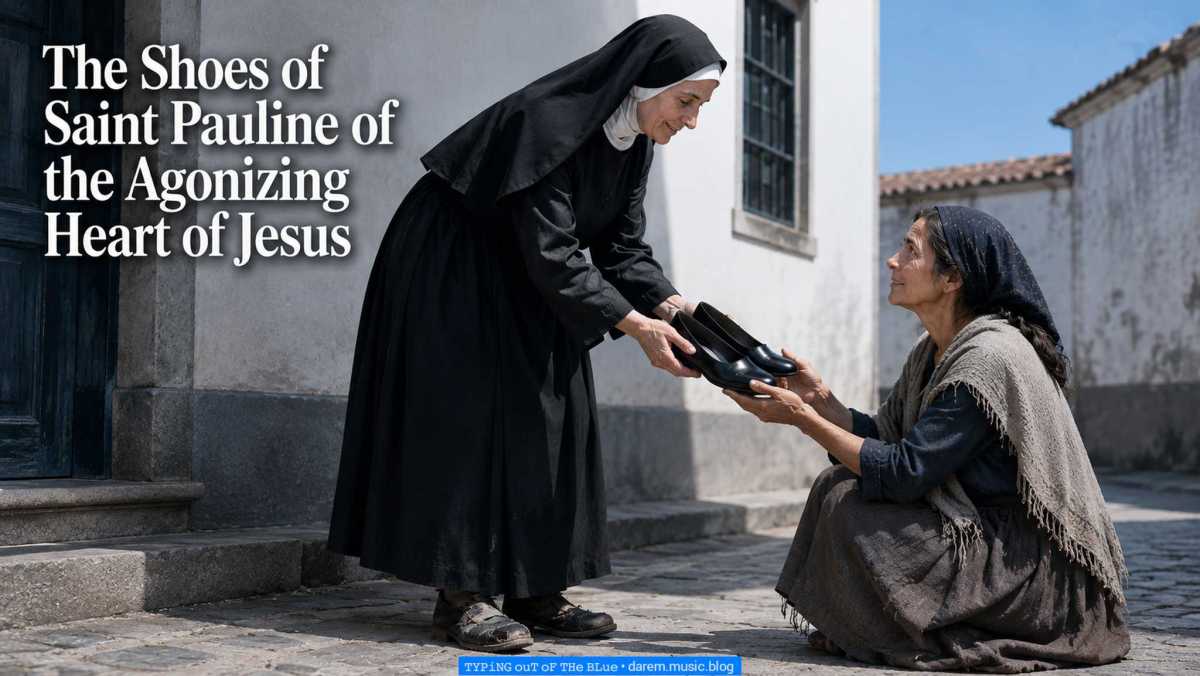
Born in Italy in 1865 and raised in Brazil, Sister Pauline spent her life caring for the poor, the sick, and those whom society had forgotten. She founded the Little Sisters of the Immaculate Conception, but one of her greatest lessons came through something as simple as a pair of shoes.
Stories about Sister Pauline tell of a simple habit. Whenever there were better shoes or clothing available, she would let someone else have them and continue wearing her own worn-out pair.
It was never about pretending to be poor or making a show of sacrifice. It was simply her way of putting others first.
Those old shoes reflected the kind of life she chose. Every scratch, every crease, and every thin sole spoke of countless ordinary decisions to serve instead of being served.
Nowadays, the race to upgrade, replace, and own more never seems to end. Sister Pauline’s old shoes reveal a different way to measure a life. A person’s worth is not measured by what they wear but by where their steps lead.
Most of us will never found a religious congregation. But every day gives us small chances to walk toward someone who needs encouragement, kindness, or a helping hand. Those steps may seem ordinary, yet they leave footprints that last longer than we imagine.
Like a gentle melody carried by old shoes on a familiar road, a generous life can travel farther than the loudest applause.
The most beautiful shoes are not always the newest pair in the closet. They are the ones worn thin by love.
Let’s keep learning the saints’ way—day by day.
⌨ ᴛʸᵖⁱⁿᵍ ᴏᵘᵗ ᵒᶠ ᵗʰᵉ ʙˡᵘᵉ ᵈᵃʳᵉᵐ ᵐᵘˢⁱᶜ ᵇˡᵒᵍ