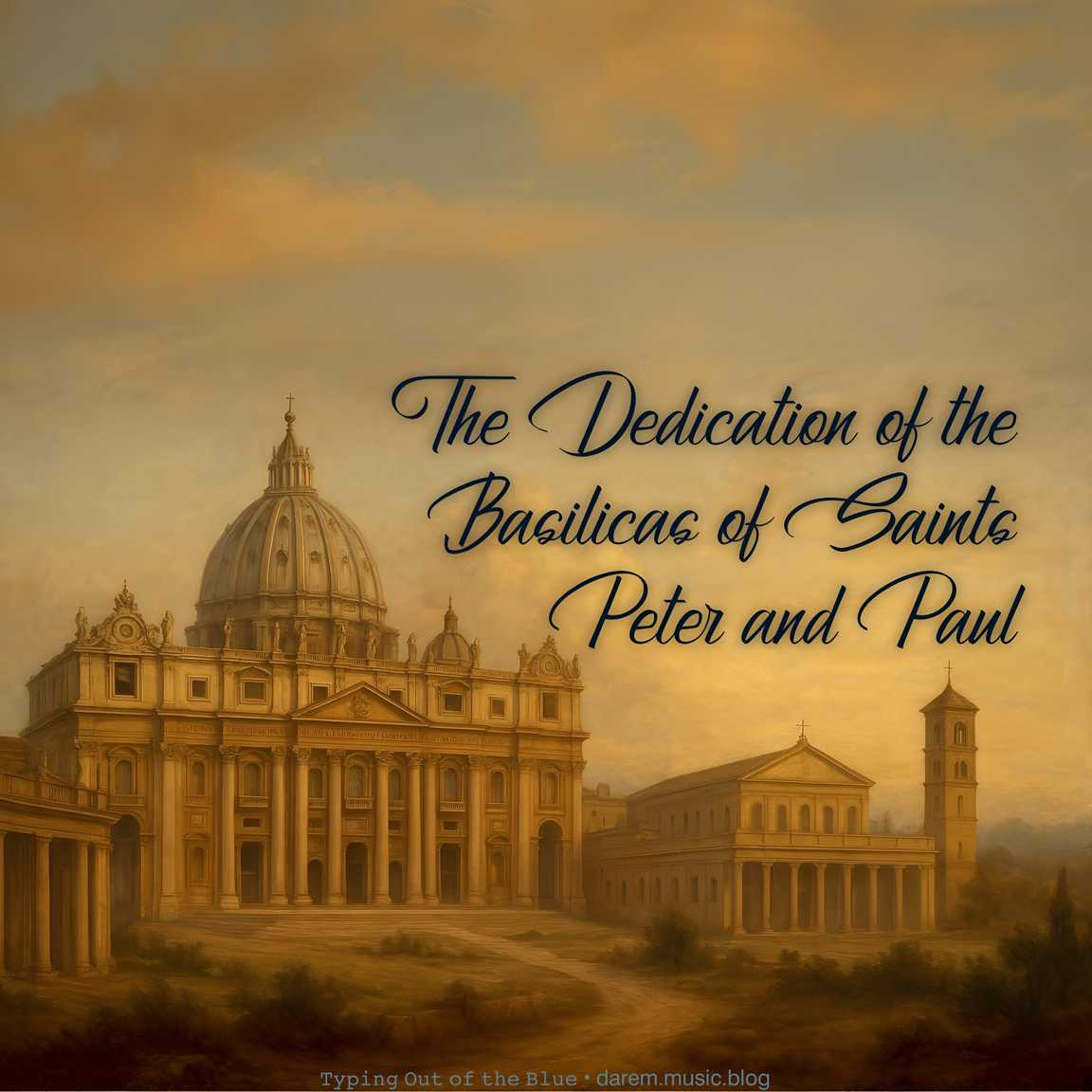
The Dedication of the Basilicas of Saints Peter and Paul

Two ancient basilicas in Rome stand over the tombs of Peter and Paul, showing how real faith stays alive across centuries here.

There are moments when the world feels too loud, too rushed, too focused on what’s new. But in Rome, there are two quiet giants that never chase trends.

Both go all the way back to the 4th century, standing on the spots where the Apostles were buried.

St. Peter’s Basilica.
St. Paul Outside the Walls.

Different styles. Different corners of the city. But the same heartbeat. Both were built over the burial places of Peter and Paul—two men who carried the early Church through danger, misunderstanding, travel, hunger, and hope.

This isn’t really about architecture. It’s about memory. It’s about the faith that survived because people kept walking into these spaces, century after century, looking for strength.

Peter was the fisherman who failed often but never gave up.

Paul was the brilliant traveler who once tried to destroy the Church but later spent his whole life building it.

Two very different stories, one direction.

The Church decided long ago: “We’ll build places here—spaces of remembrance, so no one forgets where we came from.”

It reminds us of something steady and real: faith doesn’t last because of perfect people or impressive buildings. It lasts because hearts stay open, and people keep choosing the path—even when it’s hard, even when the world feels heavy.

Old walls, yes. But still warm with the footsteps of everyone who came looking for a little courage.

⌨ ᴛʸᵖⁱⁿᵍ ᴏᵘᵗ ᵒᶠ ᵗʰᵉ ʙˡᵘᵉ ᵈᵃʳᵉᵐ ᵐᵘˢⁱᶜ ᵇˡᵒᵍ
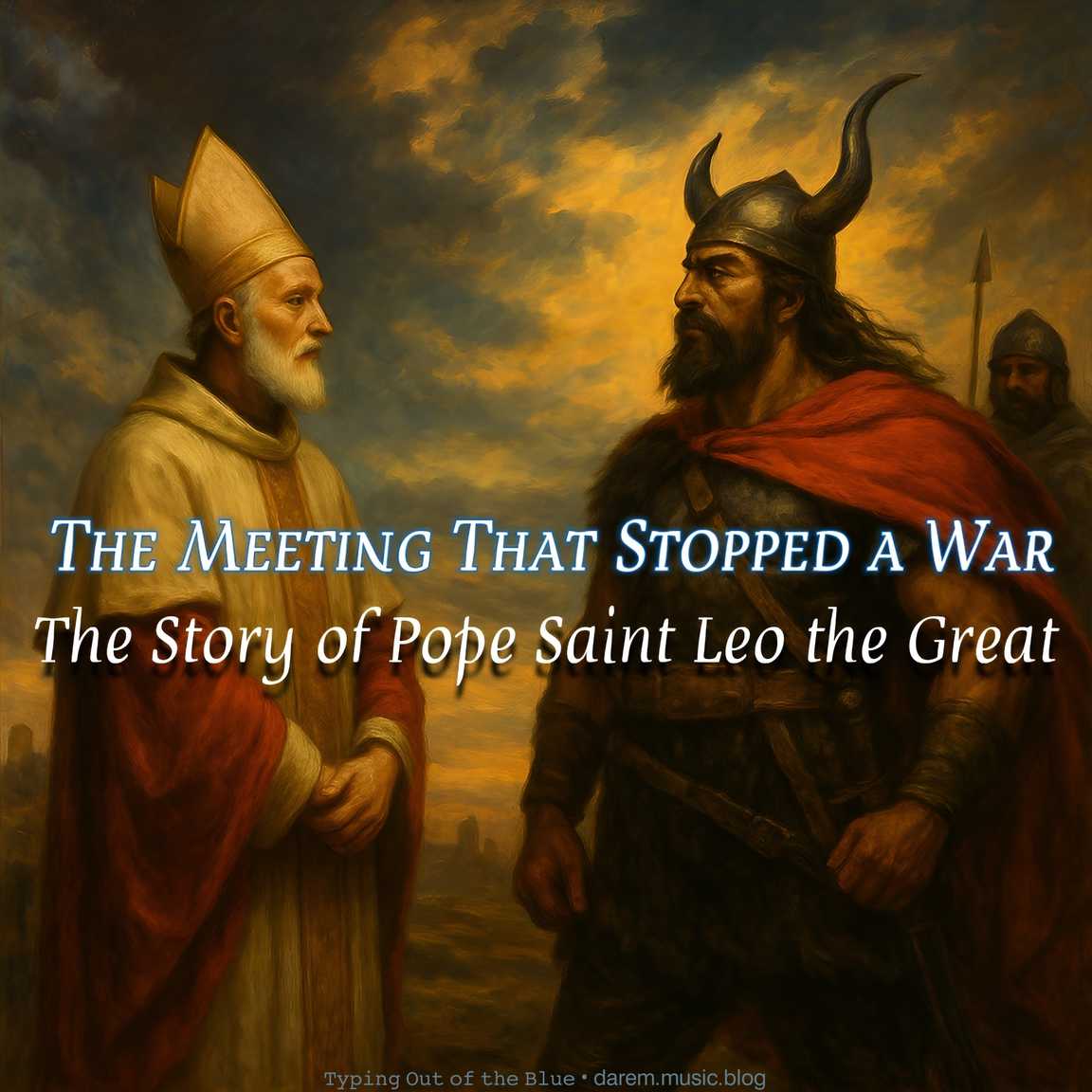
The Meeting That Stopped a War

He faced invaders with faith and led a broken world toward courage and truth.

The Story of Pope Saint Leo the Great

Back in the 5th century, when the Roman Empire was crumbling, a man named Leo stood tall—not with armies or wealth, but with faith and courage. He later became Pope Leo the Great, one of the most remarkable leaders of the early Church.

As pope, Leo faced both chaos and fear. Barbarian invasions were spreading, and confusion in faith was growing. Yet he stayed firm. When Attila the Hun, the feared leader of a nomadic empire that had conquered much of Europe, marched toward Rome, Pope Leo personally met him and convinced him to turn back—without a single battle fought. That moment alone made history, but his real greatness ran deeper.

Pope Leo’s words shaped Christian belief for centuries. Through his writings and sermons, he explained how Jesus is both truly God and truly man—a truth the Church still stands on today. He believed that real strength comes from humility, and that leadership means serving others, not ruling over them.

Pope Leo the Great died in 461, leaving behind a world still in ruins, but a faith stronger than ever. His title “the Great” wasn’t given for power—but for the peace, clarity, and courage he brought when everything else was falling apart.

⌨ ᴛʸᵖⁱⁿᵍ ᴏᵘᵗ ᵒᶠ ᵗʰᵉ ʙˡᵘᵉ ᵈᵃʳᵉᵐ ᵐᵘˢⁱᶜ ᵇˡᵒᵍ
Traces of courage, silence, and sacrifice—this is Saints.

Listen on Apple Music, Apple Music Classical, and YouTube Music