Politics and Religion: Should They Mix?

In Chrysostom’s time, faith clashed with power. Remembering him today, we still ask: should politics and religion mix?
The Time of Saint John Chrysostom

John Chrysostom lived in the late 4th century, when the Roman Empire had already accepted Christianity. By then, religion and politics weren’t just neighbors—they were housemates. The Church was closely tied to the State, and bishops often found themselves dealing with emperors, empresses, and royal advisers.

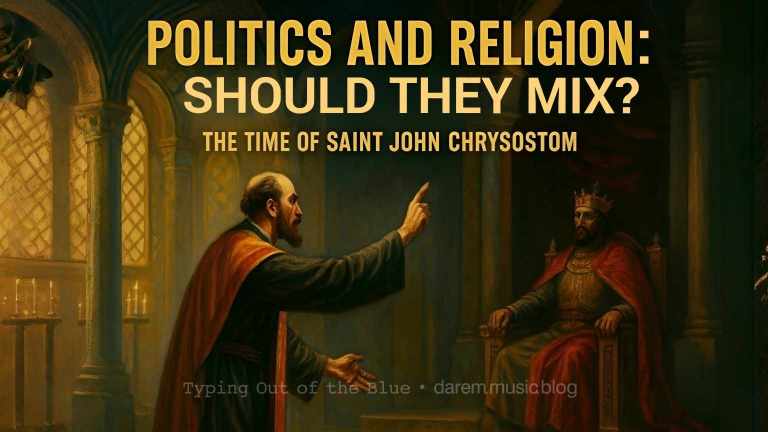
Chrysostom—“Golden-Mouthed” in Greek, not John’s last name but a title given for his strong speaking— became Archbishop of Constantinople (the empire’s capital city). His sermons weren’t just about the afterlife; they cut into the sins of the present—greed, pride, and corruption in high places. He spoke against wealth in the court while the poor suffered outside its gates. He called out bad behavior, even when it meant offending powerful people like Empress Eudoxia (wife of Emperor Arcadius, ruler of the Eastern Roman Empire).

And here’s the point: corruption existed then just as it does now. Riches, power, and comfort tempted leaders to forget fairness. Archbishop Chrysostom couldn’t keep faith away from public life, because silence in the face of wrong would have been a betrayal of the Gospel. His role as shepherd of souls pushed him into the public spotlight, whether he wanted it or not.

In the end, he paid the price—sent away, mistreated, and left alone. But his courage left a legacy: a reminder that faith has a voice in society, not for power’s sake, but for truth.

As we remember Saint John Chrysostom on his memorial day, September 13, we see that the fight remains the same. The world is still marked by corruption. And maybe this is the answer: when religion is used for control, it should never mix with politics. But when it speaks against injustice and defends the poor, it cannot stay out. The question he faced is the same we ask today: should politics and religion mix?

𝚃𝚢𝚙𝚒𝚗𝚐 𝙾𝚞𝚝 𝚘𝚏 𝚝𝚑𝚎 𝙱𝚕𝚞𝚎 • 𝖽𝖺𝗋𝖾𝗆.𝗆𝗎𝗌𝗂𝖼.𝖻𝗅𝗈𝗀

Jesus and Religion

In a world of clashing religions and arguments, Jesus didn’t play the same game—He offered a mirror and asked: is your faith real?

More Than Just Labels

When people talk about religion, debates often spark. “Who’s right? Who’s wrong?” And sadly, it hurts more than it heals. But if we go back to the time of Jesus, the story feels different.

The Religious World Back Then

During Jesus’ time, religion wasn’t just one monolithic block. The Jewish people had their own sects: Pharisees, Sadducees, Essenes, and Zealots—all claiming their way was the way. Around them, the Roman Empire carried its gods, temples, and even Caesar-worship. Add the Samaritans and Greek philosophies, and you get a world with layers of belief.

Yet, Jesus never stepped forward to declare: “Judaism is the only true religion.” He lived as a Jew, yes—but His mission wasn’t to promote one label over another. It was to point to the Father, to reveal Himself as the fulfillment of the Law, the Prophets, and ultimately, the Way, the Truth, and the Life.

What He Confronted

Notice this: Jesus didn’t march into pagan temples shouting, “You’re wrong!” His sharpest words weren’t for outsiders, but for insiders—especially the Pharisees and Sadducees who honored God with their lips while their hearts stayed far away.

Hypocrisy was His target. Pretending to be holy while living double lives—that was the real problem.

What He Offered

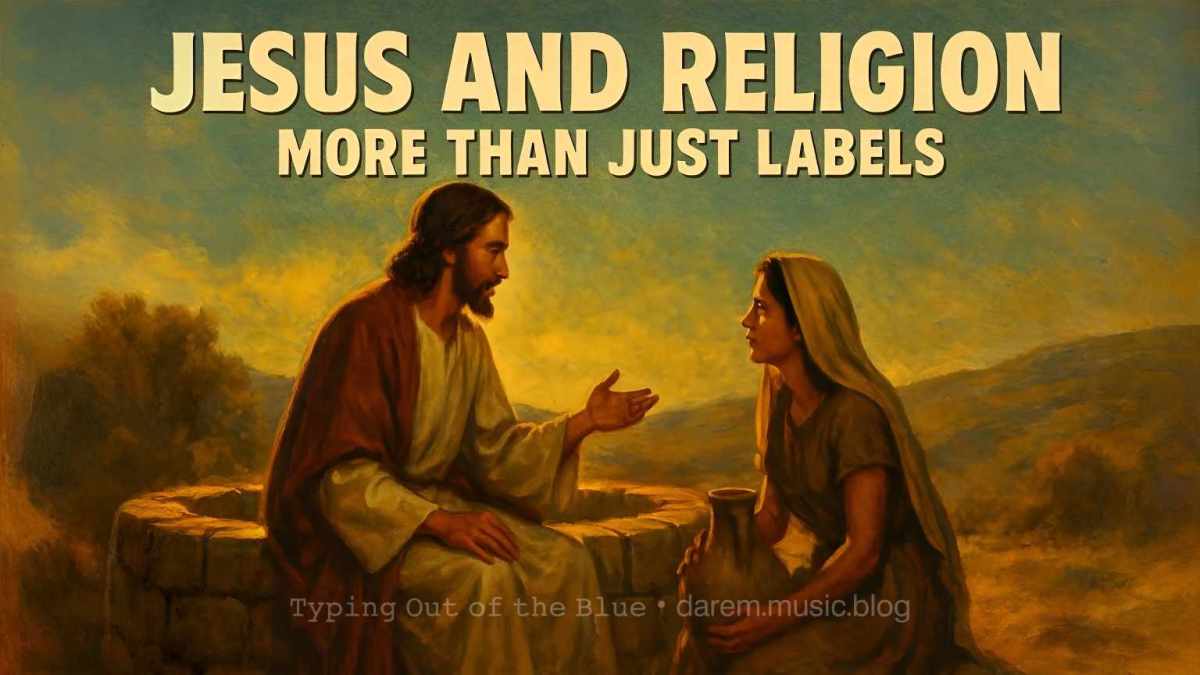
Instead of pushing conversion, Jesus invited transformation. He spoke with a Samaritan woman, not to tear down her religion, but to reveal a deeper truth: “The time is coming when true worshipers will worship the Father in Spirit and in truth.” He praised a Roman centurion’s faith without asking him to abandon his identity.

The Kingdom He proclaimed wasn’t about headcounts or religious scoreboards. It was about authentic love, lived out.

A Mirror, Not a Fight

That’s why forcing religion on others feels so unlike Jesus. He didn’t say, “Join our group or else.” What He did was hold up a mirror: “Check your heart. Is it real, or is it plastic?”

And maybe that’s the point. Religion, when reduced to labels, becomes a battlefield. But faith, when lived as Jesus lived it, becomes an invitation—not to argue, but to love, to heal, to walk in truth.

So instead of asking, “Which religion wins?” the deeper question is: “Is my faith authentic?” Because Jesus never built walls of rivalry. He built bridges of love.

Faith isn’t about proving who’s right, but about living what’s real—because religion argues, but faith lives. And the real test is love. Be real—that’s where God meets us.

𝚃𝚢𝚙𝚒𝚗𝚐 𝙾𝚞𝚝 𝚘𝚏 𝚝𝚑𝚎 𝙱𝚕𝚞𝚎 • 𝖽𝖺𝗋𝖾𝗆.𝗆𝗎𝗌𝗂𝖼.𝖻𝗅𝗈𝗀