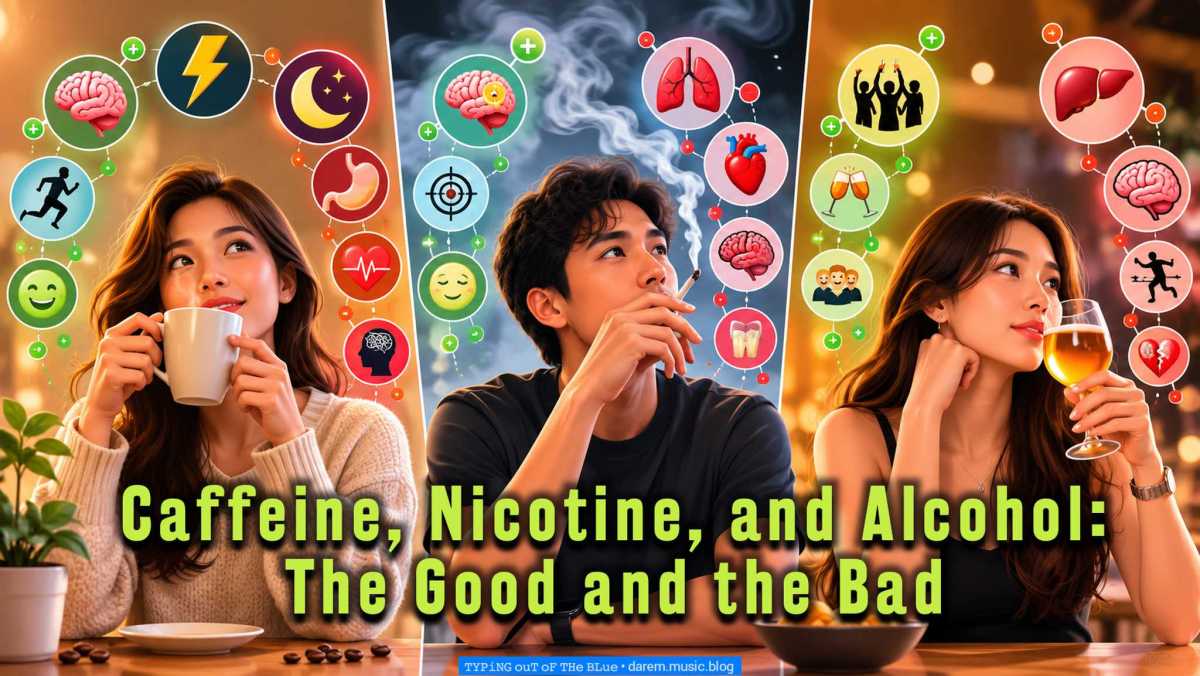
Caffeine, nicotine, and alcohol are used by millions of people every day. Each has its own benefits and risks. Knowing both sides can help us make healthier choices.
Caffeine
Caffeine is a natural stimulant found in coffee, tea, chocolate, and many energy drinks.
Pros
- Increases alertness: Helps you feel more awake and focused by reducing fatigue.
- May boost metabolism: Can slightly increase calorie and fat burning, although the effect may become smaller with regular use.
- Improves physical performance: Can help increase endurance during exercise.
- May support brain health: Studies have linked regular caffeine intake to a lower risk of developing Alzheimer’s and Parkinson’s diseases.
Cons
- Can affect sleep: May make it harder to fall asleep or sleep well, especially if consumed later in the day. However, some people can still sleep well after drinking coffee because factors such as timing, caffeine tolerance, and individual differences also play a role. Learn more: Can Coffee Help You Sleep?
- May cause anxiety: Too much caffeine can lead to jitters, nervousness, and a fast heartbeat.
- May upset the stomach: Can increase stomach acid and cause heartburn or stomach discomfort.
- Can lead to dependence: Stopping suddenly may cause headaches, tiredness, and irritability.
Nicotine
Nicotine is a highly addictive stimulant found in tobacco and most vaping products.
Pros
- Improves focus for a short time: Can briefly increase attention and alertness.
- Gives a temporary mood boost: Can create a short-lived feeling of pleasure or relief.
- May reduce appetite: Can make you feel less hungry for a while.
Cons
- Highly addictive: It can be very difficult to quit once you’re hooked.
- Puts extra strain on the heart: Raises blood pressure and makes the heart work harder.
- Smoking and vaping can harm the lungs: They expose the body to harmful chemicals that can lead to lung disease, cancer, and other health problems.
- Can affect brain development: It may interfere with normal brain development in children and teenagers.
Want to reduce the harm? Read The Truth About Quitting: When Smokers Can’t Just “Stop” for simple ways to care for your body, even if you’re not ready to quit yet.
Alcohol
Alcohol is a depressant found in drinks such as beer, wine, and spirits.
Pros
- Can help people feel more relaxed: It may temporarily reduce tension or social anxiety.
- Lowers inhibitions: Some people may find it easier to socialize after drinking.
- May increase appetite: Can make some people feel hungrier.
Cons
- Can damage the liver: Heavy drinking over time can lead to fatty liver disease, hepatitis, and cirrhosis.
- Affects judgment: Slows reaction time, reduces coordination, and increases risky behavior.
- Can affect mental health: Long-term drinking may worsen anxiety and depression and can lead to alcohol dependence.
- Increases cancer risk: Raises the risk of several types of cancer, including cancers of the mouth, throat, esophagus, liver, breast, and colon.
⌨ ᴛʸᵖⁱⁿᵍ ᴏᵘᵗ ᵒᶠ ᵗʰᵉ ʙˡᵘᵉ ᵈᵃʳᵉᵐ ᵐᵘˢⁱᶜ ᵇˡᵒᵍ