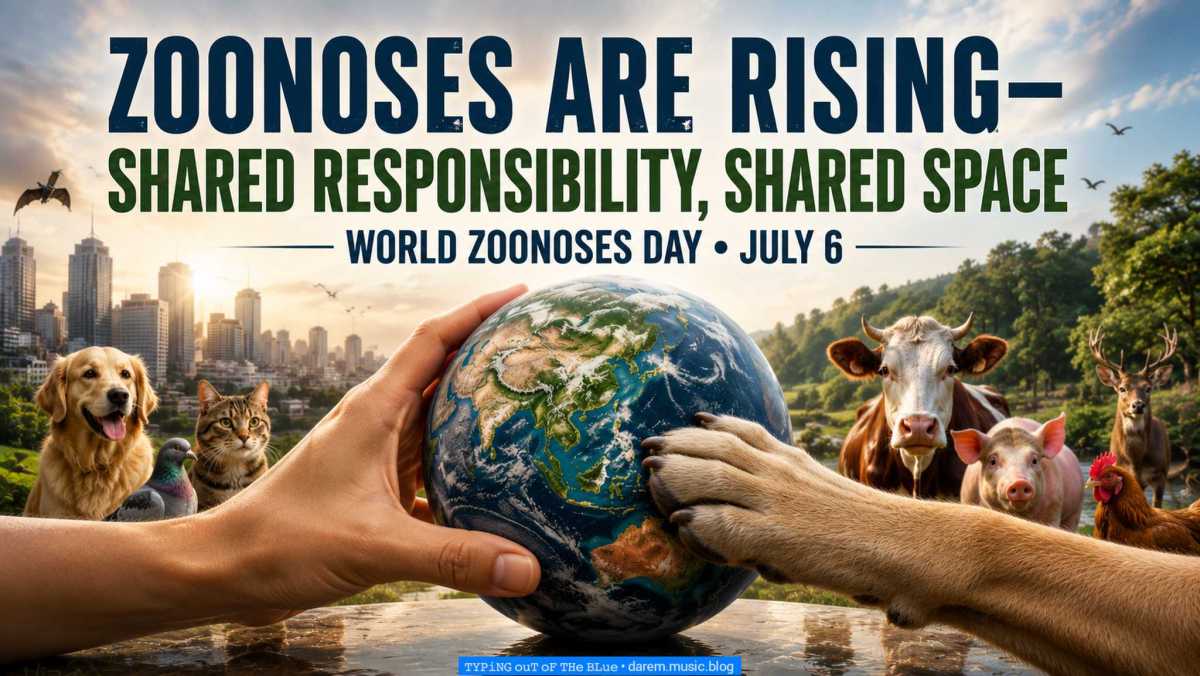
People and animals have always shared the same spaces. We live in the same communities, depend on the same environment, and often cross paths in ways we hardly notice. Because of this connection, some diseases can spread between animals and humans. These are called zoonotic diseases, or zoonoses.
These diseases are caused by viruses, bacteria, parasites, or fungi that can live in both animals and people. Some come from wildlife, while others may involve farm animals or even pets. As cities grow and human activities reach deeper into natural habitats, the chances for these diseases to spread can also grow.
Zoonotic diseases can spread through:
• Animal bites or scratches
• Contact with saliva, blood, urine, or feces from infected animals
• Contaminated food or water
• Insect bites from mosquitoes, ticks, and similar carriers
• Close contact with infected animals
Some examples include:
• Rabies
• Leptospirosis
• Avian influenza
• Brucellosis
• COVID-19
The good news is that many zoonotic diseases can be prevented through simple habits and responsible choices:
• Keep pets vaccinated and healthy.
• Wash hands after handling animals.
• Cook food properly and use clean water.
• Avoid contact with sick or wild animals.
• Keep homes and communities clean to discourage pests and rodents.
• Seek medical care after animal bites or scratches.
The world is a shared space. The health of people, animals, and the environment is more connected than it may seem. Looking after one helps protect the others too.
⌨ ᴛʸᵖⁱⁿᵍ ᴏᵘᵗ ᵒᶠ ᵗʰᵉ ʙˡᵘᵉ ᵈᵃʳᵉᵐ ᵐᵘˢⁱᶜ ᵇˡᵒᵍ