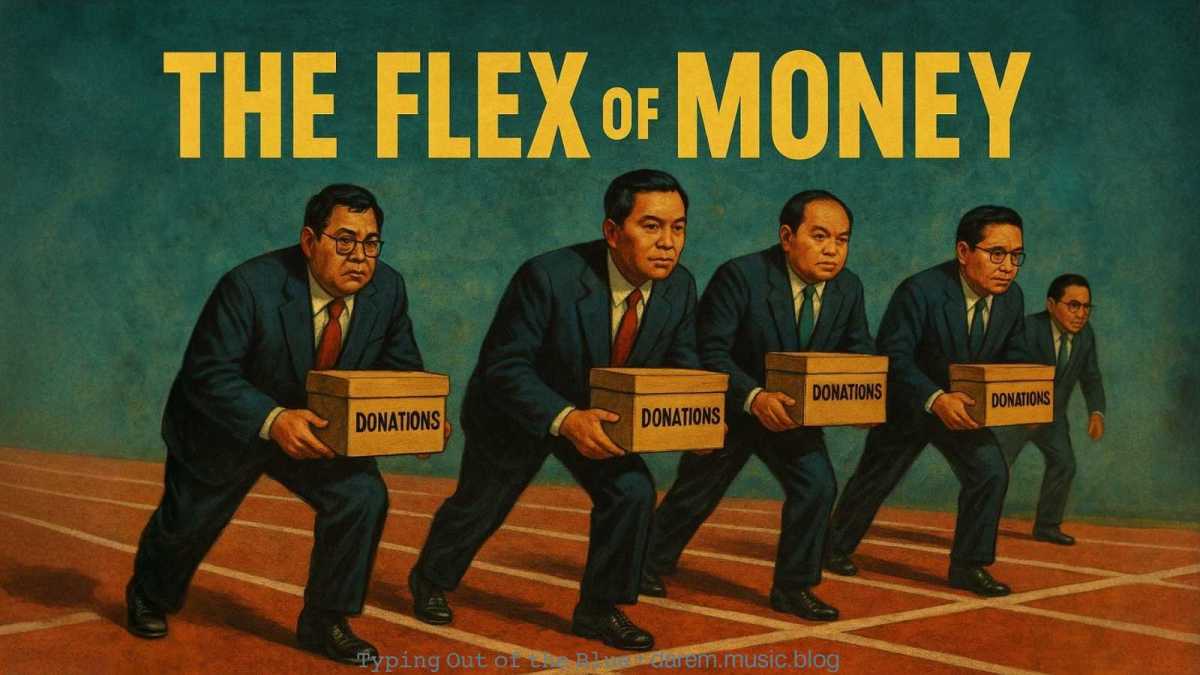
The Flex of Money

Different worlds play different games, but money is always the prize. What happens when the rules are flipped?

The rich play their game—show the newest car, the biggest house, the shiny watch. They act like it’s not a contest, but it always is.

The poor have their version too. One Christmas I heard beggar kids outside a 7-Eleven, laughing as they compared who got the biggest alms in a short time. I was shocked—their take easily outdid what many workers earn in a day.

And the scavengers? Their game is the trash. Who can find the most valuable thing, who can claim the best prize from what others throw away.

Different worlds, same story. Money as medal, money as crown. Rich or poor, everyone shows off—only the props change.

But here’s a better challenge: what if the rich changed their game? Not who owns the flashiest toy, but who gives the most to a cause that helps people—feeding the hungry, teaching the poor, healing the sick, saving lives. A monthly charity challenge, where the score is measured by help, not by wealth.

And about those rich posts on social media—yes, people say it’s wrong to give with a camera on, then post it for the world to see. But I say fine, go ahead. If that’s what it takes to challenge the next rich guy to give, then keep the cameras rolling. Call it “keeping up with the… Jonas Brothers? I mean, Joneses. 😁” Not perfect, but better than keeping up with the ugly comments on social media. 😁

Because if money stays at the center, life becomes poorer. But if giving takes the center, both rich and poor can finally be rich in what truly lasts.

ᴛʸᵖⁱⁿᵍ ᴏᵘᵗ ᵒᶠ ᵗʰᵉ ʙˡᵘᵉ ᵈᵃʳᵉᵐ ᵐᵘˢⁱᶜ ᵇˡᵒᵍ
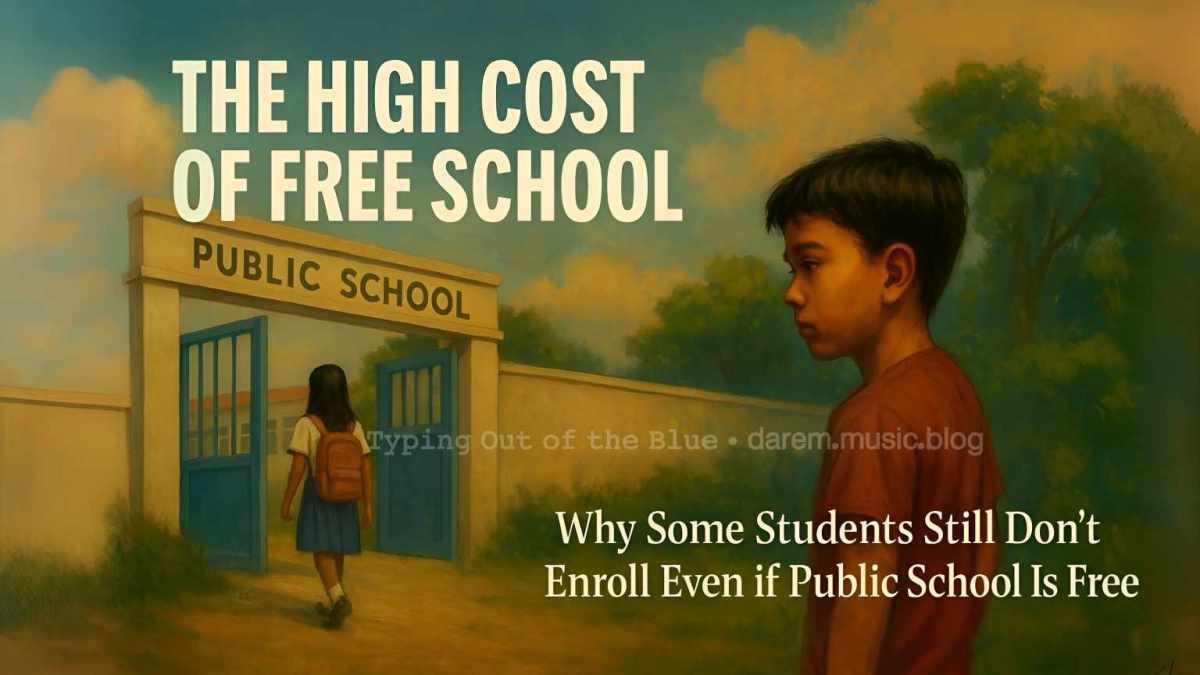
The High Cost of Free School

Free tuition sounds like victory. But for many students, hidden costs and harsh realities still keep them out of school.

Why Some Students Don’t Enroll Even When Public School Is Free

“Free already, yet they still refuse.”

That’s what teachers, principals, and even parents often say. In public schools, tuition is free from Kindergarten to Grade 12. Sounds like a win, right? But still, millions are not enrolling.

Here’s why—it’s not as simple as refusing.

It’s Free… But Not Really

Tuition is free, yes. But students still need to cover transport fare, lunch, school supplies, uniforms, projects, and printouts. For low-income families, that cost is already overwhelming.

They Have to Work

Many high school students choose work over class—farming, construction, stores, or anything that brings immediate cash. Survival comes first. Education can wait, or sometimes… never happen.

They Feel Left Behind

The pandemic disrupted everything. Without gadgets, internet, or help with modules, many fell behind. Now they think, “Should I return? What if I am the weakest one there?” That fear alone keeps them away.

School Is Too Far

Some students live hours away on foot, with no jeepney, no bike, no ride. If it rains or the heat becomes unbearable, they skip school. Eventually, they drop out completely.

They’re Not Learning Anyway

Some schools lack resources—no books, no laboratories, no real support. Teachers give their best, but it is still not enough. Students then ask, “Why attend if I’m not truly learning?”

It’s Too Hot

Classrooms often reach 40°C. No fans, no proper ventilation. Just sweat and stress. Some faint, others stop going altogether. This isn’t laziness—it’s exhaustion from extreme heat.

They Gave Up During the Pandemic

Many became disconnected and never returned. For them, school now feels optional. Worse, they believe it is already too late to go back.

So… What Now?

If we want students to return, free tuition alone is not enough.

We need:
• Free transport, food, and school supplies
• Catch-up classes for those who fell behind
• Climate-ready classrooms with proper ventilation and design
• More guidance counselors and student support teams
• Real opportunities for learners who must also work

At the heart of it:
Make school free, yes. But also—make school possible, livable, and truly for everyone.

And for those who can go to school: be grateful. Millions long to study but never get the chance. If you have a seat, even just enough for fare and snacks—don’t waste it.

Use what you have. Make it count. That is enough.

ᴛʸᵖⁱⁿᵍ ᴏᵘᵗ ᵒᶠ ᵗʰᵉ ʙˡᵘᵉ ᵈᵃʳᵉᵐ ᵐᵘˢⁱᶜ ᵇˡᵒᵍ