
International Day of Parliamentarism: Why Should We Care?

The observance may sound distant from the Philippines, yet its message lands closer than many of us think.

Every June 30, the world observes the International Day of Parliamentarism.

At first, it may sound like something meant only for countries with parliaments such as the United Kingdom or Japan. After all, the Philippines does not have a parliament. We have a President, a Senate, and a Congress.

So why should we care?

Because the idea behind the observance goes beyond parliaments. It is about the people and institutions responsible for creating the laws that shape our daily lives.

The prices we pay, the taxes we contribute, the schools we attend, the roads we use, and the public services we receive are all affected by decisions made by our elected representatives.

Many of us pay close attention during elections. But after the campaign posters disappear and the ballots are counted, the work of governing continues.

Bills are proposed. Laws are reviewed. National budgets are debated. Decisions are made that can affect our lives for years.

The International Day of Parliamentarism reminds us that democracy is not only about choosing leaders. It is also about understanding how our laws are made and who makes them.

The Philippines may not have a parliament, but the message of the day still applies to us. A healthy democracy depends not only on elected officials, but also on citizens who stay informed and involved.

⌨ ᴛʸᵖⁱⁿᵍ ᴏᵘᵗ ᵒᶠ ᵗʰᵉ ʙˡᵘᵉ ᵈᵃʳᵉᵐ ᵐᵘˢⁱᶜ ᵇˡᵒᵍ
Classical Haze • Darem Placer • Full album. Press play.

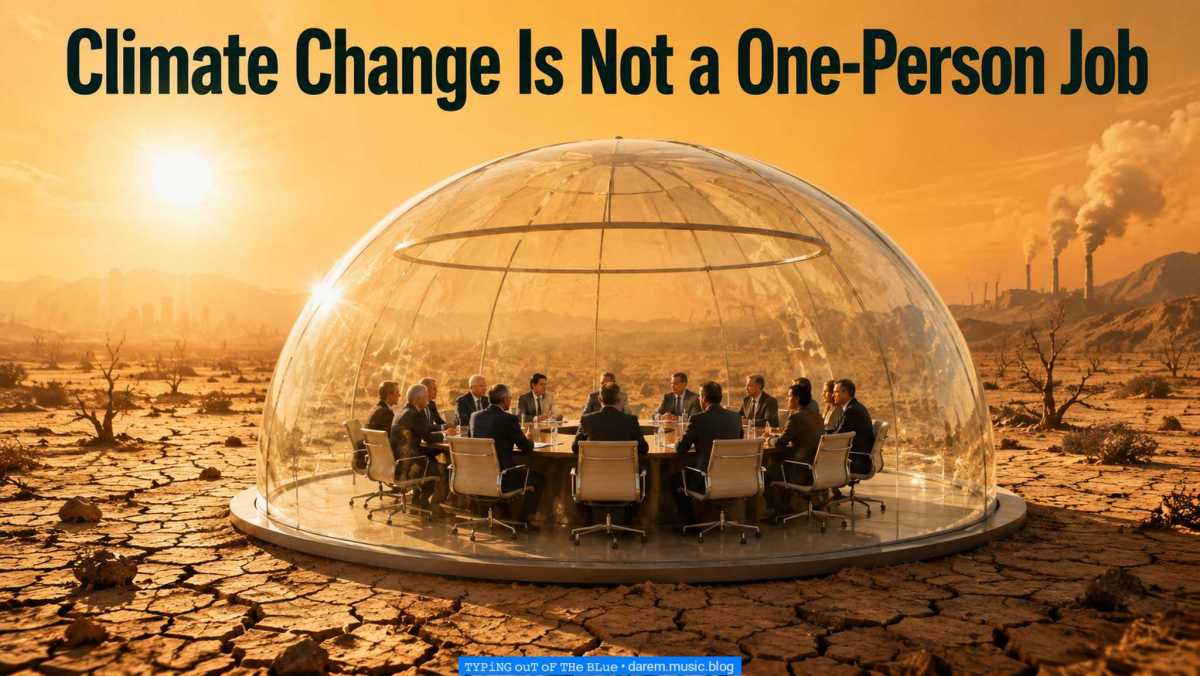
Climate Change Is Not a One-Person Job

The climate debate often focuses on ordinary people, but many of the biggest decisions happen elsewhere.

Many people hear about climate change and immediately feel a heavy weight on their shoulders.

Use less plastic. Drive less. Buy this. Avoid that.

Those things can help. Small actions still matter.

But climate change is not a one-person job.

The biggest decisions are often made far above our daily routines. Governments decide energy policies. Companies decide how products are made. Industries decide how resources are used. Large investments can change the direction of entire countries.

That is why climate discussions often focus on leaders, policymakers, and major institutions. They control many of the largest levers.

Still, this does not mean ordinary people have no role.

Stay informed. Support good policies. Vote when given the opportunity. Speak up when important issues affect the community. Encourage practical solutions instead of endless arguments.

Small actions can influence families, friends, workplaces, and communities. One person may not change the world alone, but millions of people moving in the same direction can shape what leaders and institutions choose to do.

Climate change is a shared challenge.

Governments, businesses, communities, and citizens all influence what happens next.

An orchestra does not become music because of one instrument.

The loudest instruments may carry the melody, but the whole orchestra shapes the song.

⌨ ᴛʸᵖⁱⁿᵍ ᴏᵘᵗ ᵒᶠ ᵗʰᵉ ʙˡᵘᵉ ᵈᵃʳᵉᵐ ᵐᵘˢⁱᶜ ᵇˡᵒᵍ

Sky-Low • Darem Placer