When trust in the system fades, even the most basic duty starts to feel like a burden.
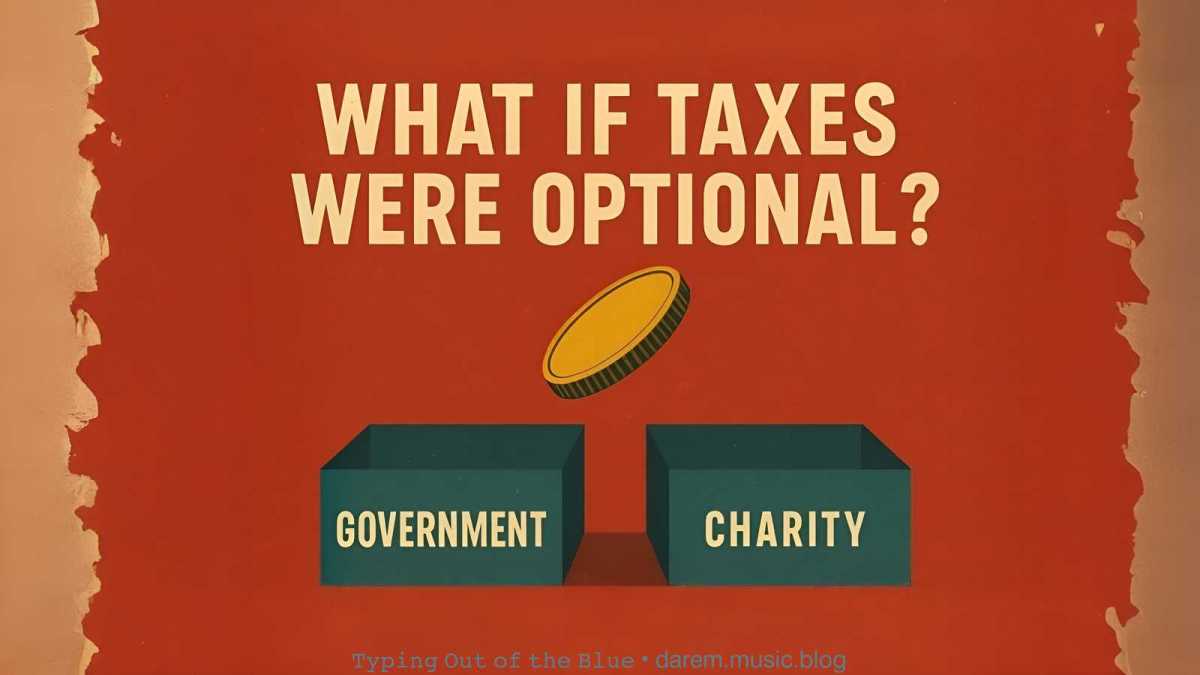
Sometimes I wonder—what if taxes came with an option? Either pay the government or donate the same amount to charity.
Of course, I know why taxes exist. That’s how a country runs: roads, hospitals, schools, the entire framework of daily life. But here in the Philippines, it often isn’t visible. What you see instead are broken streets, underfunded hospitals, and overcrowded classrooms—while scandals keep surfacing.
So people end up asking: Where did my tax go? That’s when the thought feels tempting: maybe it would make more sense to just give it directly to a cause, where the impact is clear and real.
Another thought: what if people could actually choose where their tax goes? If your community drainage needs fixing, you direct it to public works. If schools need support, you channel it there. But in the present situation, it feels more realistic to just save the money and build your own drainage system at home.
That’s why people become more self-reliant—because their taxes don’t seem to have any real effect on the order of life around them.
It’s not charity that competes with taxes—it’s trust.
Yesterday we could predict the sky. Today, the sky refuses to be predicted. That should scare us all.
Why do class suspensions so often feel wrong? One day, schools close under the hot sun. The next, heavy rain pours when classes push through. And this happens even with upgraded weather tools—satellites, Doppler radars, rain gauges, computers.
This is not just in the Philippines. Around the world, the same thing happens. In the United States, snow days are declared early, sometimes without a single flake falling—other times students walk home in blizzards when schools stay open. In Europe, sudden heat waves close schools in France and Spain, only for cooler weather to return the next day. South Asia’s monsoon rains now come in wild bursts—flooding one area while another stays strangely dry. In Australia, smoke from bushfires is hard to predict, with schools caught in the middle.
Years ago, weather forecasting was almost exact. In the 1960s, satellites like TIROS-1 gave people their first real view of storms from space. By the 1980s and 1990s, Doppler radars and computers made storm tracking sharper. In the 2000s, forecast apps gave hourly updates, and for a while, a three-day forecast felt almost certain.
But climate change broke the rhythm. Seasons blurred. Rains turned into flash floods instead of steady showers. Sunshine in the morning can vanish under strong storms by afternoon. Forecasting became harder not because scientists got worse, but because the air itself grew unstable, messy, unpredictable.
That is why suspensions, cancellations, and warnings often feel off. Leaders must decide hours before, using data that can change within minutes. Better to look overcautious than risk lives. The problem is not poor leadership—it is a world that no longer behaves the way it used to.
Climate change is no longer a faraway issue; it is here. It floods our streets, stops our schools, burns our summers, and shakes our daily lives. If the weather can no longer keep its word, maybe it is time we keep ours—to waste less, to care more, to take steps, even small ones, that add up.
Because if we ignore the signs, tomorrow’s “sunny suspension” may not just be a hassle—it may be a warning humanity cannot afford to miss.