The Invisible Side of Schools

Parents usually look at tuition, facilities, and rankings first. But the deeper impact of a school is often harder to see.

Some of the most important things about a school cannot be seen in brochures, rankings, or beautiful buildings.

Many parents ask:

• “How much is the tuition?” 
• “Are the classrooms air-conditioned?” 
• “Is it a top-performing school?” 
• “Do they use tablets?” 
• “Do the students speak English?” 
• “Is the campus nice?”

All of those are important.

But sometimes, one important question gets forgotten:

“What kind of people does this school slowly shape?”

Because school culture quietly affects confidence, kindness, honesty, behavior, discipline, how students handle stress, and even how they treat other people.

A school is like a second home. Sometimes students spend more time there than at home.

And strangely, some schools produce:

• students with high grades but empty hearts 
• students who are afraid to make mistakes 
• students who look polished but treat others badly 
• students who burn out too early in life

Meanwhile, some simple schools produce:

• grounded people 
• respectful leaders 
• emotionally healthy students 
• team players 
• people with quiet integrity

Those things do not appear on report cards. Most of the time, people only notice them years later.

So what is the “best” kind of school?

Probably the schools that balance:

• strong academics 
• clear discipline 
• emotional growth 
• good values 
• teachers who practice what they teach

Because some schools are very kind but weak in academics. Some are excellent in academics but emotionally draining. Some use too much fear. Others depend too much on rewards and praise.

A really healthy school usually feels calm, disciplined, respectful, warm, organized, and still human.

And honestly, the adults matter more than the program itself. A simple system with sincere teachers can still change lives. A great-looking program with bad examples from adults eventually becomes nothing more than words on walls.

Maybe the most important question is not:

“Will my child become successful here?”

Maybe the deeper question is:

“What kind of person will my child slowly become here?”

⌨ ᴛʸᵖⁱⁿᵍ ᴏᵘᵗ ᵒᶠ ᵗʰᵉ ʙˡᵘᵉ ᵈᵃʳᵉᵐ ᵐᵘˢⁱᶜ ᵇˡᵒᵍ
Underplayground • Darem Placer

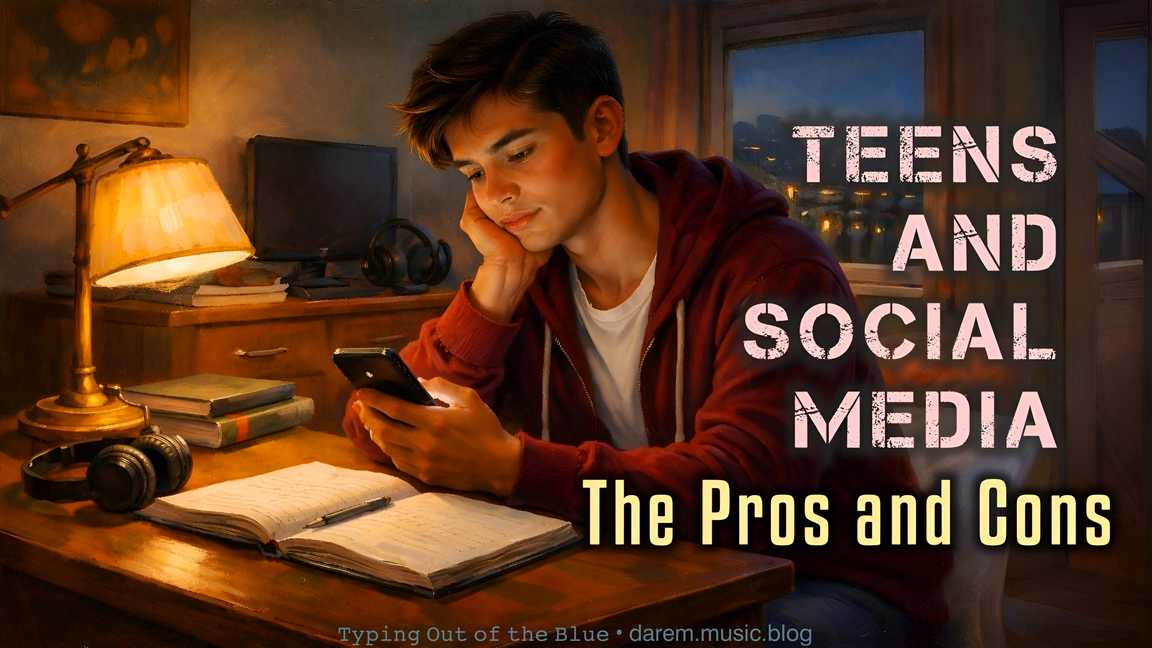
Teens and Social Media

A clear look at the pros and cons of regulating teen social media use—and why balance matters more than bans.

For those who’d rather listen.

The Pros and Cons

Social media is part of teen life. It is where they talk, joke, study, connect, and sometimes escape. So when adults talk about regulating it, the debate gets loud. Is it protection or overreaction?

The Pros

First, protection. Not all content online is healthy for young minds. There are scams, harmful trends, and pressure to look perfect. Stronger rules can reduce early exposure.

Second, less addiction. Social media platforms are designed to keep users scrolling. Even adults struggle with that. For teens, whose brains are still developing, constant stimulation can affect focus and emotional balance.

Third, stronger privacy. Many teens do not fully understand digital footprints. Regulation can require stricter privacy settings by default.

Fourth, accountability for tech companies. Instead of blaming young users, rules can pressure platforms to reduce addictive design features.

The Cons

First, workarounds. Teens are resourceful. Block one app and they move to another. Ban one account and they create a second one.

Second, secrecy. When everything is forbidden, usage becomes hidden. Parents lose visibility. What used to be open becomes private and harder to monitor.

Third, no digital training. If access is removed completely, teens do not learn responsibility. They learn how to bypass restrictions.

Fourth, social impact. School groups, announcements, and creative communities often exist online. Total restriction can isolate instead of protect.

Mental health is part of this discussion. Too much exposure can bring pressure and comparison. But strict bans can also create isolation or secrecy. The issue is not only access, but how young people are supported and guided.

So the issue is not simply whether social media is good or bad. It is about balance. Teens do not just need limits. They need guidance and digital skills. The internet is not going away. The real question is whether we are preparing them to handle it wisely.

⌨ ᴛʸᵖⁱⁿᵍ ᴏᵘᵗ ᵒᶠ ᵗʰᵉ ʙˡᵘᵉ ᵈᵃʳᵉᵐ ᵐᵘˢⁱᶜ ᵇˡᵒᵍ