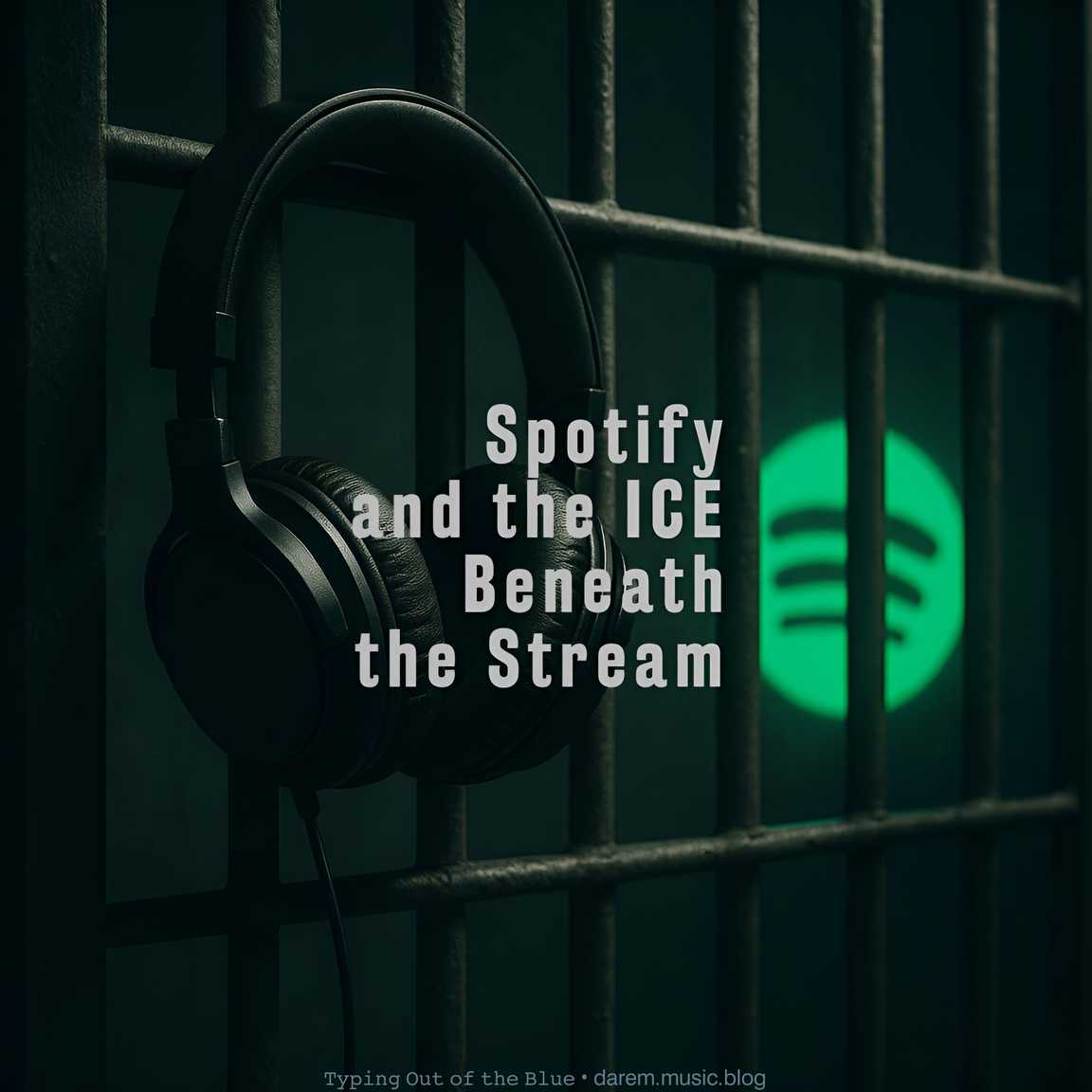
Spotify and the ICE Beneath the Stream

When music plays beside ICE, even the rhythm feels cold.

It began with a sound—not a song, but an ad. Between playlists, Spotify listeners in the U.S. suddenly heard a voice inviting them to “Join ICE today.” Fifty-thousand dollar bonuses. Patriotic music. And a message that made many stop listening altogether.

ICE—short for Immigration and Customs Enforcement—was formed after 9/11. Its mission sounds noble: protect borders, catch criminals, defend the nation. But for millions, it became a symbol of fear. Raids in neighborhoods, families separated, children locked in detention centers. The name itself turned cold as ice—freezing kindness, numbing hearts, and chilling what it meant to be human.

So when Spotify allowed ICE recruitment ads to play on its platform, listeners felt betrayed. For them, music was supposed to be a refuge, not a recruiting ground for an agency known for pain and division. Artists began to speak up. Fans deleted the app. The boycott hashtag spread like static across social media.

Spotify’s answer? The ads didn’t break their rules. But rules are not always right. When money stands beside fear, even silence becomes part of the problem.

It’s not just about an ad. It’s about what a company chooses to stand with—or stand against.

And when the rhythm stops for a reason this deep, it’s not just a boycott. It’s a wake-up call.

Music, war, and ICE shouldn’t mix.
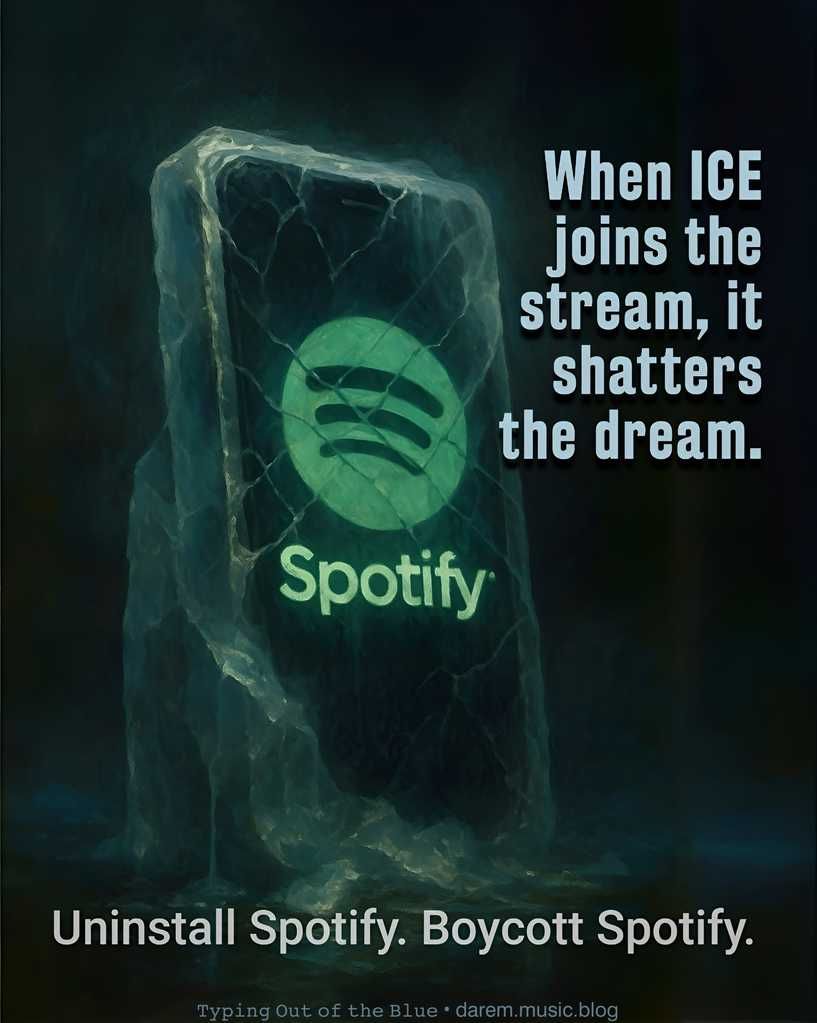
Uninstall Spotify. Boycott Spotify.
⌨ ᴛʸᵖⁱⁿᵍ ᴏᵘᵗ ᵒᶠ ᵗʰᵉ ʙˡᵘᵉ ᵈᵃʳᵉᵐ ᵐᵘˢⁱᶜ ᵇˡᵒᵍ


Stepping Down, Not Out

Spotify’s “new era” isn’t a change—it’s a costume. Titles shift, power stays, and the music world still bleeds quietly.

Daniel Ek Stepify.

On September 30, 2025, Spotify announced that Daniel Ek will step down as CEO on January 1, 2026, and transition into the role of Executive Chairman. The company said this move “formalizes how Spotify has successfully operated since 2023.”

Taking his place will be Gustav Söderström and Alex Norström, who will serve as co-CEOs. Söderström handles product and technology; Norström leads business and growth. Both have long worked under Ek’s direction, and both come from tech and business—not from music.

When the change takes effect, Ek will remain in control of Spotify’s broader strategy from a higher seat, still shaping where the company goes next.

For indie artists, that reality doesn’t bring hope. Royalties stay small, and Spotify’s algorithms and playlists still favor major-label artists—the same names recycled across curated lists and discovery feeds. This leadership shuffle? It’s just another headline meant to make people think something’s different.

Spotify started by finding artists first—telling them, “join us, reach the world.” But once the major labels stepped in, the story flipped. The same independent artists who helped build the platform became its ladder—stepped on so the giants could climb higher. The whole “artists first” promise? Just a marketing strategy.

Now Ek’s focus is somewhere else—on Helsing’s CA-1 Europa, the new AI-powered combat aircraft his defense company just revealed. It’s sleek, self-thinking, and it listens better than the artists who made him rich.

He’d rather hear Helsing’s CA-1 than the voices of underpaid artists.

Spotify once promised connection, but it was never about that. It was about conversion—streams to ads, plays to profit. The people making the music get crumbs, while the boardroom keeps getting louder.

Music used to move the world.
Now it’s just another product in the cart.

And this “new leadership”? It’s nothing but PR—meant to lure back those who left and keep fooling those still willing to believe the pitch.

Boycott Spotify. Uninstall Spotify. What’s next—wait for the war?

Just Wait and You Will Still Wait • Darem Placer

Listen on Apple Music and YouTube Music

The Piano Outside includes Just Wait and You Will Still Wait

ᴛʸᵖⁱⁿᵍ ᴏᵘᵗ ᵒᶠ ᵗʰᵉ ʙˡᵘᵉ ᵈᵃʳᵉᵐ ᵐᵘˢⁱᶜ ᵇˡᵒᵍ