When Music Piracy Becomes Necessary

When streaming fails in real life, people turn to files—not to steal, but to make music usable.

For those who’d rather listen.

Picture a school gym. Students practicing a dance number. They need one specific track.

The problem is simple. The song exists only on streaming platforms. There is no CD, no official download, no legal file they can save, loop, trim, or play offline.

Streaming during every practice sounds fine in theory. In real life, it fails. Internet drops. Ads interrupt. Phones overheat. Data runs out. Offline modes have limits. Some tracks refuse to play without reconnecting. And looping one clean section for practice is awkward at best.

Dance practice does not work like casual listening. Music has to be controlled, not just played.

So the next step is predictable. They rip the track. Not to steal. Not to disrespect the artist. But because they need the music to function.

This is not rebellion. This is a system gap.

Streaming was designed for consumption. Real life requires usage.

The same thing happens with bands.

A bandmate says, “Listen to this. Let’s cover it.” Everyone is ready. Guitars out. Ideas flowing.

Then nothing loads. No data. No signal. The app refuses to connect. The song exists, but access is gone.

Someone says, “Wait, I have an MP3.” Problem solved.

Again, this is not piracy as an ideology. It is simply music getting done.

Ironically, this can feel worse than the cassette era. Back then, you waited for your favorite song on the radio, finger hovering over the record button. DJs talked over intros. Timing was stressful. The audio was messy. But you knew the song would eventually play.

Now the song is everywhere, yet unavailable the moment you need it.

Streaming promised instant access. What it delivered was conditional access. Only if the internet works. Only if you have data. Only if the license still exists. Only if your region is allowed. Only if the app behaves.

That is not ownership. That is rental.

Even in cars, streaming is a hassle. You are driving. Signal drops. Data slows. The app buffers right when the chorus hits. Or worse, the track stops completely because the connection dipped for two seconds. Bluetooth reconnects. The app reloads. The moment is gone.

Driving needs music that just plays. No thinking. No tapping. No reconnecting.

That is why many people still keep MP3s or USB drives in their cars. Not because they hate streaming, but because driving demands reliability. Once the car is moving, you cannot babysit an app.

Again, this is not piracy as a statement. It is piracy as friction removal.

Streaming works best when you are stationary, online, and patient. Real life is rarely any of those things.

School halls, practice rooms, band rehearsals, cars on the road. These spaces expose the same weakness.

Streaming sells access. Life needs possession.

Until that gap is addressed, people will keep doing what they have always done: find the most practical way to make music present where it is needed. Quietly. Naturally. Without drama.

⌨ ᴛʸᵖⁱⁿᵍ ᴏᵘᵗ ᵒᶠ ᵗʰᵉ ʙˡᵘᵉ ᵈᵃʳᵉᵐ ᵐᵘˢⁱᶜ ᵇˡᵒᵍ

Digital Albums by Darem Placer on Bandcamp
Listen. Support. Buy. Download.

When Spotify Was Scraped

Streaming promised convenience, but scraping proved it didn’t end piracy—it only reshaped it.

A hacktivist group calling itself Anna’s Archive recently claimed it scraped almost the entire Spotify catalog—around 86 million tracks, covering roughly 99% of all music streams on the platform. Not removed. Not deleted. Just copied, at massive scale.

They framed it as preservation. An archive. Almost like a Wikipedia offline dump—but for music.

And that comparison is tempting. Wikipedia openly allows full database dumps. Knowledge is meant to be shared, copied, preserved. No royalties. No artists losing income. No complicated middle ground. Music is different.

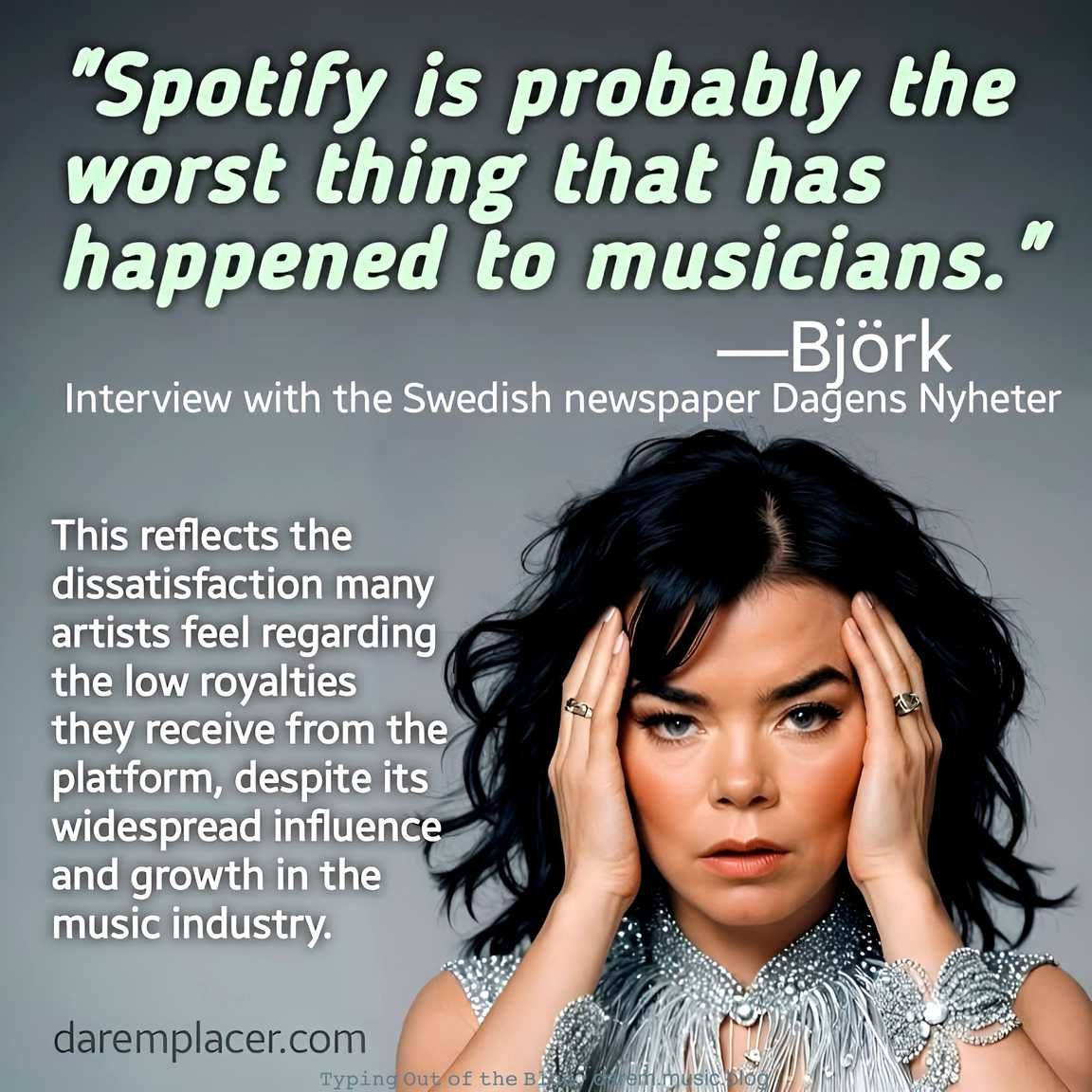
Every track has a creator behind it. A livelihood. Rights. Royalties—small as they already are. So while Wikipedia sharing feels clean, music sharing is messy. Someone always pays the price, and it’s usually the artist.

Still, the scrape exposed something uncomfortable.

Spotify is known for being one of the most paranoid platforms. Locked-down accounts. DRM. Aggressive bot detection. AI-driven defenses against fraud, fake streams, and abuse. And yet, it still happened. Which makes you wonder what was really being protected.

It feels like a platform busy securing war defenses—AI battles, data battles, behavior battles—while missing the obvious truth. If music is streamable, it is copyable. There is no firewall against sound.

It’s like a house with every door locked, even the CR, but the windows left open—because people still need air. Access is the window. Streaming is the window. And scraping simply climbed through it.

Streaming was supposed to solve piracy. No more downloading. No more hoarding MP3s. Just press play and move on. But instead of killing piracy, it only reshaped it. From individual downloads to automated harvesting. From one song to entire catalogs.

And this is where regret enters.

Because when everything is rented, nothing is yours. You don’t own the music. You don’t keep it. You don’t pass it on. You can’t ask an artist to sign your phone. You can’t hand down a playlist. You can’t keep a song when a platform changes its rules or disappears.

That’s why physical media is quietly coming back. Vinyl. Cassette. CD. Even simple MP3 files. Not because they’re trendy, but because ownership matters.

A record can be signed. A CD can age with you. An MP3 works offline, free from algorithms and policy shifts. Streaming promised convenience, but people want permanence.

In the end, Spotify didn’t solve piracy. It just closed one door and opened another—leading people back to physical media, digital files, and the human need to keep what they love.

Some things shouldn’t be rented forever. Some things deserve to stay.

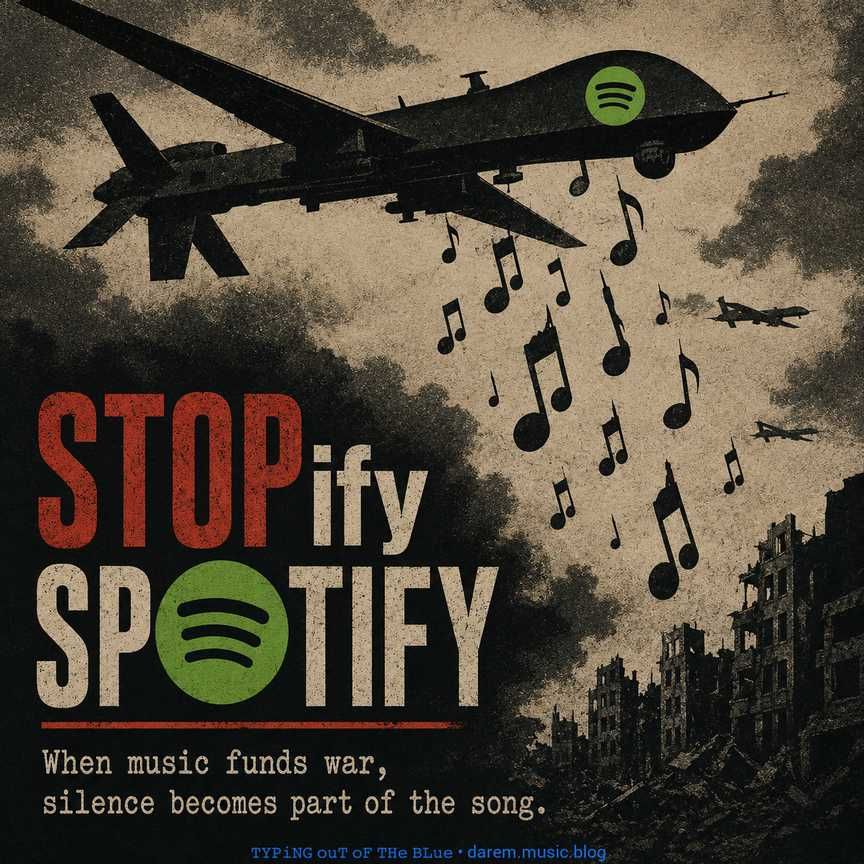
Boycott Spotify.
Uninstall Spotify.
Support Bandcamp artists.
Install Bandcamp.

⌨ ᴛʸᵖⁱⁿᵍ ᴏᵘᵗ ᵒᶠ ᵗʰᵉ ʙˡᵘᵉ ᵈᵃʳᵉᵐ ᵐᵘˢⁱᶜ ᵇˡᵒᵍ

Digital Albums by Darem Placer on Bandcamp
Listen. Buy. Download.