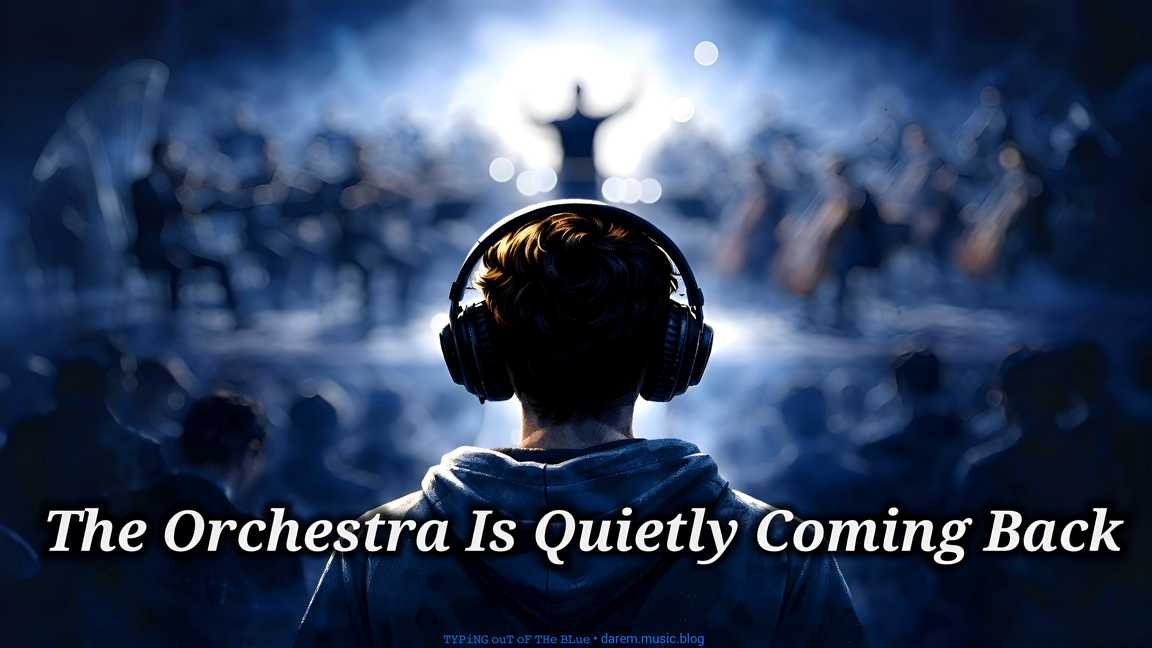
For many years, people kept saying that orchestral music was dying.
Concert halls were seen as places for older audiences. Streaming platforms were filled with pop, rap, and electronic music. For a while, it looked like orchestral music had become a small corner of the music world.
But recent research suggests something interesting is happening.
A survey connected with the Royal Philharmonic Orchestra in the United Kingdom found that interest in orchestral music has reached its highest level in six years. About 35% of UK adults say they want to learn more about orchestral music. In 2021, that number was only 11%.
Even more surprising is where the growth is coming from.
Among people under 25, interest jumped from 11% to around 30% in a single year. That means younger listeners are becoming curious about orchestral sound again.
The reason may not be what many people expect.
Most young listeners are not discovering orchestras inside concert halls. They are discovering them through everyday media.
Film scores
Video game soundtracks
Study playlists
Streaming recommendations
Many modern movies and games use full orchestras. When people enjoy those soundtracks, they are already listening to orchestral music without realizing it.
Streaming platforms also play a role. Algorithms often recommend orchestral pieces to listeners who enjoy cinematic, ambient, or instrumental music. Over time, those recommendations slowly introduce people to a wider orchestral world.
Another factor is the role of music in daily life.
Surveys show that many listeners now hear orchestral music while commuting, studying, or working. It has become part of focus playlists and background listening, not just something reserved for formal concerts.
This does not mean orchestral music has suddenly become mainstream like pop music.
But it does show that curiosity is growing again.
New listeners are discovering a sound that has existed for centuries. Some will listen once and move on. Others may stay and explore deeper.
The orchestra has not changed much.
But the ears discovering it are new.
⌨ ᴛʸᵖⁱⁿᵍ ᴏᵘᵗ ᵒᶠ ᵗʰᵉ ʙˡᵘᵉ ᵈᵃʳᵉᵐ ᵐᵘˢⁱᶜ ᵇˡᵒᵍ