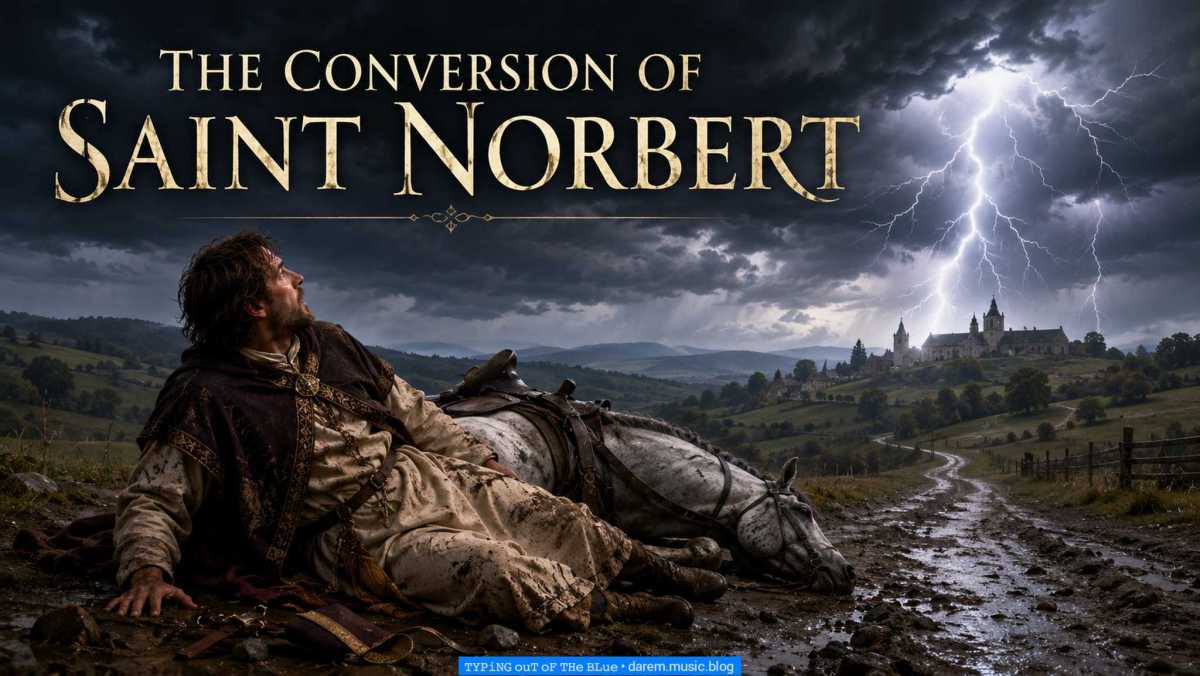
Norbert was born around 1080 in Xanten, in present-day Germany. He lived during the Middle Ages, a time when the Church held great influence across Europe. As a young man, he became a churchman and served in important positions close to nobles and rulers. He was respected, educated, and comfortable. There is no record of him living a life of scandal or crime.
That is why some people are surprised when they hear that Saint Norbert experienced a “conversion.”
When people hear the word “conversion”, they usually expect a dramatic story. A criminal becomes a saint. An unbeliever discovers faith. A selfish person changes completely.
Then they read about Saint Norbert and think, “Wait. Conversion from what?”
The famous story says that while riding on horseback, a lightning strike during a storm threw him to the ground. After that experience, he changed the direction of his life and became a passionate preacher, reformer, and eventually founded the Premonstratensian Order in Prémontré, France.
For modern readers, “calling” may be the clearer word.
He seems to have realized that he was meant for more than a comfortable and prestigious life. The storm did not turn a “villain” into a hero. It woke up a man who had grown comfortable where he was.
The Church uses the word “conversion” in a broader sense. It can mean any movement toward God, even for someone who already believes. In that sense, Norbert experienced a conversion of heart.
Whether the storm caused the change or simply marked it, it became a turning point in his life. A moment that made him ask hard questions: What am I doing with my life? What is God asking of me? Am I serving a mission or simply enjoying a position?
Those questions changed everything.
Most people are not choosing between being a saint or a villain. They are choosing between comfort and purpose.
Sometimes a life does not need a different beginning. It only needs a different direction. The same person. The same gifts. The same faith. Just a clearer sense of what they were meant for.
Norbert’s story is less about becoming someone new and more about finally finding the right note.
What happened on that stormy day was a call to something greater.
Let’s keep learning the saints’ way—day by day.
⌨ ᴛʸᵖⁱⁿᵍ ᴏᵘᵗ ᵒᶠ ᵗʰᵉ ʙˡᵘᵉ ᵈᵃʳᵉᵐ ᵐᵘˢⁱᶜ ᵇˡᵒᵍ