Saint Brigid of Ireland as a Child

A child whose instinct was simply to give.

Brigid was born around the year 451 in Ireland, at a time when Christianity was still finding its place alongside older Celtic traditions. Life was hard. Poverty was common. Need was visible and close. Long before she became a nun, an abbess, or the founder of the monastery of Kildare, there were small moments that already showed where her heart leaned.

She grew up in a world where poverty was impossible to miss. Even as a child, she noticed it. People without food. People without help. People who were simply passed over.

One early story says she kept giving away food and milk from the household to the poor. It happened more than once. Those in charge noticed supplies running low and grew upset. She did not argue. She did not explain. She just kept giving.

Another account says she once gave away a nobleman’s sword to help someone in need. She was very young then, probably around 10, when giving came more as instinct than decision.

There was no long thinking, no weighing of ownership or consequence. She saw need, and her response was immediate. What mattered was the person in front of her.

That instinct did not disappear as she grew older. It matured. Later in life, she would organize charity, manage land, and lead a monastery with structure and responsibility. But the root was already there early on—a simple pull toward generosity.

These stories are not about polished virtue. They show a child acting from instinct, long before wisdom, titles, or legacy came into the picture.

⌨ ᴛʸᵖⁱⁿᵍ ᴏᵘᵗ ᵒᶠ ᵗʰᵉ ʙˡᵘᵉ ᵈᵃʳᵉᵐ ᵐᵘˢⁱᶜ ᵇˡᵒᵍ

Digital Albums by Darem Placer on Bandcamp
Listen. Support. Buy. Download.

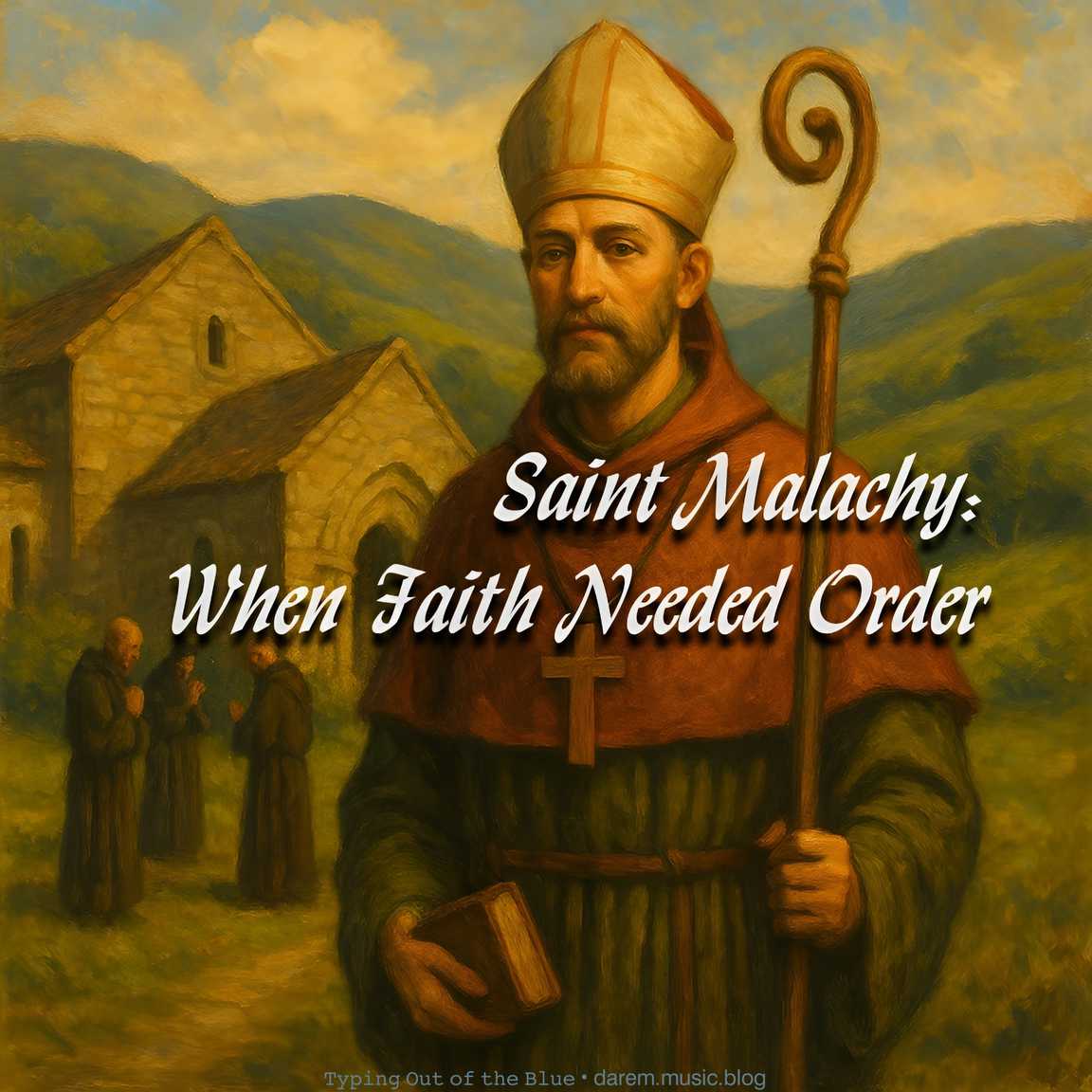
Saint Malachy: When Faith Needed Order

He didn’t seek control—only clarity. And through quiet reform, he turned confusion into peace that still echoes today.

In the early 1100s, the Church in Ireland had the heart but not the harmony. Monks prayed, abbots ruled, and bishops passed their titles like family treasures. It wasn’t scandalous, just uncoordinated. Think: different choirs singing one song, but in separate keys.

Malachy, who later became Archbishop of Armagh in Northern Ireland, stepped into that scene quietly. He didn’t come with power, only purpose. He saw that faith was alive but needed direction. So, he worked to bring unity. He reintroduced the Roman way of worship so that everyone prayed the same way again. He stopped the practice of families passing down church positions. He reminded priests to live simply and serve humbly. And he helped people rediscover confession—a forgotten path to peace.

Some leaders pushed back, not wanting change. But Malachy didn’t fight. He reformed through patience, kindness, and example. Slowly, people began to follow.

He built friendship with Saint Bernard of Clairvaux and helped Ireland reconnect with the rest of the Catholic world. When he died in France in 1148, the Church in Ireland was more united and alive than before.

Malachy wasn’t chasing control. He was restoring balance. Because when faith finds order, hearts find peace.

⌨ ᴛʸᵖⁱⁿᵍ ᴏᵘᵗ ᵒᶠ ᵗʰᵉ ʙˡᵘᵉ ᵈᵃʳᵉᵐ ᵐᵘˢⁱᶜ ᵇˡᵒᵍ
Traces of courage, silence, and sacrifice—this is Saints.

Listen on Apple Music, Apple Music Classical, and YouTube Music