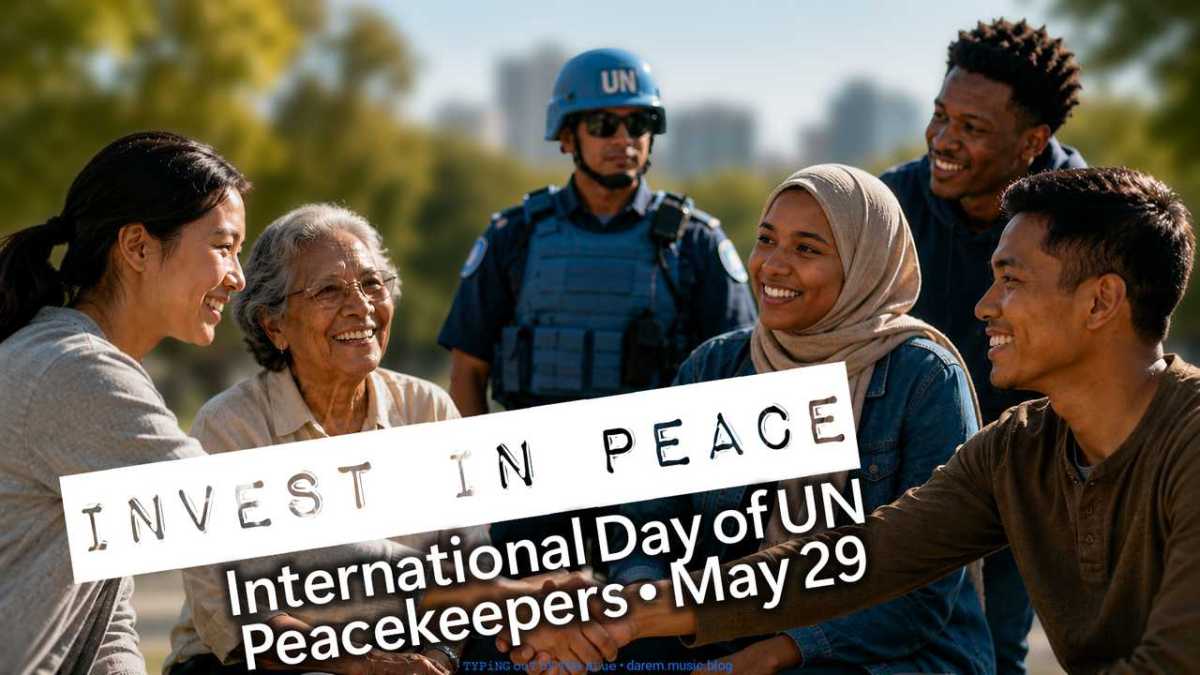
Invest in Peace

The world needs peacekeepers in blue helmets. It also needs ordinary people willing to keep the peace where they are.

A United Nations peacekeeper may be a soldier, police officer, or civilian standing in places where conflict has left deep scars. Wearing the famous blue helmet, a peacekeeper helps protect civilians, monitor ceasefires, support communities, and give peace a chance to take root again. Their work rarely makes headlines. Yet in many parts of the world, they stand between fear and hope.

Most of us will never wear a blue helmet or serve in a conflict zone. We may never negotiate peace treaties or patrol dangerous borders. But that does not mean peace is someone else’s job.

Every day gives us opportunities to invest in peace.

We invest in peace when we listen before judging. When we choose truth over rumors. When we calm an argument instead of fueling it. When we treat people with dignity, even when we disagree. When we forgive. When we help. When we build bridges instead of walls.

Peace is often sustained by people whose names are never known. The same way a song depends not only on the melody, but also on the quieter parts that keep everything together. Most people will never be recognized for keeping the peace. Yet many conflicts never grow because someone chose patience over anger, understanding over suspicion, or reconciliation over revenge.

We may never wear the blue helmet of a UN peacekeeper. But we can all wear invisible blue helmets with visible peace. Every choice that reduces conflict, heals division, and brings people together is an investment in peace.

Full album. Press play.

⌨ ᴛʸᵖⁱⁿᵍ ᴏᵘᵗ ᵒᶠ ᵗʰᵉ ʙˡᵘᵉ ᵈᵃʳᵉᵐ ᵐᵘˢⁱᶜ ᵇˡᵒᵍ

Non-Governmental Organizations (NGOs)

Organized service beyond government and profit.

World NGO Day • February 27

A non-governmental organization, or NGO, is a non-profit group created to serve a specific cause. It operates independently from the government and does not exist to generate profit. Its focus is public benefit.

NGOs work in many areas such as education, health, environmental protection, human rights, disaster response, and community development. Their activities range from large-scale international missions to small, neighborhood-based initiatives.

Some well-known examples include:

• World Vision – A Christian humanitarian organization that focuses on child sponsorship, education, emergency relief, and long-term community development in vulnerable communities worldwide.

• Greenpeace – An environmental organization known for campaigns addressing climate change, deforestation, ocean protection, and pollution, using research and non-violent direct action.

• Médecins Sans Frontières – Also known as Doctors Without Borders, it provides emergency medical care in conflict zones, disaster areas, and places with limited access to healthcare.

Not all NGOs operate globally. Many are local and community-based. They organize feeding programs in barangays, tutor children after school, assist families during emergencies, and lead environmental cleanups.

What defines an NGO is its structure and purpose. It is organized, mission-driven, and sustained by volunteers, donors, or grants. Its measure of success is not profit, but impact.

⌨ ᴛʸᵖⁱⁿᵍ ᴏᵘᵗ ᵒᶠ ᵗʰᵉ ʙˡᵘᵉ ᵈᵃʳᵉᵐ ᵐᵘˢⁱᶜ ᵇˡᵒᵍ

Underplayground • Darem Placer