Rich Countries Are Slowing Down in the Climate Fight

Rich nations slow down in the climate fight as poorer countries face the rising cost of promises left hanging.

At the opening of COP30 in Belém, Brazil, conference president André Corrêa do Lago warned that rich nations are losing energy in the fight against climate change. Thirty years after the first COP, global greenhouse gas emissions have climbed by about one-third, and the gap between promises and real action keeps widening.

What is COP30?

COP stands for Conference of the Parties—the annual meeting of countries under the United Nations Framework Convention on Climate Change (UNFCCC). COP30 is the 30th session, held from 10–21 November 2025 in Belém, Brazil.

Corrêa do Lago said wealthy nations in the Global North—once the strongest voices for climate leadership—are now less motivated. This slowdown matters because they have the money, the technology, and the historical responsibility to act first. When they hesitate, the whole world feels the delay.

The numbers tell the story:

• The world is heading toward 2.5 °C of warming, far beyond the 1.5 °C Paris goal.

• The Global Methane Pledge, signed by 159 countries in 2021, aimed to cut methane by 30% by 2030—but emissions from six major signatories, including the United States and Australia, are now 8.5% higher than in 2020.

• The US oil and gas sector alone has raised methane emissions by 18% since 2020.

• The promised $100 billion per year in climate finance for poorer nations has still not been delivered.

Meanwhile, China leads both in carbon emissions and clean-energy growth. It produces the largest share of solar panels and renewable systems—showing that large-scale transition remains possible.

For developing countries, especially across Asia, Africa, and the Pacific, the situation is urgent. They face stronger storms, longer droughts, and higher seas while still waiting for the help promised years ago. The growing silence from rich countries isn’t just political—it’s felt in flooded homes, failed crops, and rising prices of basic goods.

If climate action were a song, the rich countries were once the lead guitarist, setting the tone for the world. Now they’re slowing down while the drummer—the climate crisis itself—keeps pounding louder. The rest of the band—the developing nations—must keep the beat alive.

Because Earth is the stage, and there’s no backstage to escape to when the lights burn out. The performance must go on—for everyone.

⌨ ᴛʸᵖⁱⁿᵍ ᴏᵘᵗ ᵒᶠ ᵗʰᵉ ʙˡᵘᵉ ᵈᵃʳᵉᵐ ᵐᵘˢⁱᶜ ᵇˡᵒᵍ

👉 Download Sky-Low on Bandcamp

💿 Just type 0 if you want to download the album for free.

Sky-Low
“Sky-Low” is not just an album—it’s an awareness campaign about climate change and a challenge to protect our planet.

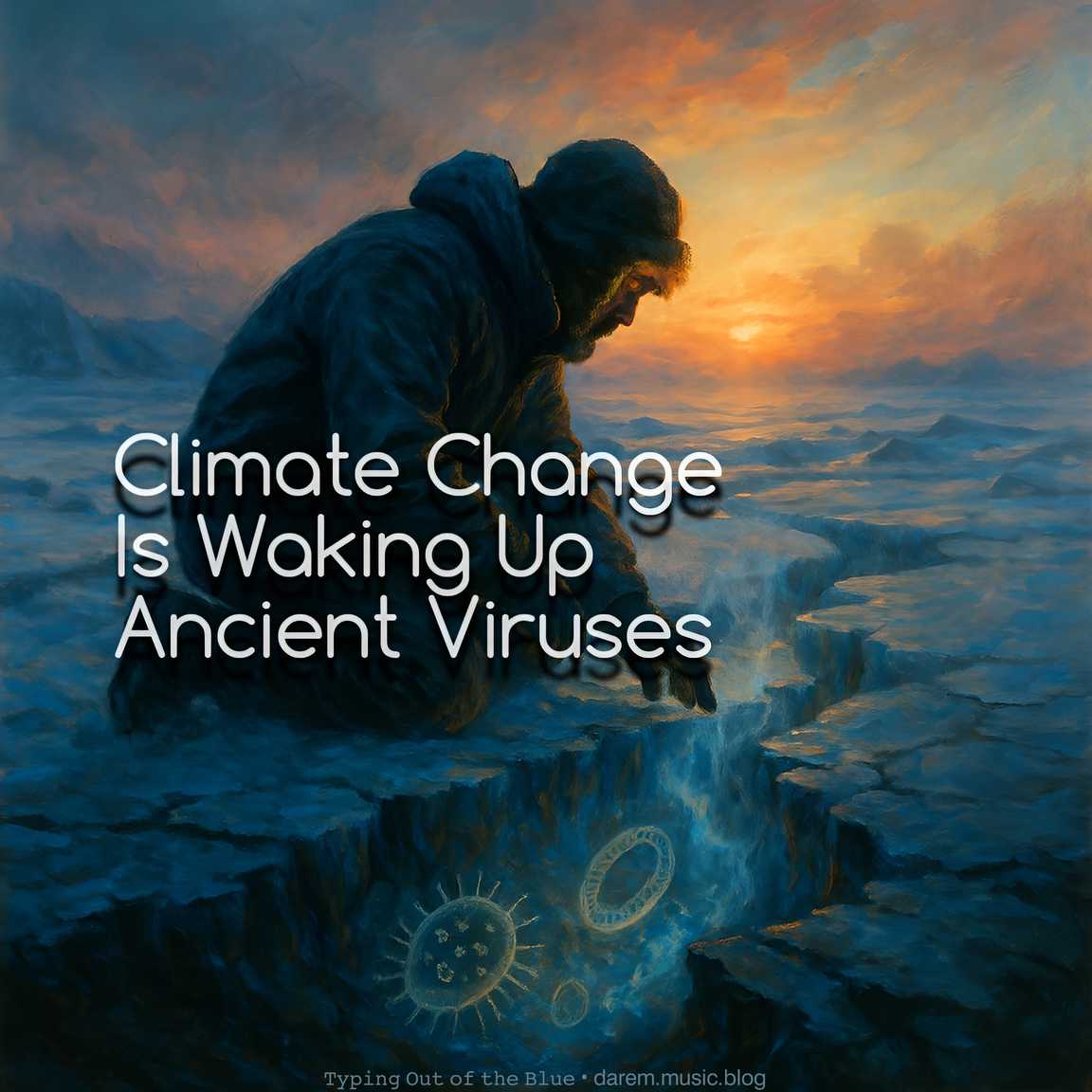
Climate Change Is Waking Up Ancient Viruses

Melting ice is releasing ancient microbes and viruses. The past is waking—and scientists say the world must pay attention.

As the planet warms, something old is stirring beneath the ice.

In the frozen Arctic and distant mountain ranges, scientists are finding ancient microbes and viruses—some frozen for tens of thousands of years. They call them “zombie viruses.” Not because they crawl, but because they never truly died.

🧊 What’s Beneath the Ice

Permafrost, the ground that stays frozen for centuries, is melting faster than ever. Inside it are the remains of plants, animals, and microorganisms from a forgotten world. When the ice thaws, those tiny life forms can wake up again.

In Siberia, researchers revived 13 ancient viruses, including one that’s 48,500 years old and still capable of infecting amoebas.

In the Himalayas, scientists discovered around 1,700 unknown viral species trapped inside glacier ice. They may not infect humans, but they reveal how much life the Earth has been keeping in storage.

⚠️ The Real Concern

The risk to humans is still small—but not zero.

In 2016, melting permafrost in Siberia released anthrax bacteria from a frozen reindeer carcass, infecting both people and animals. That outbreak proved one thing: some threats from the past can still return.

As mining, drilling, and research move deeper into thawing ground, more contact with ancient microbes becomes possible. Each disturbance of the ice opens another page of the planet’s old archive.

🌡 More Than Health

The melting isn’t just a health issue—it’s a climate one.

When permafrost softens, it also releases carbon and methane, powerful greenhouse gases that trap more heat and speed up global warming. The ice is part of Earth’s natural balance; when it breaks, the rhythm changes everywhere.

🔍 What Scientists Warn

Researchers are calling for stronger monitoring and safety systems in melting regions. We can’t refreeze the planet overnight, but we can track what’s emerging and prepare for the possible consequences.

Ignoring the problem doesn’t stop it—it only lets the thaw go unnoticed.

🌱 The Reminder

Climate change isn’t only about heatwaves and rising seas. It’s also about the Earth reopening its old pages.

Every melt reveals something forgotten.

Every discovery reminds us that when we disturb the past, it might just wake up.

⌨ ᴛʸᵖⁱⁿᵍ ᴏᵘᵗ ᵒᶠ ᵗʰᵉ ʙˡᵘᵉ ᵈᵃʳᵉᵐ ᵐᵘˢⁱᶜ ᵇˡᵒᵍ

👉 Download Sky-Low on Bandcamp

💿 Just type 0 if you want to download the album for free.
Sky-Low
“Sky-Low” is not just an album—it’s an awareness campaign about climate change and a challenge to protect our planet.