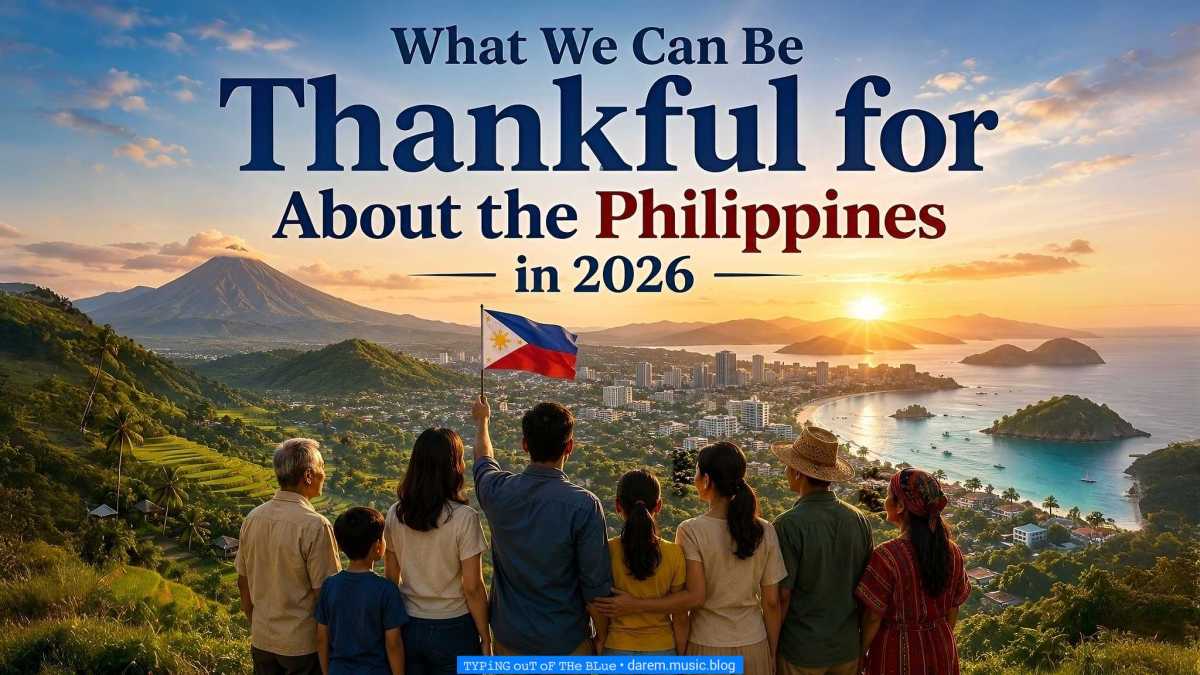
What We Can Be Thankful for About the Philippines in 2026

Looking beyond the headlines, there are still many reasons to appreciate life in the Philippines today.

It is easy to focus on problems. Every country has them. The Philippines has them too.

But there are also many things worth being thankful for.

• We live in a free country. We can speak, learn, create, vote, and practice our faith freely.

• We are surrounded by relatives, friends, and communities that support us through life’s challenges.

• When disasters happen, we often help one another by sharing food, donating supplies, volunteering, and helping neighbors rebuild.

• We have more opportunities today than ever before. Technology, education, and English have opened doors that many earlier generations never had.

• We have a rich culture. Our food, languages, stories, music, and traditions make the Philippines unique.

• We have beautiful places. Beaches, mountains, forests, rivers, and islands remind us that nature is one of our greatest treasures.

• We are creative and resourceful. We are known for music, art, storytelling, and finding ways to solve problems.

• We are growing up in a time of peace rather than war or foreign occupation.

Perhaps the greatest reason to be thankful is this:

The Philippines we know today was built by countless people who came before us. It is not perfect. It never has been. But every generation has the chance to make it a little better than they found it.

The Philippines of tomorrow will be shaped by what we do today.
Voices Across the Field • Darem Placer

⌨ ᴛʸᵖⁱⁿᵍ ᴏᵘᵗ ᵒᶠ ᵗʰᵉ ʙˡᵘᵉ ᵈᵃʳᵉᵐ ᵐᵘˢⁱᶜ ᵇˡᵒᵍ
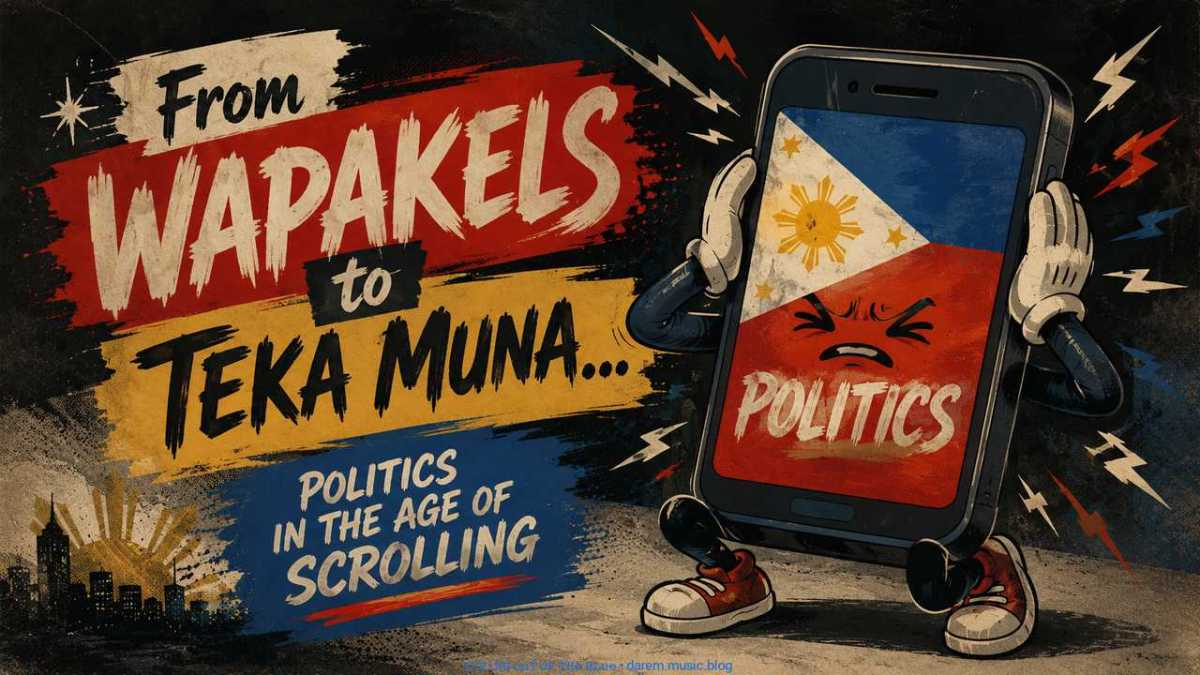
From Wapakels to “Teka Muna…”

Somewhere between memes, senate hearings, and endless scrolling, more people started saying, “Wait…”

Politics used to feel distant. Parang radyo sa kabilang room. You hear it, but you do not really pay attention to it. A lot of people used to stay wapakels about politics while life moved on with work, school, bills, music, heartbreaks, and everyday survival.

But now, iba na ang rhythm.

Because of social media, public issues suddenly became part of daily scrolling. One swipe shows a senate hearing. Next swipe, a meme. Then a budget issue. Then a dancing cat. 😁

Messy sometimes. But interesting too.

Even people who used to scroll past everything are now learning how to pause and say, “Teka muna…”

“What exactly does the Senate do?”
“Why are there hearings?”
“Where do taxes go?”
“Why does government have so many branches?”

And honestly, that is a healthy sign.

Nobody needs to become a political expert overnight. Hindi need maging walking encyclopedia ng constitution. But it matters when ordinary people slowly start understanding how the country moves, where public money goes, and why accountability exists in the first place.

Social media opened that door.

Yun nga lang, sabay ring pumasok ang ingay.

Fake quotes. Cropped videos. Old clips reposted like they happened yesterday. Rage bait designed to make people angry before they even verify anything. Sometimes the internet feels like every instrument is playing at full volume while nobody is sure which melody is real. 😅

That is why learning how to check sources matters now more than ever. Viral does not always mean true. Dramatic does not automatically mean accurate.

Still, something good is happening underneath all the chaos.

People are slowly becoming more aware of how the country works.

Not perfectly. Minsan magulo parang sabay-sabay tumutugtog ang iba’t ibang banda sa iisang kanto. But at least more people are awake now. More people are paying attention instead of ignoring everything completely.

And maybe that matters more than we realize.

Because a country slowly changes the moment ordinary people stop treating politics like background noise.

Full album. Press play.

⌨ ᴛʸᵖⁱⁿᵍ ᴏᵘᵗ ᵒᶠ ᵗʰᵉ ʙˡᵘᵉ ᵈᵃʳᵉᵐ ᵐᵘˢⁱᶜ ᵇˡᵒᵍ