

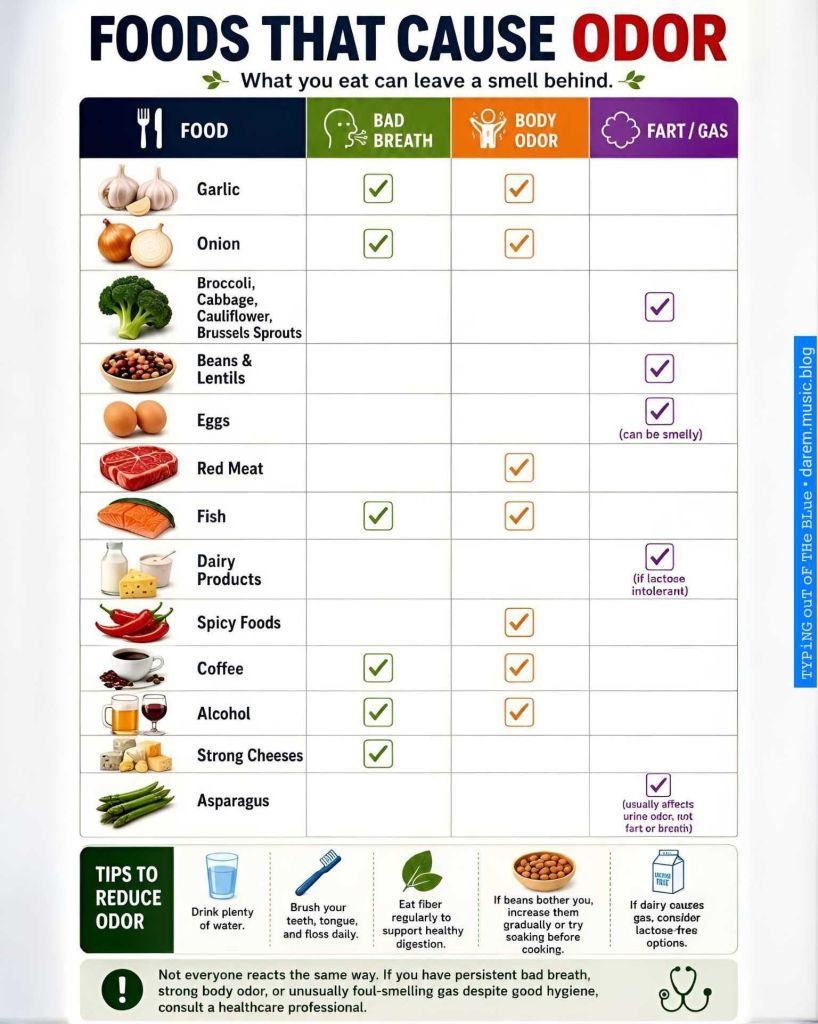
Some foods are famous for leaving a little “souvenir” after the meal. They do not affect everyone the same way, but these are among the most common culprits.
• Garlic: Can cause bad breath and body odor because sulfur compounds enter the bloodstream and are released through the lungs and skin.
• Onions: Similar to garlic, they can contribute to both bad breath and body odor.
• Cruciferous vegetables: Broccoli, cabbage, cauliflower, and Brussels sprouts are highly nutritious, but their sulfur compounds and fiber can lead to smelly gas.
• Beans and lentils: Rich in fiber, they can cause gas as gut bacteria ferment them during digestion.
• Eggs: In some people, sulfur compounds in eggs can produce particularly smelly gas.
• Red meat: Some studies suggest that eating large amounts of red meat may contribute to stronger body odor in some people.
• Fish: Some fish can leave lingering breath. Rarely, a condition called Trimethylaminuria, also known as fish odor syndrome, causes a fishy body odor after eating certain foods.
• Dairy products: If you are lactose intolerant, milk, cheese, and ice cream can cause gas and foul-smelling flatulence.
• Spicy foods: Chili peppers can increase sweating, and some spicy compounds may be released through sweat, affecting body odor.
• Coffee: Can dry out the mouth, which may contribute to bad breath. It may also increase sweating in some people.
• Alcohol: Can contribute to bad breath and body odor because some of it is released through the breath and skin.
• Strong cheeses: Can leave lingering bad breath and may contribute to body odor in some people.
• Asparagus: Best known for making urine smell strong. It usually does not affect breath or body odor.
How to Reduce Odor
• Drink plenty of water.
• Brush your teeth, clean your tongue, and floss every day.
• Eat enough fiber to support healthy digestion.
• If beans often cause gas, introduce them gradually or soak dried beans before cooking.
• If dairy causes digestive problems, consider lactose-free alternatives.
Most food-related odors are temporary and harmless. However, if you develop persistent bad breath, strong body odor, or unusually foul-smelling gas despite good hygiene and no obvious dietary cause, consult a healthcare professional. In some cases, these symptoms may be related to an underlying medical condition.
⌨ ᴛʸᵖⁱⁿᵍ ᴏᵘᵗ ᵒᶠ ᵗʰᵉ ʙˡᵘᵉ ᵈᵃʳᵉᵐ ᵐᵘˢⁱᶜ ᵇˡᵒᵍ