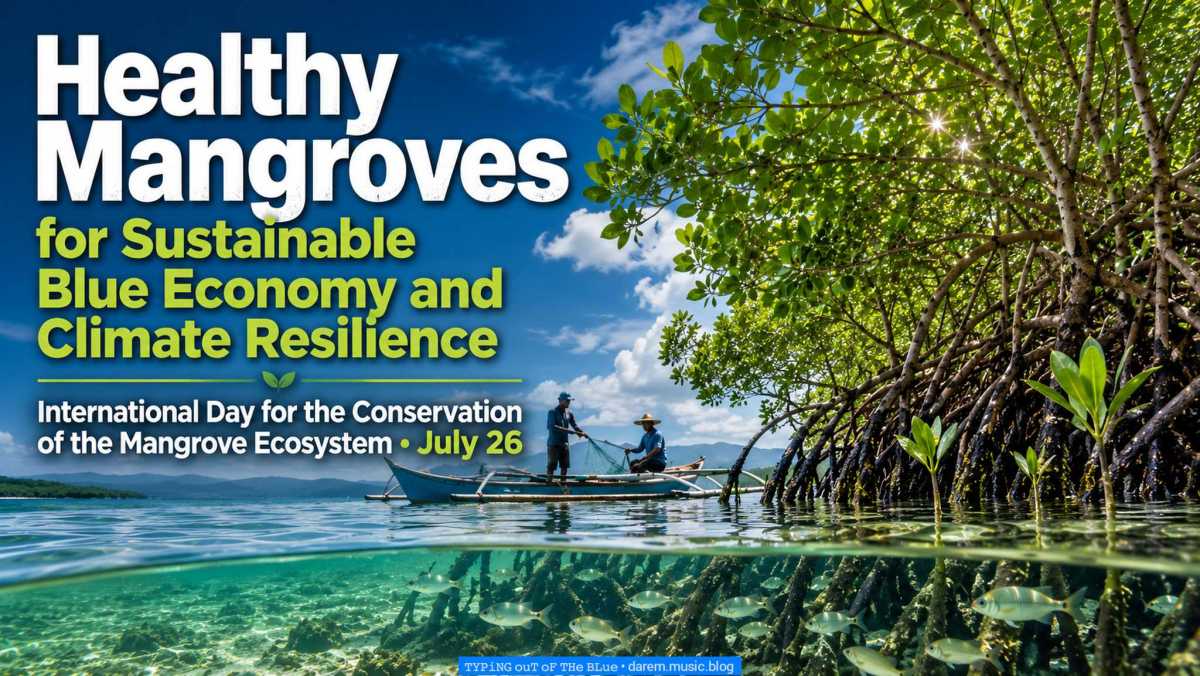
International Day for the Conservation of the Mangrove Ecosystem • July 26
Mangroves are not exactly the glamorous stars of the coast. They stand in mud, get soaked twice a day, and somehow keep doing important work.
Their roots help slow down waves and protect shorelines from erosion. They give young fish, crabs, and other marine life a place to grow. They support fishing and coastal livelihoods. And while doing all that, mangroves absorb carbon dioxide and store carbon in their vegetation and soil, helping slow climate change.
It is a whole ecosystem working together, almost like a band. Remove too many players and eventually, the music falls apart.
So how do we keep it playing?
• Protect what is already there. Saving an existing mangrove forest is better than trying to rebuild one after it is gone.
• Work with local communities. People who live along the coast should have a real role in decisions and long-term care.
• Restore wisely. Plant the right mangrove species in the right places, not just hundreds of seedlings for a photo.
• Keep coastal waters clean. Plastic, sewage, and other pollution can damage the whole ecosystem.
• Fish responsibly. Avoid overfishing and destructive practices that damage marine life and their habitats.
• Develop with care. Roads, resorts, fishponds, and other coastal projects should not come at the cost of mangroves.
A healthy blue economy does not mean taking everything the sea can give. It means keeping the rhythm going: use, protect, restore, repeat.
When mangroves thrive, so can the life and communities around them.

⌨ ᴛʸᵖⁱⁿᵍ ᴏᵘᵗ ᵒᶠ ᵗʰᵉ ʙˡᵘᵉ ᵈᵃʳᵉᵐ ᵐᵘˢⁱᶜ ᵇˡᵒᵍ
