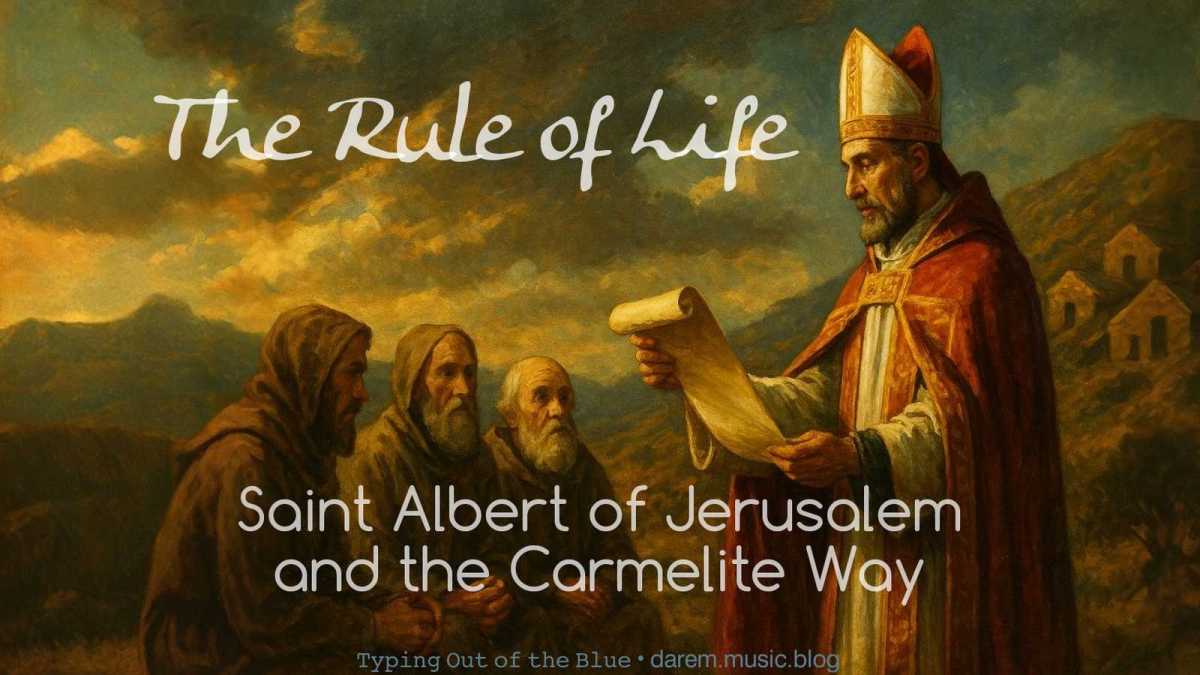
The Rule of Life

What started as a guide for the few would one day shape the many.

Saint Albert of Jerusalem and the Carmelite Way

Bishop Albert Avogadro once served in Italy before becoming Patriarch of Jerusalem. Around 1209–1210, hermits on Mount Carmel asked him for a guide to shape their way of life. He gave them a short, practical rule—simple on paper, but powerful in spirit.

The Rule of Bishop Albert guided them through:

Living in cells close to each other — balancing solitude with community.

Meditating on the Law of the Lord day and night — letting Scripture shape their rhythm.

Daily Eucharist if possible — making Christ the center.

Manual labor and fasting — strengthening both spirit and body.

Obedience to a prior chosen by the group — unity through humility.

Bishop Albert was assassinated in 1214, never seeing how far his rule would spread. What began as guidance for a few desert hermits became the foundation of the Carmelite Order, later producing saints like Teresa of Ávila, John of the Cross, and Thérèse of Lisieux.

Saint Albert’s memorial comes each September 17, yet through the years the few pages he wrote in a war-torn land for hermits on Mount Carmel endure as a sacred guide.

ᴛʸᵖⁱⁿᵍ ᴏᵘᵗ ᵒᶠ ᵗʰᵉ ʙˡᵘᵉ ᵈᵃʳᵉᵐ ᵐᵘˢⁱᶜ ᵇˡᵒᵍ
Traces of courage, silence, and sacrifice—this is Saints.

Listen on Apple Music, Apple Music Classical, and YouTube Music
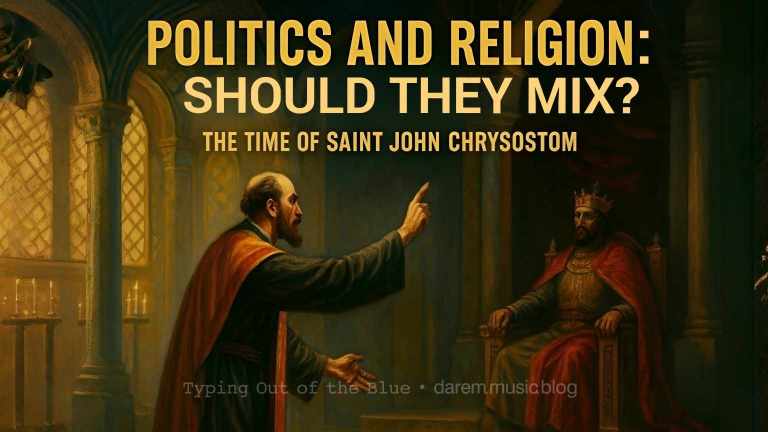
Politics and Religion: Should They Mix?

In Chrysostom’s time, faith clashed with power. Remembering him today, we still ask: should politics and religion mix?

The Time of Saint John Chrysostom

John Chrysostom lived in the late 4th century, when the Roman Empire had already accepted Christianity. By then, religion and politics weren’t just neighbors—they were housemates. The Church was closely tied to the State, and bishops often found themselves dealing with emperors, empresses, and royal advisers.

Chrysostom—“Golden-Mouthed” in Greek, not John’s last name but a title given for his strong speaking— became Archbishop of Constantinople (the empire’s capital city). His sermons weren’t just about the afterlife; they cut into the sins of the present—greed, pride, and corruption in high places. He spoke against wealth in the court while the poor suffered outside its gates. He called out bad behavior, even when it meant offending powerful people like Empress Eudoxia (wife of Emperor Arcadius, ruler of the Eastern Roman Empire).

And here’s the point: corruption existed then just as it does now. Riches, power, and comfort tempted leaders to forget fairness. Archbishop Chrysostom couldn’t keep faith away from public life, because silence in the face of wrong would have been a betrayal of the Gospel. His role as shepherd of souls pushed him into the public spotlight, whether he wanted it or not.

In the end, he paid the price—sent away, mistreated, and left alone. But his courage left a legacy: a reminder that faith has a voice in society, not for power’s sake, but for truth.

As we remember Saint John Chrysostom on his memorial day, September 13, we see that the fight remains the same. The world is still marked by corruption. And maybe this is the answer: when religion is used for control, it should never mix with politics. But when it speaks against injustice and defends the poor, it cannot stay out. The question he faced is the same we ask today: should politics and religion mix?

𝚃𝚢𝚙𝚒𝚗𝚐 𝙾𝚞𝚝 𝚘𝚏 𝚝𝚑𝚎 𝙱𝚕𝚞𝚎 • 𝖽𝖺𝗋𝖾𝗆.𝗆𝗎𝗌𝗂𝖼.𝖻𝗅𝗈𝗀