Saint Jerome and the Bible Translation

How one priest in Bethlehem shaped the Bible into clarity—turning scattered texts into a message that still speaks today.

In the 300s, the Bible in Latin was scattered. Different translations floated around, sometimes contradicting each other. That’s when Pope Damasus asked Father Jerome to fix it.

He didn’t just tidy things up—he went deep. First, he checked the New Testament against the original Greek. Then he took on the Old Testament by studying Hebrew directly from Jewish rabbis in Bethlehem. It wasn’t common for Christians to do that. For him, accuracy mattered more than tradition.

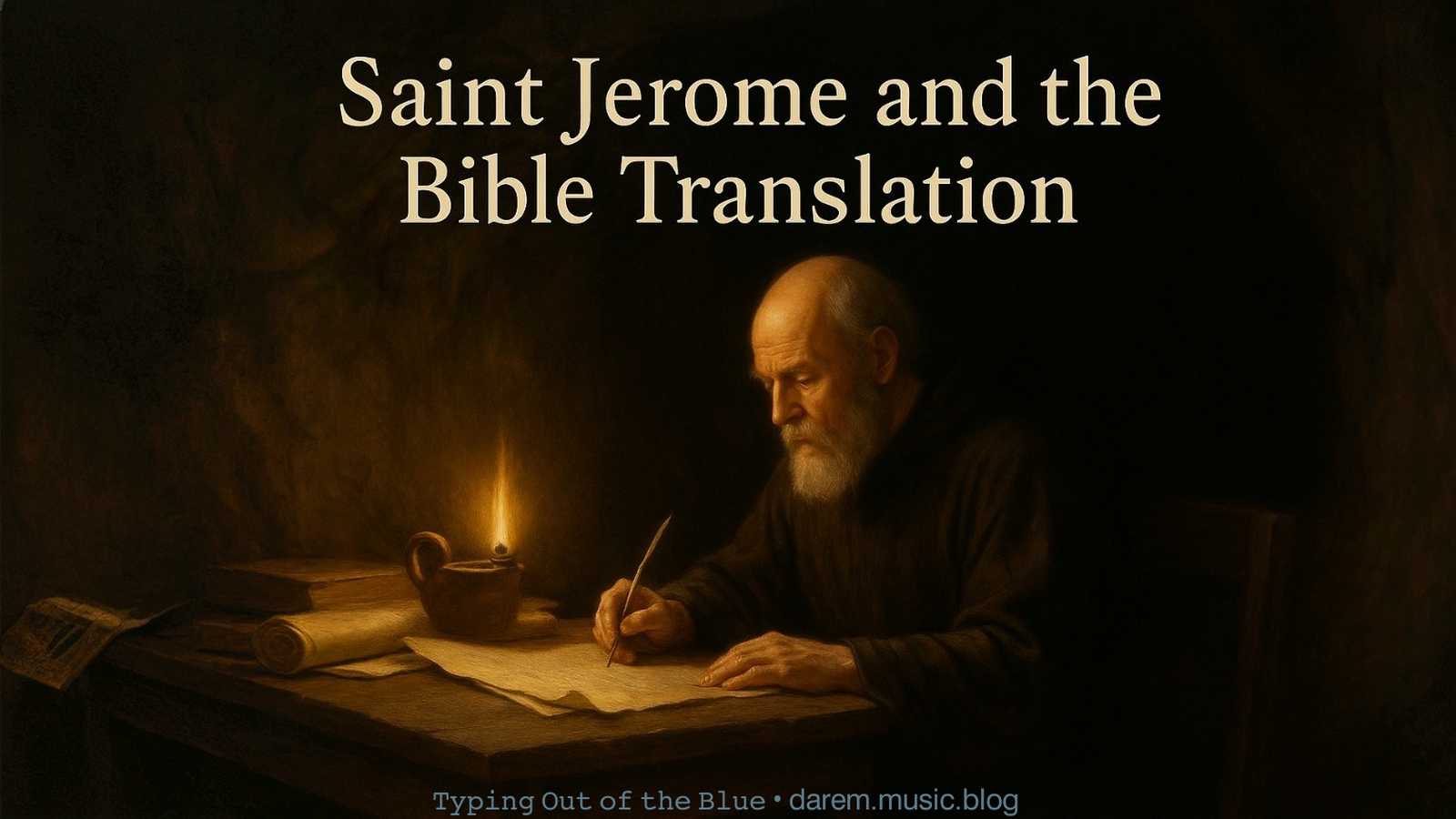
He worked for decades in Bethlehem, near the grotto of Christ’s birth. By lamplight, surrounded by scrolls, he wrestled with words, deciding which Latin phrase could carry the full weight of the original. Sometimes he was criticized for going “too far back” to the Hebrew, but his goal was clear: stay faithful to the source.

The result was the Vulgate (Latin for “common version”)—a Bible that became the standard for over a thousand years. Even when councils debated Scripture centuries later, Jerome’s version stood strong. The Council of Trent (1545–1563), a major gathering that defined Catholic teaching and reforms, confirmed the Vulgate as the official Bible. His line still echoes today: “Ignorance of Scripture is ignorance of Christ.”

Because of his work, the Word of God reached hearts with clarity. That priest in Bethlehem is now honored as Saint Jerome, Doctor of the Church, whose life reminds us that truth is best served when it is faithfully passed on.

ᴛʸᵖⁱⁿᵍ ᴏᵘᵗ ᵒᶠ ᵗʰᵉ ʙˡᵘᵉ ᵈᵃʳᵉᵐ ᵐᵘˢⁱᶜ ᵇˡᵒᵍ
Traces of courage, silence, and sacrifice—this is Saints.

Listen on Apple Music, Apple Music Classical, and YouTube Music

The Restless Heart

The story of Saint Augustine—brilliant yet restless, torn between pride and truth—until grace transformed him into one of the greatest teachers of the Church.

The life of Saint Augustine
Saint Monica often wept for her son. Augustine, born in 354, was brilliant but stubborn, chasing pleasures and philosophies that pulled him far from God. Monica prayed night after night, believing that one day her son would find his way to God.

Their conversations were never recorded, but it was probably something like this:

“Don’t worry, mother,” Augustine might have said with a half-smile. “There’s more to life than your faith. I want freedom, pleasure, ideas. That’s where truth is.”

And Monica, with tears in her eyes, probably whispered in her heart: “Lord, please… don’t let him be lost.”

For years, Augustine resisted. He joined the Manicheans, a religious group that claimed light and darkness were equal forces fighting in the world. They rejected the God of the Bible and offered Augustine big promises of wisdom, but in the end left him empty. He also searched through philosophies and lived with pride. Yet the more he chased answers, the less peace he found. Still, Monica never gave up—her prayers followed him everywhere.

In Milan, Augustine began listening to Bishop Ambrose, whose preaching was calm, wise, and able to explain Scripture in a way that made sense even to Augustine’s questioning mind. The more he listened, the more his heart started to open. But even then, the real battle was inside him.

“How long, Lord? Tomorrow and tomorrow… why not now?”

He opened the Scriptures and read: Put on the Lord Jesus Christ, and make no provision for the desires of the flesh.” (Romans 13:14)

At that moment, everything became clear. His restless heart finally found peace.

Augustine was later baptized by Bishop Ambrose. From then on, his life became a witness to grace. He wrote a book called Confessions, often considered the first true spiritual autobiography. Written as a prayer to God, it tells the story of his sins, struggles, and conversion, showing how God’s mercy can transform even the most restless heart. He also wrote a book called City of God, explaining that while earthly kingdoms rise and fall, God’s kingdom built on love will last forever.

He eventually became Bishop of Hippo and guided his people with wisdom. When he died while Hippo was under siege, the Church began to honor his memory every August 28. And through the centuries, his words continue to speak:

You have made us for Yourself, O Lord, and our heart is restless until it rests in You.”

𝚃𝚢𝚙𝚒𝚗𝚐 𝙾𝚞𝚝 𝚘𝚏 𝚝𝚑𝚎 𝙱𝚕𝚞𝚎 • 𝚍𝚊𝚛𝚎𝚖𝚙𝚕𝚊𝚌𝚎𝚛.𝚌𝚘𝚖