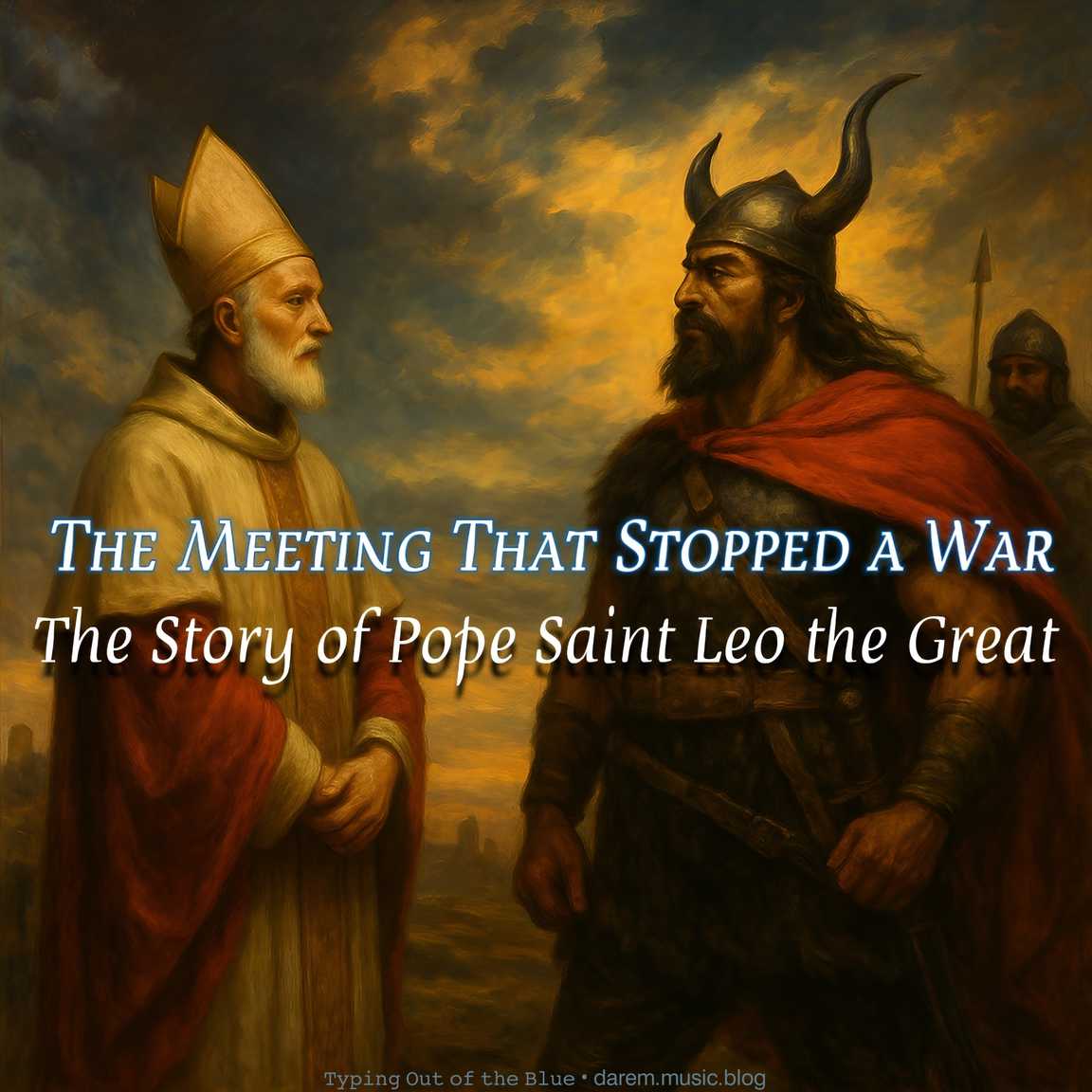
The Meeting That Stopped a War

He faced invaders with faith and led a broken world toward courage and truth.

The Story of Pope Saint Leo the Great

Back in the 5th century, when the Roman Empire was crumbling, a man named Leo stood tall—not with armies or wealth, but with faith and courage. He later became Pope Leo the Great, one of the most remarkable leaders of the early Church.

As pope, Leo faced both chaos and fear. Barbarian invasions were spreading, and confusion in faith was growing. Yet he stayed firm. When Attila the Hun, the feared leader of a nomadic empire that had conquered much of Europe, marched toward Rome, Pope Leo personally met him and convinced him to turn back—without a single battle fought. That moment alone made history, but his real greatness ran deeper.

Pope Leo’s words shaped Christian belief for centuries. Through his writings and sermons, he explained how Jesus is both truly God and truly man—a truth the Church still stands on today. He believed that real strength comes from humility, and that leadership means serving others, not ruling over them.

Pope Leo the Great died in 461, leaving behind a world still in ruins, but a faith stronger than ever. His title “the Great” wasn’t given for power—but for the peace, clarity, and courage he brought when everything else was falling apart.

⌨ ᴛʸᵖⁱⁿᵍ ᴏᵘᵗ ᵒᶠ ᵗʰᵉ ʙˡᵘᵉ ᵈᵃʳᵉᵐ ᵐᵘˢⁱᶜ ᵇˡᵒᵍ
Traces of courage, silence, and sacrifice—this is Saints.

Listen on Apple Music, Apple Music Classical, and YouTube Music
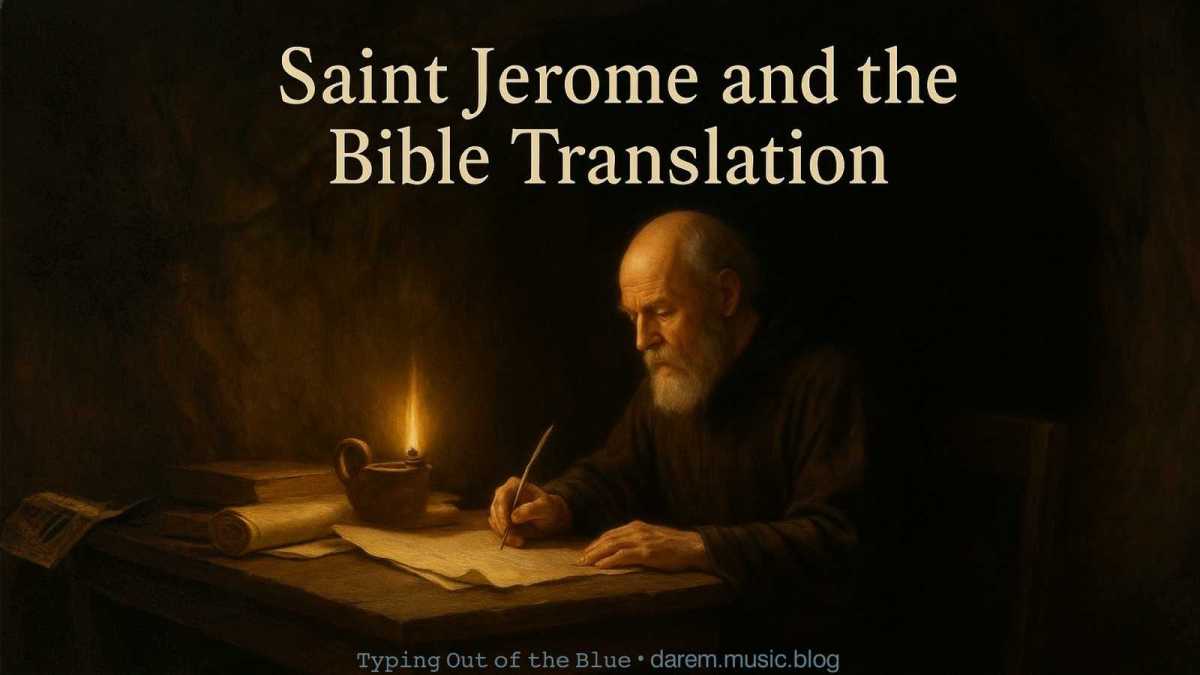
Saint Jerome and the Bible Translation

How one priest in Bethlehem shaped the Bible into clarity—turning scattered texts into a message that still speaks today.

In the 300s, the Bible in Latin was scattered. Different translations floated around, sometimes contradicting each other. That’s when Pope Damasus asked Father Jerome to fix it.

He didn’t just tidy things up—he went deep. First, he checked the New Testament against the original Greek. Then he took on the Old Testament by studying Hebrew directly from Jewish rabbis in Bethlehem. It wasn’t common for Christians to do that. For him, accuracy mattered more than tradition.

He worked for decades in Bethlehem, near the grotto of Christ’s birth. By lamplight, surrounded by scrolls, he wrestled with words, deciding which Latin phrase could carry the full weight of the original. Sometimes he was criticized for going “too far back” to the Hebrew, but his goal was clear: stay faithful to the source.

The result was the Vulgate (Latin for “common version”)—a Bible that became the standard for over a thousand years. Even when councils debated Scripture centuries later, Jerome’s version stood strong. The Council of Trent (1545–1563), a major gathering that defined Catholic teaching and reforms, confirmed the Vulgate as the official Bible. His line still echoes today: “Ignorance of Scripture is ignorance of Christ.”

Because of his work, the Word of God reached hearts with clarity. That priest in Bethlehem is now honored as Saint Jerome, Doctor of the Church, whose life reminds us that truth is best served when it is faithfully passed on.

ᴛʸᵖⁱⁿᵍ ᴏᵘᵗ ᵒᶠ ᵗʰᵉ ʙˡᵘᵉ ᵈᵃʳᵉᵐ ᵐᵘˢⁱᶜ ᵇˡᵒᵍ

Traces of courage, silence, and sacrifice—this is Saints.

Listen on Apple Music, Apple Music Classical, and YouTube Music