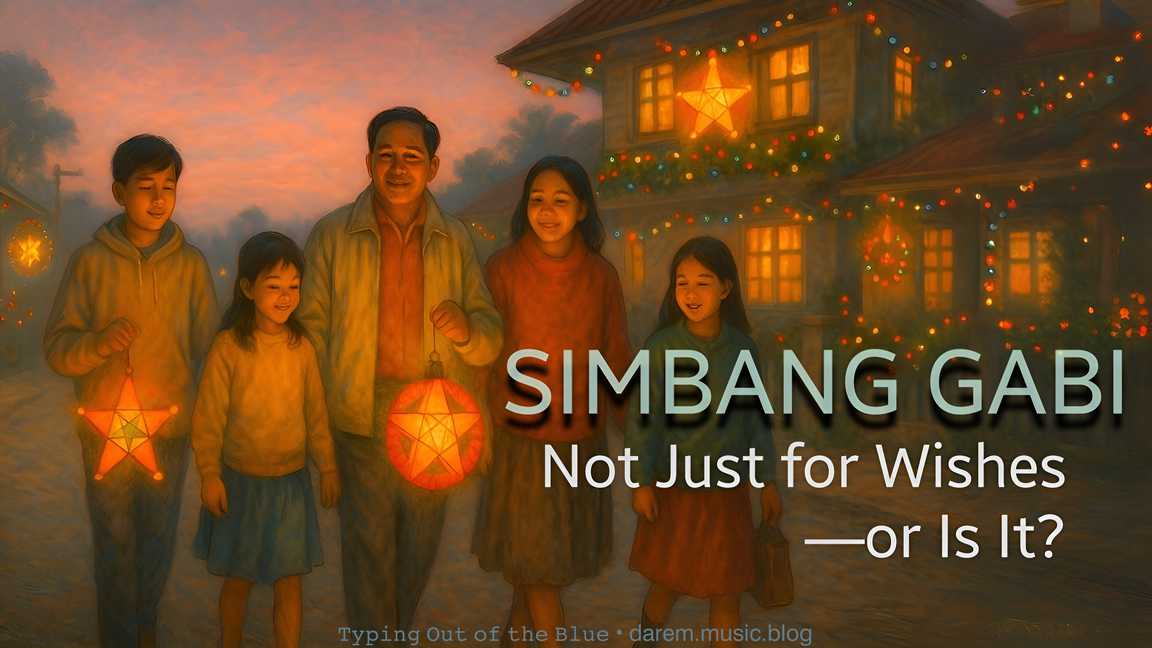
Simbang Gabi, Not Just for Wishes—or Is It?

Nine early mornings, one quiet tradition, and a meaning often missed.

Simbang Gabi is about preparation.

For nine days, people wake up early while everything is still quiet. It slows you down before Christmas arrives.

Christmas is about the coming of Jesus. Simbang Gabi prepares the heart for that moment. It teaches patience, presence, and attention.

In another way, Simbang Gabi is also a countdown to Noche Buena. Not to the food, but to being together.

Most days, families are incomplete. Work, school, and daily schedules pull people in different directions. Meals are rushed or taken separately. This has become normal.

Noche Buena is different. At midnight, families try to gather at one table, even if only once in the year. The food is not the focus. It represents the blessings received through shared effort and sacrifice.

What matters is that people are present. Together. Thankful.

Simbang Gabi leads to that moment. It reminds us to prepare not just the home, but relationships.

It is not about getting what we want, but about being thankful for what we have.

⌨ ᴛʸᵖⁱⁿᵍ ᴏᵘᵗ ᵒᶠ ᵗʰᵉ ʙˡᵘᵉ ᵈᵃʳᵉᵐ ᵐᵘˢⁱᶜ ᵇˡᵒᵍ

Merely Christmas • Darem Placer
Out this season on Bandcamp.

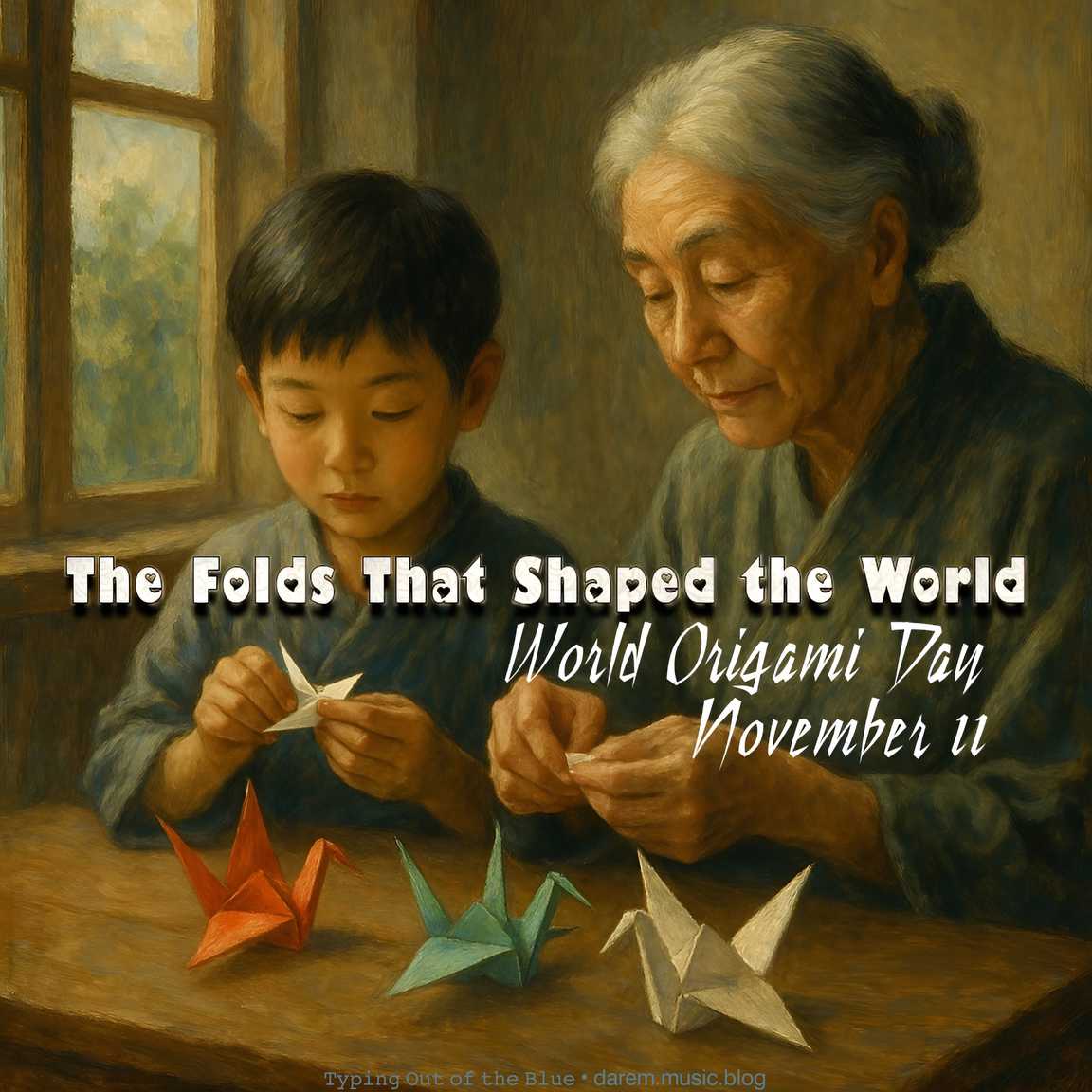
The Folds That Shaped the World

From sacred rituals to modern design, origami proves that patience and creativity can turn the simplest paper into art.

World Origami Day • November 11

Origami began more than a thousand years ago in Japan, back when paper itself was rare and sacred. People used folded paper in Shinto rituals—to wrap offerings and symbolize purity.

Shinto—Japan’s ancient belief system—centers on kami, or spirits that live in nature, people, and everyday things. It values purity, gratitude, and harmony with the natural world. That’s why even paper, when folded with care, was seen as something spiritual.

As paper became more common, origami evolved into decoration and art, spreading through families, temples, and schools. It flourished during the Edo period (1603–1868), an era of peace and cultural growth when Japan was ruled by the Tokugawa shoguns. Life slowed down, creativity thrived, and origami became a quiet pastime that taught patience and precision. Every fold carried meaning—the crane for peace, the frog for luck, the butterfly for love.

Then came Lillian Oppenheimer, the woman who introduced origami to the Western world in the 1950s. She founded the Origami Center of America and worked with Japanese origami masters like Akira Yoshizawa, who created the modern style of folding and invented the symbols used in origami books today. Because of them, folding became not just a cultural practice but a bridge between worlds.

Today, origami’s influence goes far beyond art. Engineers use folding principles for space telescopes, airbags, and medical tools. Artists use it for massive installations. Teachers use it to train focus and patience. And people still fold cranes—not for skill, but for peace.

Origami’s message hasn’t changed through centuries: even something fragile can hold infinite possibilities when handled with care.

⌨ ᴛʸᵖⁱⁿᵍ ᴏᵘᵗ ᵒᶠ ᵗʰᵉ ʙˡᵘᵉ ᵈᵃʳᵉᵐ ᵐᵘˢⁱᶜ ᵇˡᵒᵍ