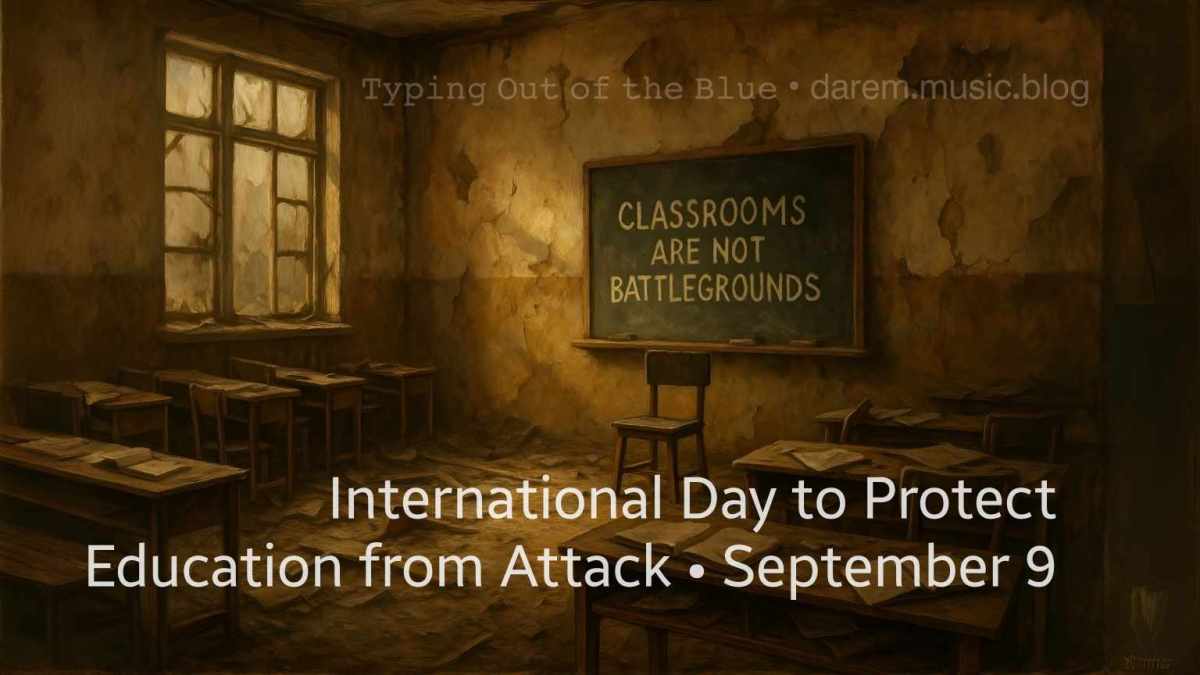
Classrooms Are Not Battlegrounds

A classroom should be a place for laughter and learning, not fear and silence. On September 9, the International Day to Protect Education from Attack reminds the world that schools are not battlefields. The 2025 theme—“Challenging narratives, reshaping action”—calls us to push back against twisted stories that justify violence and take real steps to protect the dream of education.


International Day to Protect Education from Attack

Once upon a time, a classroom was just a classroom—chalk dust in the air, kids laughing, teachers guiding. But in too many corners of the world, those walls have been turned into targets. Blackboards replaced by bullet holes. Silence replacing the sound of learning.

That’s why, every September 9, the world pauses for the International Day to Protect Education from Attack. It’s not just another date—it’s a reminder that the right to learn should never be interrupted by war.

In 2025, the theme says it all: “Challenging narratives, reshaping action.” Because too often, stories are twisted—violence gets justified, schools become statistics. This year asks us to flip the script. To push back against the lies that make attacks on education sound normal. To demand real action that doesn’t just patch broken walls but protects the dream inside them.

Think about it: protecting education isn’t just about today’s lessons. It’s about tomorrow’s doctors, artists, builders, musicians, dreamers. It’s about refusing to let fear take the teacher’s desk.

So on this day, the world unites with one voice: classrooms are for learning, never for war.

𝚃𝚢𝚙𝚒𝚗𝚐 𝙾𝚞𝚝 𝚘𝚏 𝚝𝚑𝚎 𝙱𝚕𝚞𝚎 • 𝖽𝖺𝗋𝖾𝗆.𝗆𝗎𝗌𝗂𝖼.𝖻𝗅𝗈𝗀

Chains in Disguise

What connects the slave ships of Cartagena to the hidden chains people carry today? On September 9, one man’s story still speaks louder than silence.

Saint Peter Claver and the Chains That Still Remain

Slavery didn’t disappear—it only changed form. Today, fifty million people live with hidden chains. They clean houses they don’t own, make clothes they can’t buy, and dig minerals for gadgets they will never use. Meanwhile, the rich spend on pleasures while keeping labor as cheap—almost free—as possible.

Centuries ago, the picture was clear and cruel. In the port city of Cartagena, Colombia, slave ships arrived full of men, women, and children. Dragging iron chains and starving, they were pulled out after weeks in the dark. Families were torn apart. Children were branded and sold like objects. Their cries mixed with the voices of buyers counting profit.

Into this walked Father Peter Claver, a Spanish Jesuit priest. He brought food, water, and medicine. He cared for the sick when no one else would. He called the enslaved not property but human beings. He named himself their “slave forever.” He didn’t end the system, but he showed that their lives had value.

In his final years, Father Peter was left weak and sick. Paralysis kept him in bed, and the servant assigned to him treated him harshly and neglected him. The man who had spent his life lifting up the forgotten died almost forgotten himself on September 8, 1654. Yet when he passed, the same city that once ignored him filled the streets to honor him.

On September 9, the Memorial of Saint Peter Claver, we remember him. And in remembering him, we face the truth: slavery never fully ended. The chains look different now, but they still exist.

𝚃𝚢𝚙𝚒𝚗𝚐 𝙾𝚞𝚝 𝚘𝚏 𝚝𝚑𝚎 𝙱𝚕𝚞𝚎 • 𝚍𝚊𝚛𝚎𝚖𝚙𝚕𝚊𝚌𝚎𝚛.𝚌𝚘𝚖

Saints • Darem Placer

Listen on Apple Music, Apple Music Classical, and YouTube Music