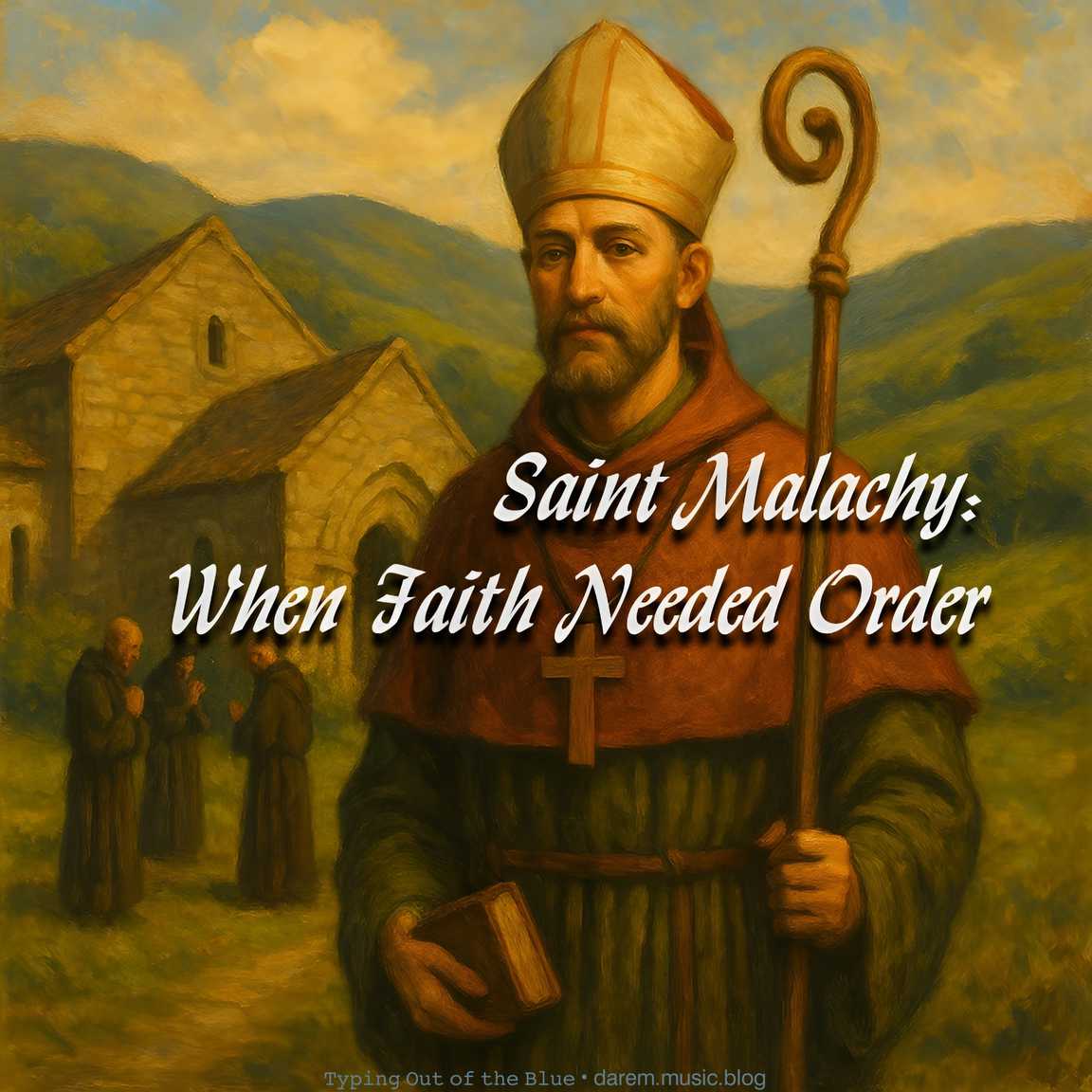
Saint Malachy: When Faith Needed Order

He didn’t seek control—only clarity. And through quiet reform, he turned confusion into peace that still echoes today.

In the early 1100s, the Church in Ireland had the heart but not the harmony. Monks prayed, abbots ruled, and bishops passed their titles like family treasures. It wasn’t scandalous, just uncoordinated. Think: different choirs singing one song, but in separate keys.

Malachy, who later became Archbishop of Armagh in Northern Ireland, stepped into that scene quietly. He didn’t come with power, only purpose. He saw that faith was alive but needed direction. So, he worked to bring unity. He reintroduced the Roman way of worship so that everyone prayed the same way again. He stopped the practice of families passing down church positions. He reminded priests to live simply and serve humbly. And he helped people rediscover confession—a forgotten path to peace.

Some leaders pushed back, not wanting change. But Malachy didn’t fight. He reformed through patience, kindness, and example. Slowly, people began to follow.

He built friendship with Saint Bernard of Clairvaux and helped Ireland reconnect with the rest of the Catholic world. When he died in France in 1148, the Church in Ireland was more united and alive than before.

Malachy wasn’t chasing control. He was restoring balance. Because when faith finds order, hearts find peace.

⌨ ᴛʸᵖⁱⁿᵍ ᴏᵘᵗ ᵒᶠ ᵗʰᵉ ʙˡᵘᵉ ᵈᵃʳᵉᵐ ᵐᵘˢⁱᶜ ᵇˡᵒᵍ
Traces of courage, silence, and sacrifice—this is Saints.

Listen on Apple Music, Apple Music Classical, and YouTube Music
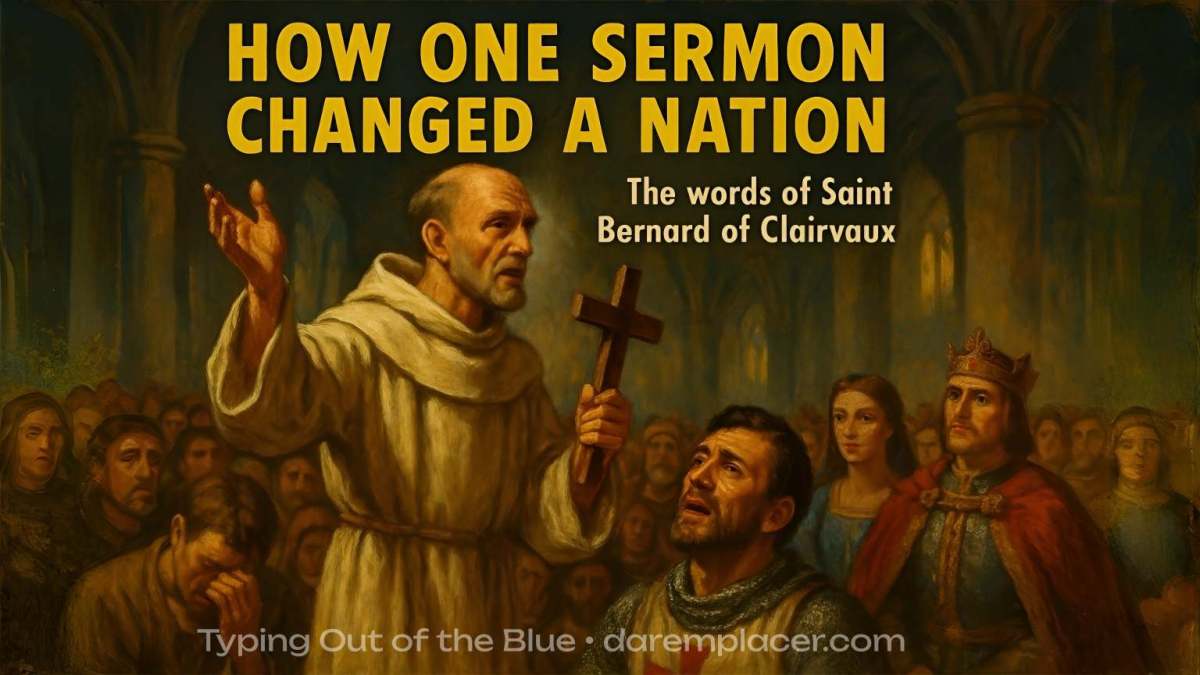
How One Sermon Changed a Nation

At Vézelay, the words of Saint Bernard of Clairvaux cut through pride and comfort, awakening the conscience of soldiers, nobles, and families. One sermon stirred tears, repentance, and action—showing how truth spoken with faith can change a nation.

The words of Saint Bernard of Clairvaux

“Take up the sign of the cross. If you must have glory, let it be God’s. If you seek riches, let it be in heaven. If you desire honor, let it be in the presence of the angels.”

That’s how Bernard began at Vézelay. He spoke about Christ—His wounds, His blood given for all, and the holy places left in ruin.

The words went straight to the heart. Soldiers na sanay sa patayan felt their guilt. Nobles na puro power and pleasure lang ang inisip saw how empty it all was. People realized: Christ gave everything for us, and we’ve given Him nothing.

It wasn’t just emotion—it was conscience. Tears came kasi tinamaan sila ng guilt and love at the same time, and they knew they had to change.

Right there, men tore strips of cloth to make crosses on their clothes. Families begged for Bernard’s blessing. Kahit sina King Louis and Queen Eleanor looked in awe as the crowd shifted from curiosity to conviction.

That day, it wasn’t fancy words that moved them. It was truth—and the power of a conscience finally awake before God.

Today, every August 20, the Church remembers Saint Bernard of Clairvaux—not just as a monk or abbot, but as a preacher whose words still challenge us. His life reminds us that when truth is spoken with faith, it can stir even the hardest heart and move a whole nation.


Typing Out of the Blue
daremplacer.com