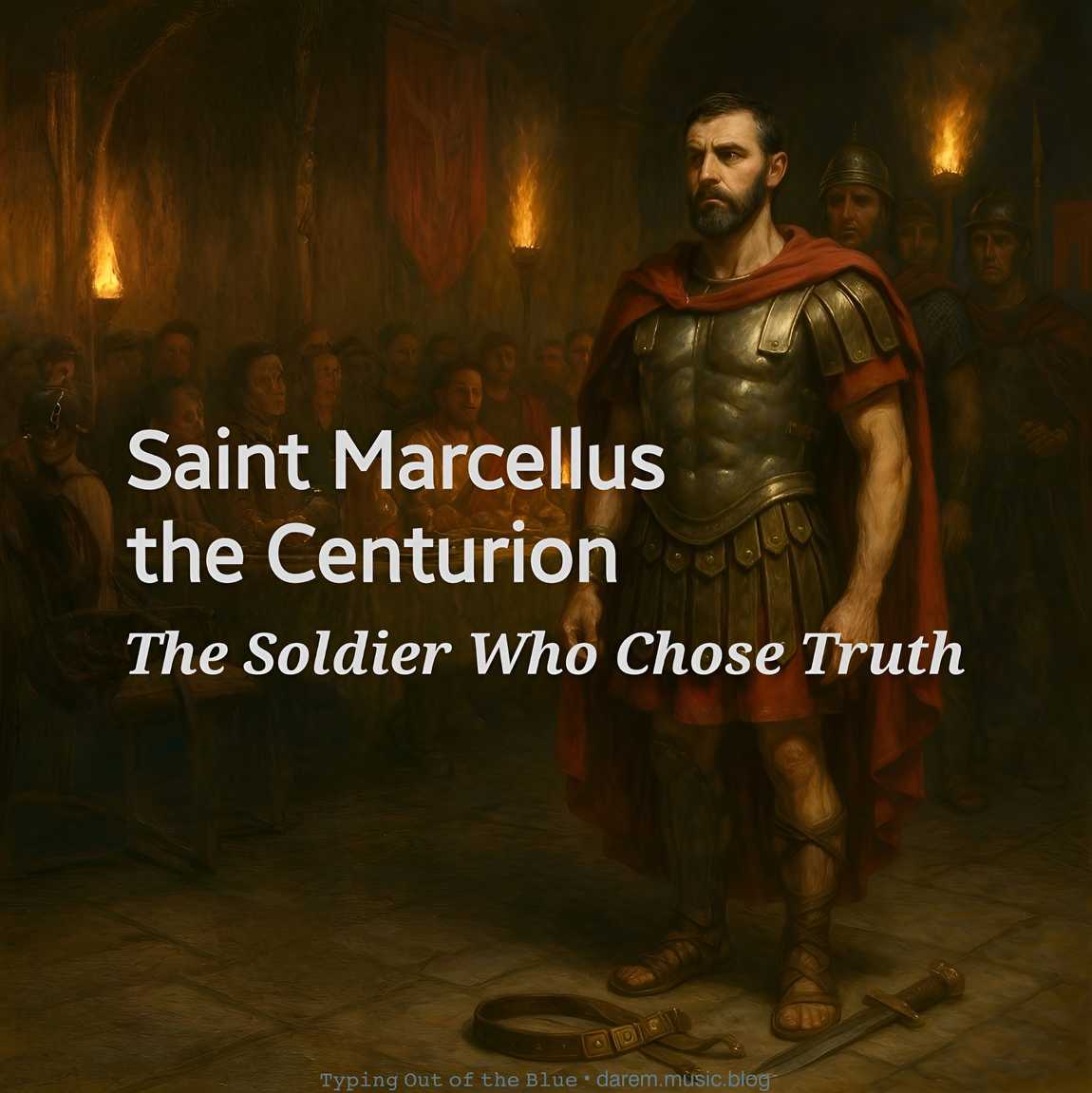
The Soldier Who Chose Truth—Saint Marcellus the Centurion

In a world that worshiped power, one soldier laid down his rank to serve truth that no empire could command.

In the late third century, the Roman Empire ruled most of the world—and expected everyone to worship its gods. Every soldier had to honor the emperor as divine. Refusal meant death.

Marcellus was a centurion—a commander trusted by his men. He wore his armor with pride and obeyed every order. Until one day, at a feast for Emperor Maximian, everything changed.

The hall was filled with light, noise, and celebration. Torches burned, cups were raised, and offerings were made to the gods.

Then Marcellus stepped forward. He unbuckled his command belt, let it drop to the floor, and said,

“I serve Jesus Christ, the eternal King. I cannot serve the gods of men.”

The noise stopped. Soldiers stared. Within minutes, he was arrested and brought before Governor Aurelius Agricolanus in Tangier.

Did you throw away your weapons?” the judge asked.

“I did,” Marcellus replied. “A Christian cannot serve two masters.”

He was sentenced to death and executed in Tangier in 298 AD.

Saint Marcellus died without anger, without fear—just truth. And through that single act, his name outlasted the empire that condemned him.

⌨ ᴛʸᵖⁱⁿᵍ ᴏᵘᵗ ᵒᶠ ᵗʰᵉ ʙˡᵘᵉ ᵈᵃʳᵉᵐ ᵐᵘˢⁱᶜ ᵇˡᵒᵍ
Traces of courage, silence, and sacrifice—this is Saints.

Listen on Apple Music, Apple Music Classical, and YouTube Music
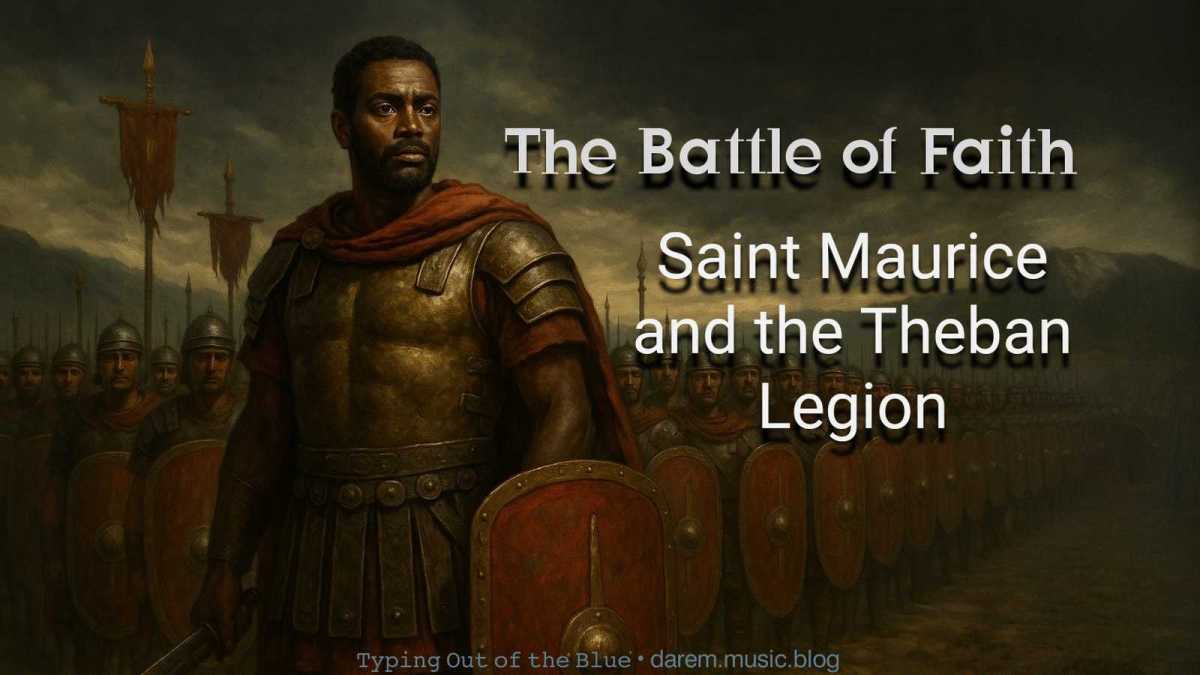
The Battle of Faith

An entire legion faced a choice—loyalty to empire, or loyalty to Christ.

Saint Maurice and the Theban Legion

Most martyrs died alone. Some died in small groups. But this story is different—Maurice stood with more than 6,600 Christian soldiers, all ready to die with him.

This legion was known as the Theban Legion—because they came from Thebes in Egypt. It was one of the strongest units of the Roman army. Around 285 AD, Emperor Maximian sent them to Gaul, in what is now Switzerland.

The emperor gave them two commands:

• join in sacrifices to the Roman gods
• attack fellow Christians in the area

Maurice and his men refused. They declared: We will serve Rome faithfully as soldiers—but we cannot betray Christ.

The emperor was furious. First he ordered “decimation”—every tenth soldier executed. Still, the legion stood firm. A second decimation followed, yet not one gave in. At last, the emperor commanded the execution of them all. More than 6,600 trained warriors chose death together rather than deny their faith.

This was not the ordinary story of a single martyr—it was an entire army laying down their swords. Maurice and the Theban Legion show us that true courage is not counted in victories won, but in the strength to stand together for what is right—even when the world’s sword is raised against you.

Maurice was honored with the name Saint Maurice—and his Theban Legion is remembered as an army of martyrs whose witness still burns like fire.

ᴛʸᵖⁱⁿᵍ ᴏᵘᵗ ᵒᶠ ᵗʰᵉ ʙˡᵘᵉ ᵈᵃʳᵉᵐ ᵐᵘˢⁱᶜ ᵇˡᵒᵍ

Traces of courage, silence, and sacrifice—this is Saints.

Listen on Apple Music, Apple Music Classical, and YouTube Music