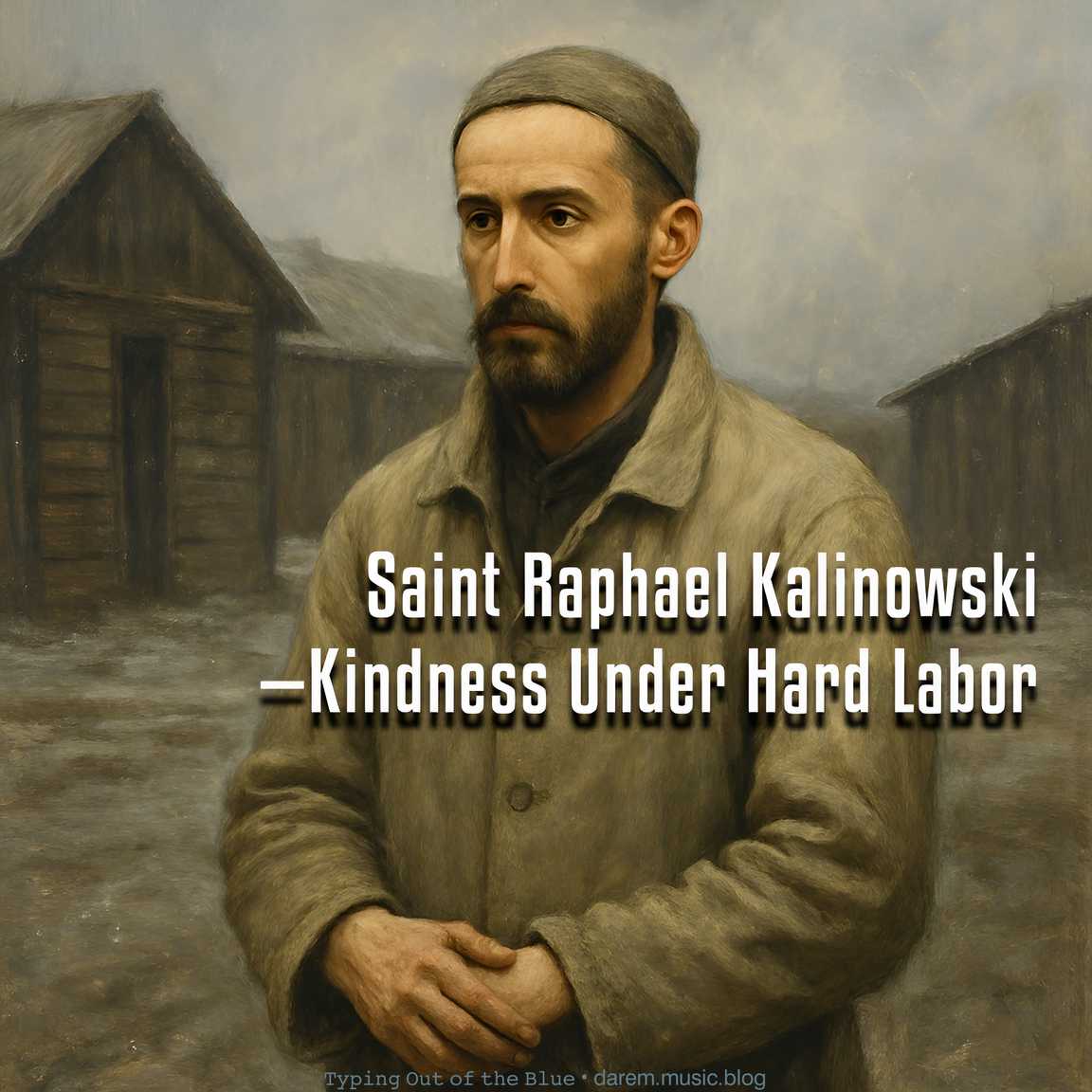
Saint Raphael Kalinowski—Kindness Under Hard Labor

A former officer turned prisoner, he became a steady source of kindness for men who had no one left to trust.

A Polish military officer and engineer from the mid-1800s, Raphael Kalinowski was taken from Poland to a Russian labor camp after joining the uprising against the Russian Empire. Once he reached the camp, none of his rank or training mattered. He became a political prisoner, living in the same freezing wooden barracks, eating the same small portions of food, and doing the same heavy work as everyone else.

Their camp had no priest, and many prisoners carried years of guilt and fear with no one to talk to. The place was full of men who felt lost inside, not just punished outside. Raphael suffered the same harsh life, but people noticed something different about him. He stayed patient, listened without judgment, and spoke in simple, steady ways that helped tired men think clearly again.

That’s why some prisoners slowly approached him during short breaks or near the barracks after work. They weren’t treating him like a priest. They were simply looking for someone safe to talk to. Raphael always made things clear:

“I’m not a priest. When one finally arrives, tell him everything again.”

He never acted like he had authority. He only helped men examine their conscience and find a bit of peace in a place designed to crush hope.

As more prisoners found comfort after speaking with him, word spread quietly. Small groups began waiting for a chance to talk to him—not for sacraments, but for the one steady presence who still chose kindness. Raphael remained a fellow prisoner, but in that frozen land, his compassion became something rare.

Years later, after he was freed and returned to Europe, Raphael entered the Carmelite Order. The same calm heart that guided prisoners under hard labor would eventually lead him to the priesthood—this time with the role he never used or claimed during exile.

⌨ ᴛʸᵖⁱⁿᵍ ᴏᵘᵗ ᵒᶠ ᵗʰᵉ ʙˡᵘᵉ ᵈᵃʳᵉᵐ ᵐᵘˢⁱᶜ ᵇˡᵒᵍ
Traces of courage, silence, and sacrifice—this is Saints.

Listen on Apple Music, Apple Music Classical, and YouTube Music
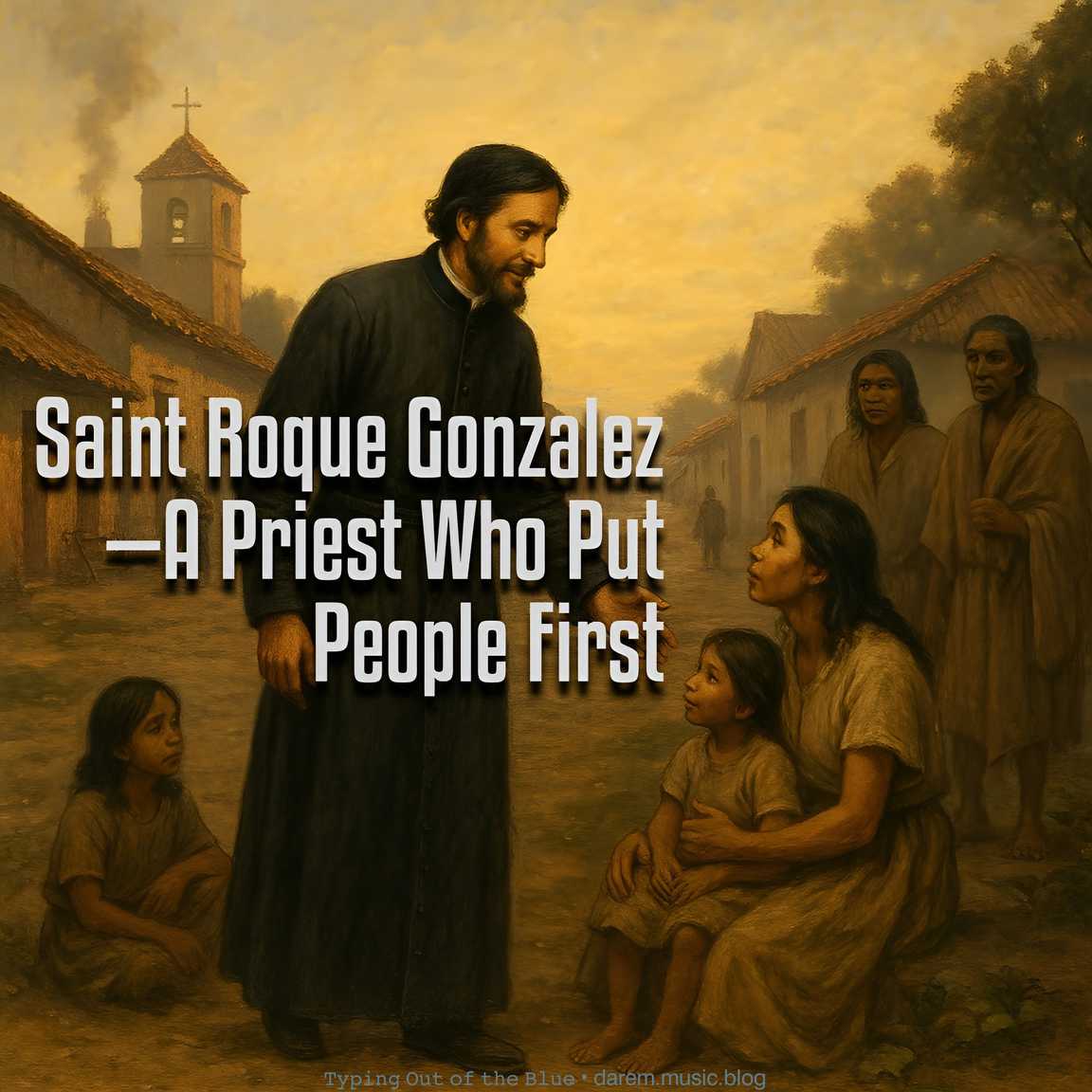
Saint Roque Gonzalez—A Priest Who Put People First

A priest who put people first, choosing their safety before any building or plan.

In the early 1600s, in the Rio de la Plata region of South America—today’s Paraguay, Argentina, and Brazil—Jesuit priest Roque González worked among the Guaraní people who trusted him enough to call him Pa’i Roque, their own word for priest.

Life in the missions was fragile. Raids, fires, and sudden conflict could damage a whole community overnight. In most mission settlements of that time, the usual response was clear: rebuild the chapel first. The chapel served as the center of the town, the place for prayer, teaching, meetings, and even storage. Restoring it meant restoring order.

But Roque did not start with structures.

Jesuit letters describe him as the kind of priest who checked on people before anything else—who was hurt, who had food, who had lost shelter, and which families needed immediate help. He believed a mission was not defined by buildings. It lived or died through the people who formed it.

So when trouble came, Pa’i Roque focused on stabilizing the community. He organized food, found temporary shelter, and made sure families could recover before larger rebuilding began. Only after the people were safe did he turn to the chapel or any other structure.

That is why the Guaraní trusted him. He didn’t lead from above.
He stood beside them—with their worries, their needs, and their hope.

Pa’i Roque was not just a priest in their land.

He was a priest on their side.

⌨ ᴛʸᵖⁱⁿᵍ ᴏᵘᵗ ᵒᶠ ᵗʰᵉ ʙˡᵘᵉ ᵈᵃʳᵉᵐ ᵐᵘˢⁱᶜ ᵇˡᵒᵍ

Traces of courage, silence, and sacrifice—this is Saints.

Listen on Apple Music, Apple Music Classical, and YouTube Music