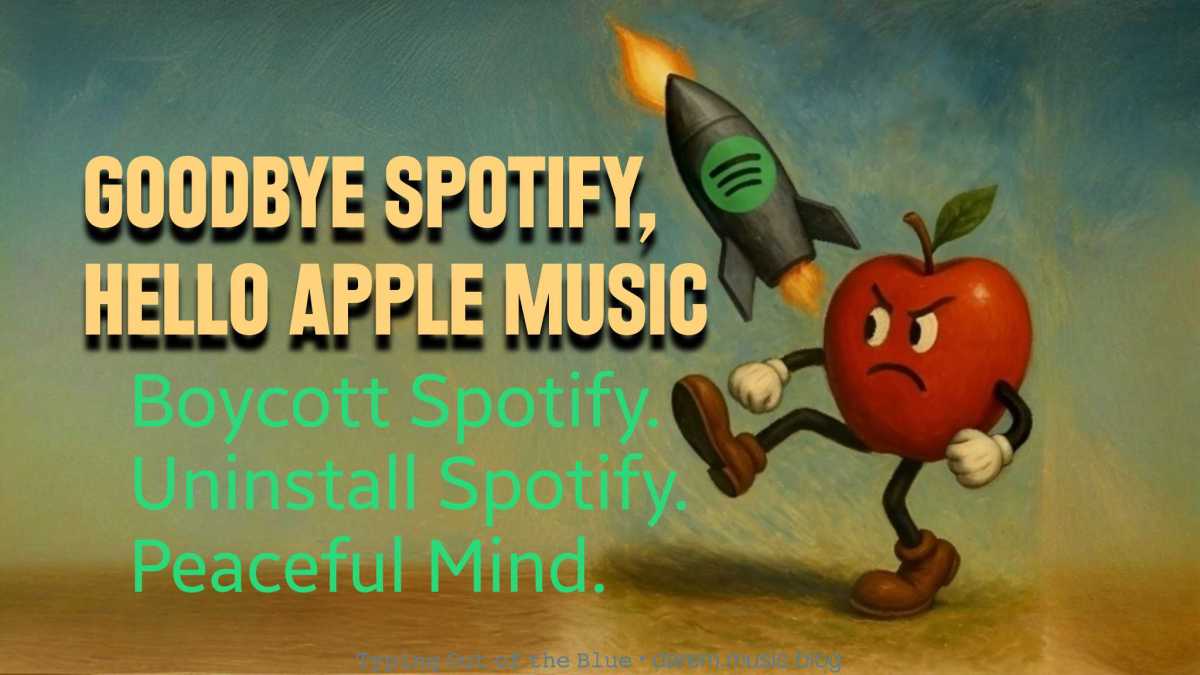
Goodbye Spotify, Hello Apple Music

Apple Music’s new import tool makes it simple to leave Spotify—and the war budgets it supports—behind.

Boycott Spotify. Uninstall Spotify. Peaceful Mind.

Spotify just made it easier to say goodbye. Not because they suddenly gave us more options—but because Apple did. With the new Apple Music import tool now available worldwide, jumping ship has never been this simple.

And honestly? It’s the perfect time.

Spotify’s decision to pour money into Helsing, a defense AI company, has left a sour note. Music is supposed to be about connection, creativity, maybe even peace of mind. Instead, your monthly subscription is indirectly fueling tech that builds war machines. That doesn’t sound like the soundtrack anyone signed up for.

Why boycott Spotify

It’s not just about switching apps. It’s about what you support when you pay. Every stream, every premium renewal is a vote. And if the company you’re funding is investing in military AI, then you’re not just listening to music—you’re subsidizing conflict.

So if you’ve been thinking about uninstalling Spotify, this is your moment. Apple practically handed us the off-ramp.

How easy the move is

Apple’s import tool works smoothly:

1. Make sure you have an Apple Music subscription.

2. Open the app (or web player), go to Settings → Transfer Music from Other Services.

3. Choose Spotify.

4. Sign in, pick your playlists, and let Apple scan for matches.

5. Review anything that doesn’t perfectly match. You get 30 days to clean things up.

And that’s it—your playlists, your vibe, your library—moved over without drama. Even better, only your self-made playlists go through, which is perfect. Those are the ones that matter anyway.

Remember

Music should never be about war budgets. If Spotify wants to bankroll defense AI, then it’s time for music lovers to defend something else—our values.

Import your playlists first. Then uninstall Spotify. Let your music live where it belongs.
ᴛʸᵖⁱⁿᵍ ᴏᵘᵗ ᵒᶠ ᵗʰᵉ ʙˡᵘᵉ ᵈᵃʳᵉᵐ ᵐᵘˢⁱᶜ ᵇˡᵒᵍ

Playlist on Apple Music

The Complete Darem Placer on Apple Music
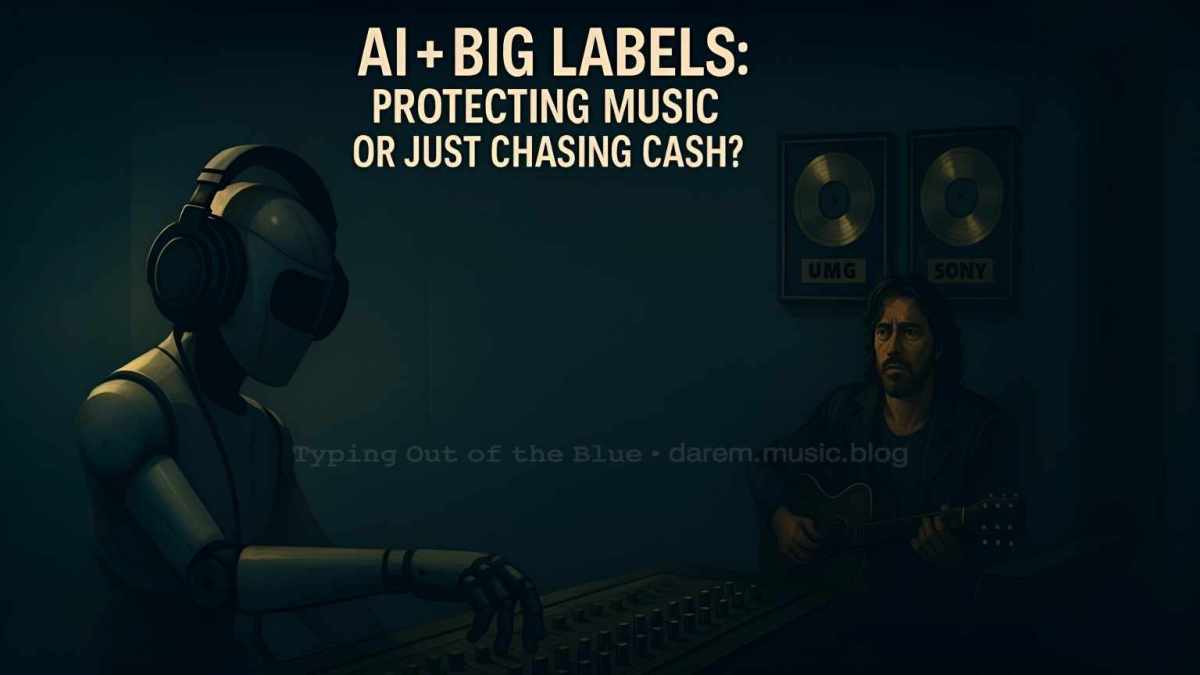
🎧 AI + Big Labels: Protecting Music or Just Chasing Cash?

Big labels aren’t blocking AI anymore—they’re turning it into business. But indie artists? Still left out.

Here’s what’s happening. UMG, Warner, and Sony used to fight AI. Now? They are licensing it. Instead of blocking AI-generated music, they are making agreements with AI companies to use songs, voices, and styles from their huge catalogs.

They call it “artist compensation” and “creative protection.” But it’s also clear—this is new money. And they want a large share.

🤝 What the Agreements Actually Say

  • AI companies must license music correctly
  • Artists can choose not to be used for training
  • There should be credit and payment if their voice or work is used
  • And there should be systems to track what was used

Sounds good, right? But…

💸 It’s Also a Business Move

Here’s the point: big labels are not only protecting artists. They are protecting their influence.

  • Turning AI into a source of income
  • Keeping control over how AI uses music
  • And yes—they want payment from AI companies

In short: don’t block AI. Take control of it.

🆕 What’s New in 2025

  • Talks with AI platforms: UMG, Warner, and Sony are now negotiating with AI music services like Suno and Udio. They want payment, artist opt-outs, and tracking tools (similar to YouTube’s Content ID). Some agreements may even include owning part of these AI companies.
  • UMG patents: Universal has already filed 15 patents related to AI (2 already approved), covering rights management, content safety, and even music for health. They also created Music IP Holdings, Inc. to license these patents worldwide.
  • Sony’s move: Sony supports Vermillio, a platform that can track, remove, and monetize AI use of artist content.
  • Court cases: Labels are still in legal disputes with AI firms such as Anthropic. Recently, publishers lost a case because the court said they did not prove “serious harm.”

🤷‍♂️ What About Independent Artists?

That’s where it gets complicated.

Independent musicians are not included in these agreements. If you are unsigned, your music or even your voice may already be in AI datasets—with no credit, no payment, and no knowledge.

Unless:

  • You use a platform that protects you (rare)
  • You try to track AI use yourself (very difficult)
  • Or new laws are made (not yet happening)

So while big labels earn more, independent creators remain unprotected—copied, collected, and ignored.

🎯 The Bigger Picture

This is not only about defending music. It is about controlling its future.

Yes, it protects some artists. Yes, it brings in money. But big labels are making AI follow their rules—and earning money while doing it.

And unless independent artists are included, the gap will only grow.

Because protecting creativity should not mean protecting power—it should mean protecting everyone.

𝚃𝚢𝚙𝚒𝚗𝚐 𝙾𝚞𝚝 𝚘𝚏 𝚝𝚑𝚎 𝙱𝚕𝚞𝚎 • 𝖽𝖺𝗋𝖾𝗆.𝗆𝗎𝗌𝗂𝖼.𝖻𝗅𝗈𝗀