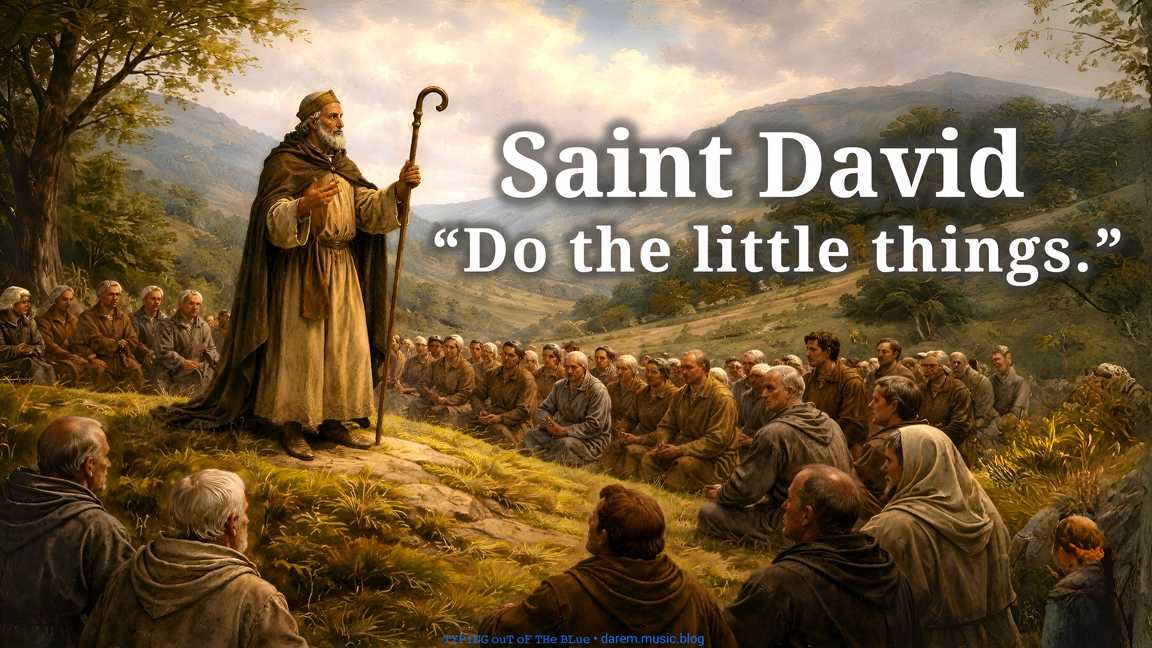
Saint Benedict of Aniane — A Life Reordered

He nearly drowned as a young soldier. One question changed his life—and shaped a generation.

He almost died in a river.

While serving as a young noble and soldier, Benedict fell into fast-moving water during a royal expedition. He nearly drowned. In that moment, surrounded by panic and fear, a certain thought came to him. He later expressed it this way: “If this was the end, what was the point of my life?”

That moment stayed with him.

Benedict was born around 747 in what is now southern France. He lived during the time of Charlemagne, when Europe was being rebuilt after years of disorder. After his near-death experience, he slowly turned away from military life and chose the monastery. The shift was not instant or perfect. He struggled at first, even going to extremes, before learning balance and discipline.

What Benedict became known for was not founding something new, but organizing what already existed. At the time, monasteries followed many different rules. Practices varied widely, and discipline was uneven. Benedict believed this chaos weakened monastic life. He promoted one clear guide for all: the Rule of Saint Benedict. He helped unify monasteries across the empire, bringing order, rhythm, and consistency.

Because of his work, monastic communities became stable places of prayer, work, and learning. His influence shaped religious life in Europe for centuries, quietly and steadily.

Today, Saint Benedict of Aniane’s life still speaks in a simple way. Many people live busy, scattered lives, reacting instead of choosing direction. Clarity often begins after a hard pause. Sometimes it takes a near fall, a loss, or a scare to see what truly matters. Order, balance, and daily faithfulness may not look impressive, but over time they shape a life that stands.

Let’s keep learning the saints’ way—day by day.

⌨ ᴛʸᵖⁱⁿᵍ ᴏᵘᵗ ᵒᶠ ᵗʰᵉ ʙˡᵘᵉ ᵈᵃʳᵉᵐ ᵐᵘˢⁱᶜ ᵇˡᵒᵍ

Saint Giovanni Battista Clemente Saggio—Faith Lived in Daily Work

A short life shaped by poverty, illness, and hidden work.

Giovanni was born February 19, 1851, in Montevarchi, Italy, into a poor peasant family. He was bright and eager to learn, but poverty shaped his childhood. Instead of regular schooling, he spent much of his youth working the fields with his father, which limited his education.

From a young age, illness marked his life, especially tuberculosis. Over time, this formed a steady habit of prayer, silence, and trust in God.

He later became a Cistercian monk. Cistercians live a life centered on prayer, manual work, and silence. Giovanni chose obedience and a hidden way of life. In the monastery, he was given simple manual work rather than visible roles. Kitchen duties, cleaning, physical labor. Ordinary tasks carried out with care and consistency.

Those who lived with him noticed his patience, gentleness, and steady prayer, particularly during times of suffering. His faith was shown through endurance and humility.

He died on April 16, 1889, at 38. After his death, devotion grew among people who recognized their own lives in his quiet fidelity.

Saint Giovanni lived a life that shows holiness grows quietly through daily work and faithful perseverance.

Let’s keep learning the saints’ way—day by day.

⌨ ᴛʸᵖⁱⁿᵍ ᴏᵘᵗ ᵒᶠ ᵗʰᵉ ʙˡᵘᵉ ᵈᵃʳᵉᵐ ᵐᵘˢⁱᶜ ᵇˡᵒᵍ

Darem Placer on YouTube Music