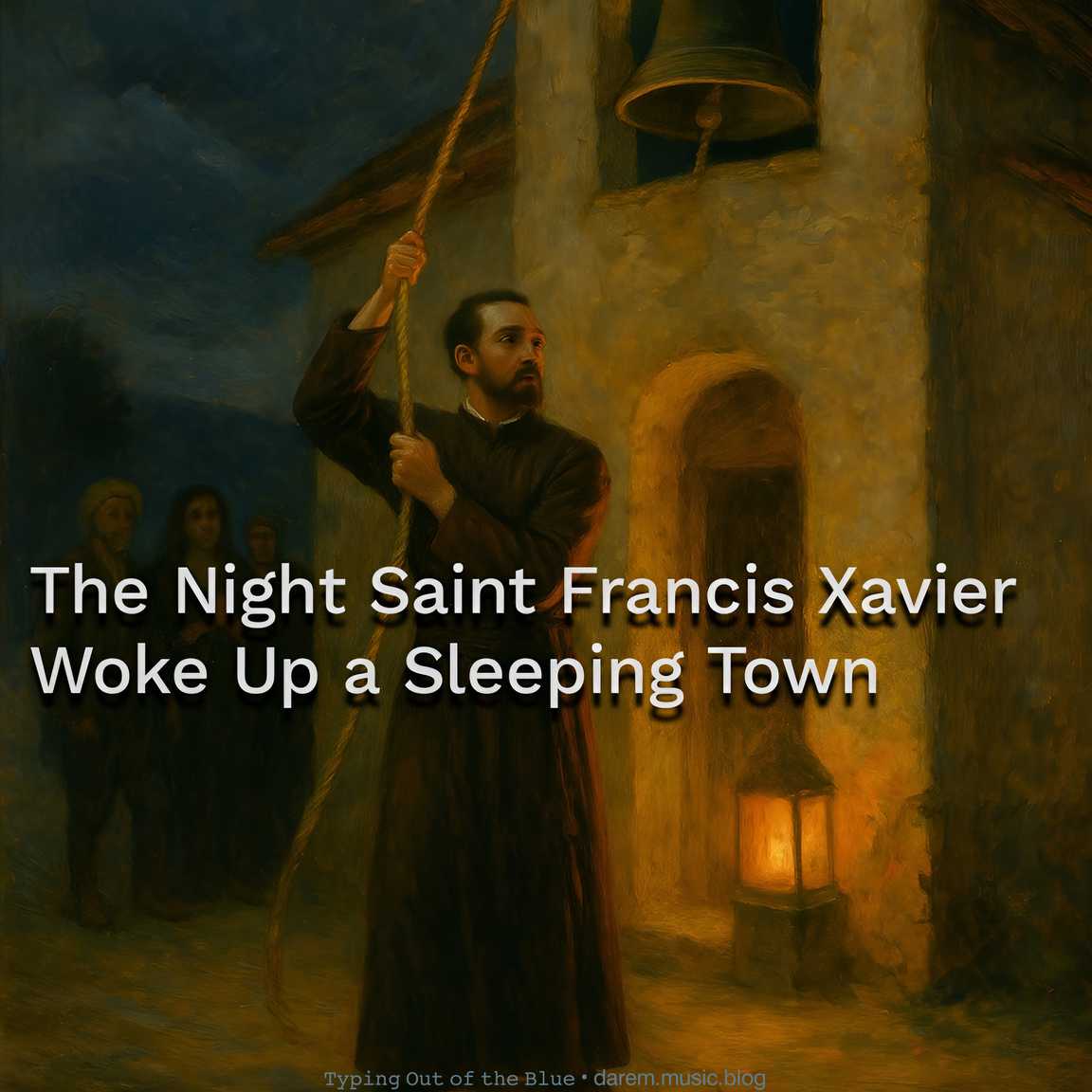
The Night Saint Francis Xavier Woke Up a Sleeping Town

He rang a forgotten church bell and changed the rhythm of a town.

Goa, India, in the 1500s was alive at night—crowded streets, loud drinking, and restless noise everywhere. In the middle of it all stood a small church that people no longer cared about. It was dusty, quiet, and forgotten, as if faith had slowly faded out of the town.

When Father Francis Xavier, a Spanish priest from the Kingdom of Navarre in northern Spain near the French border, arrived and saw that emptiness, he didn’t wait for permission or a perfect plan. One night, he simply stepped outside, took the rope of the neglected church bell, and rang it with all his strength.

The sudden sound cut through the streets and pulled people out of their homes. They came out annoyed and curious, expecting to find an official causing trouble. Instead, they saw a thin, travel-worn priest standing by the bell, completely calm, as if this midnight disturbance was intentional.

He looked at them and said, “Come. Pray with me.”

A few stayed. The next night, more returned. Soon the forgotten church began to breathe again—not because of a dramatic miracle, but through one stubborn act that refused to let silence take over a community that had stopped listening.

And that is the rare beauty of this moment: Father Francis Xavier didn’t wait for the right conditions. He created them. One bell, one night, one act of quiet courage that shifted the rhythm of a town—just one of the many reasons the world later came to know him as Saint Francis Xavier.

⌨ ᴛʸᵖⁱⁿᵍ ᴏᵘᵗ ᵒᶠ ᵗʰᵉ ʙˡᵘᵉ ᵈᵃʳᵉᵐ ᵐᵘˢⁱᶜ ᵇˡᵒᵍ
Traces of courage, silence, and sacrifice—this is Saints.

Listen on Apple Music, Apple Music Classical, and YouTube Music
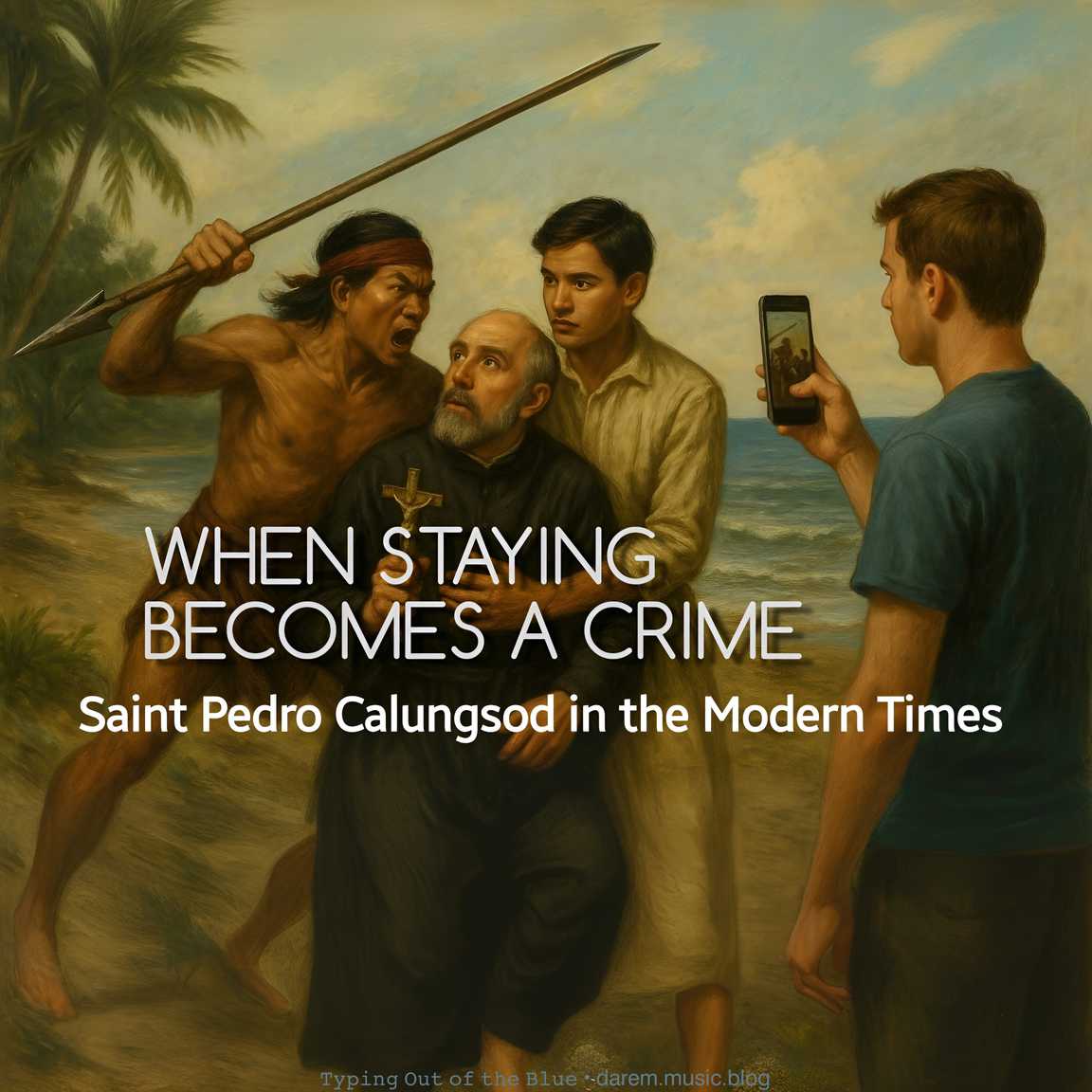
When Staying Becomes a Crime

He stayed when he could have run. In a world that calls loyalty foolish, Pedro reminds us what courage really is.

Saint Pedro Calungsod in the Modern Times

Pedro Calungsod was 17 years old, a Filipino catechist who went with Jesuit missionaries to Guam in the 1600s. He helped Fr. Diego Luis de San Vitores teach and baptize those who wished to join the faith.

A man named Choco spread a rumor that the baptismal water was poison. Because of fear, Chief Matå’pang got angry when his child was baptized with the mother’s permission only. Matå’pang attacked Fr. Diego. Pedro could have escaped but chose to stay by his side. Both were killed, and their bodies were thrown into the sea.

If Pedro Calungsod’s story happened now, no one would call him a saint.

People would say it was a crime. They’d ask why a priest baptized a child without the father’s consent. They’d question why a teenager didn’t run for safety. Some would call it foolish, not holy.

That’s how the world changed. People look at the surface—law, mistake, reaction. No one asks what was inside the choice.

Pedro stayed beside Fr. Diego when he could have escaped. He didn’t stay for reward, fame, or even a selfie to prove he was there. He stayed because loyalty meant something real to him. That’s what makes his death different.

He wasn’t trying to prove faith. He was simply being true when fear said to run.

And that’s what strikes hardest today—choosing others over your own life doesn’t come naturally anymore. But it did for him. And that’s why his story still matters.

⌨ ᴛʸᵖⁱⁿᵍ ᴏᵘᵗ ᵒᶠ ᵗʰᵉ ʙˡᵘᵉ ᵈᵃʳᵉᵐ ᵐᵘˢⁱᶜ ᵇˡᵒᵍ

Traces of courage, silence, and sacrifice—this is Saints.

Listen on Apple Music, Apple Music Classical, and YouTube Music