
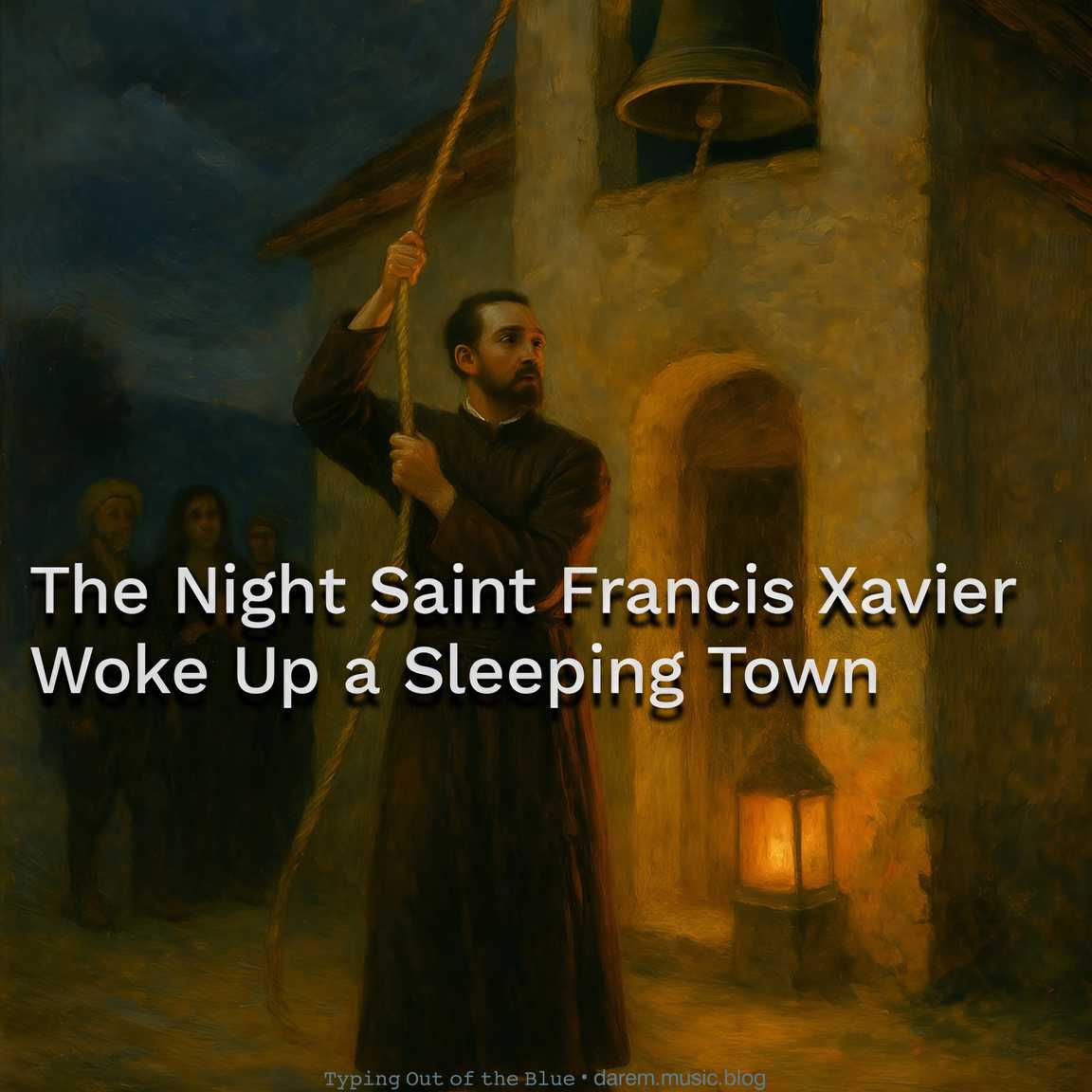
Goa, India, in the 1500s was alive at night—crowded streets, loud drinking, and restless noise everywhere. In the middle of it all stood a small church that people no longer cared about. It was dusty, quiet, and forgotten, as if faith had slowly faded out of the town.
When Father Francis Xavier, a Spanish priest from the Kingdom of Navarre in northern Spain near the French border, arrived and saw that emptiness, he didn’t wait for permission or a perfect plan. One night, he simply stepped outside, took the rope of the neglected church bell, and rang it with all his strength.
The sudden sound cut through the streets and pulled people out of their homes. They came out annoyed and curious, expecting to find an official causing trouble. Instead, they saw a thin, travel-worn priest standing by the bell, completely calm, as if this midnight disturbance was intentional.
He looked at them and said, “Come. Pray with me.”
A few stayed. The next night, more returned. Soon the forgotten church began to breathe again—not because of a dramatic miracle, but through one stubborn act that refused to let silence take over a community that had stopped listening.
And that is the rare beauty of this moment: Father Francis Xavier didn’t wait for the right conditions. He created them. One bell, one night, one act of quiet courage that shifted the rhythm of a town—just one of the many reasons the world later came to know him as Saint Francis Xavier.
⌨ ᴛʸᵖⁱⁿᵍ ᴏᵘᵗ ᵒᶠ ᵗʰᵉ ʙˡᵘᵉ ᵈᵃʳᵉᵐ ᵐᵘˢⁱᶜ ᵇˡᵒᵍ

Listen on Apple Music, Apple Music Classical, and YouTube Music
