Continue reading “When Church and Government Worked Together”
When Church and Government Worked Together
A medieval king used faith, law, and leadership to bring a divided people together.

A medieval king used faith, law, and leadership to bring a divided people together.
One of history’s most famous confrontations began with a single swing.
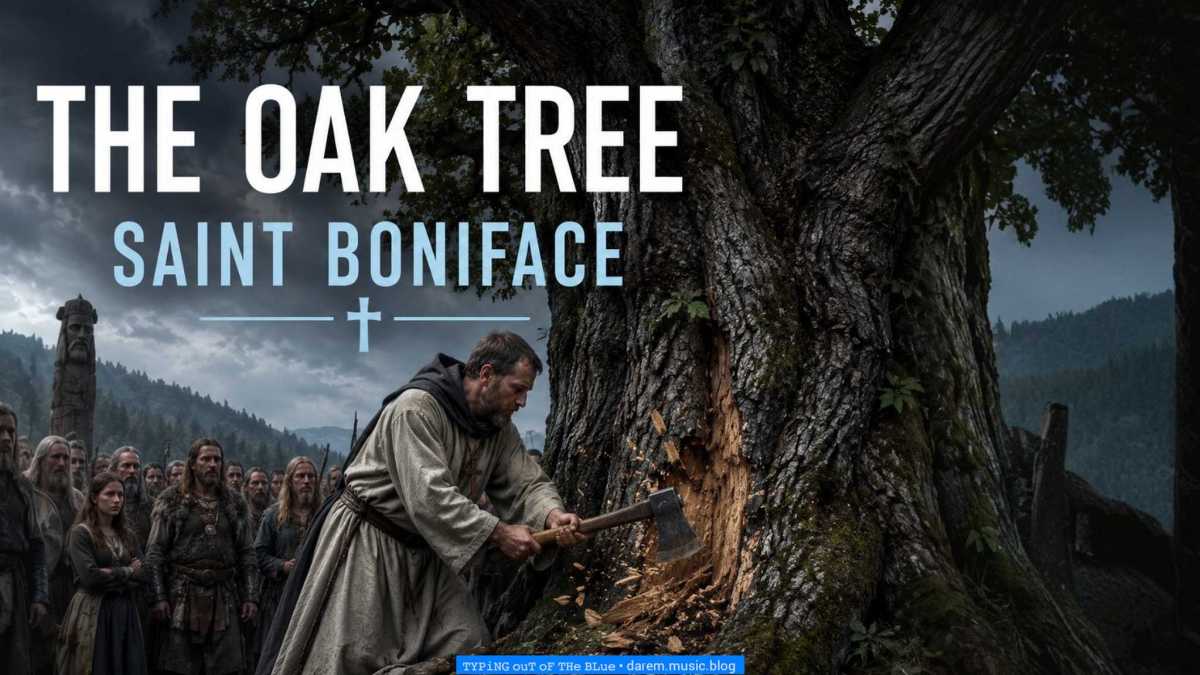
Around the year 723, in what is now central Germany, an English missionary named Boniface walked up to an oak tree believed to be sacred by local pagan tribes and prepared to cut it down.
But to many local Germanic tribes, this oak was associated with Donar, the god later known as Thor. It was a place surrounded by tradition and fear. Many believed that anyone who damaged the tree would face divine punishment.
Boniface knew what people believed. The crowd watching knew it too. That was precisely why he chose the tree.
According to tradition, Boniface took an axe to the oak while people watched. The crowd waited to see what would happen. The tree was cut down, but the punishment they feared never came.
Whether every detail happened exactly as later accounts describe is debated by historians. What is clear is that the story survived for more than 1,300 years.
The tree was never really the point.
Few of us will ever face anything quite like Boniface’s oak tree. Instead, we carry smaller fears. A difficult conversation. An overdue apology. A project that remains stuck in the planning stage. A habit we already know is holding us back.
These things often stay in the background of our lives like the wrong soundtrack playing beneath a scene. We hear it so often that we stop noticing it. Eventually, we start believing it belongs there. We spend more time imagining the consequences than facing them.
Fear can look enormous from a distance, yet many fears lose their power the moment we stop walking around them and finally walk through them.
Let’s keep learning the saints’ way—day by day.
⌨ ᴛʸᵖⁱⁿᵍ ᴏᵘᵗ ᵒᶠ ᵗʰᵉ ʙˡᵘᵉ ᵈᵃʳᵉᵐ ᵐᵘˢⁱᶜ ᵇˡᵒᵍ