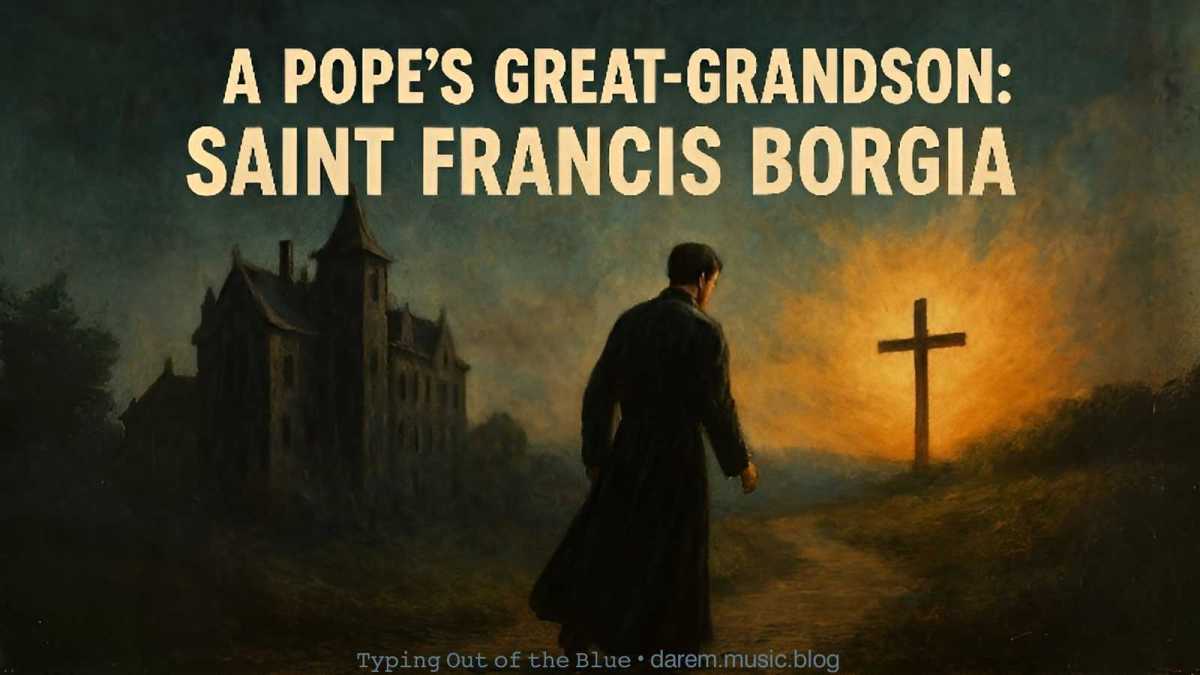
A Pope’s Great-Grandson: Saint Francis Borgia

A corrupt pope once shook the Church. Generations later, his bloodline produced a saint. How did that happen?

For Catholics today, it sounds impossible. Priests cannot marry, much less have children. Yet history tells a shocking truth: Pope Alexander VI—Rodrigo Borgia—openly had mistresses and children. His name became a symbol of corruption and scandal in the late 1400s.

From this same bloodline came a saint. His great-grandson, Francis Borgia, lived as a duke in Spain, close to the royal court, surrounded by wealth and honor.

Then came the moment that broke his world. He escorted the body of Empress Isabella of Portugal to her burial. When the coffin was opened for identification, the face that once charmed an empire was already ruined by decay.

This man, raised in court life, beauty, power, and glory, suddenly saw with his own eyes that all of it—status, fame, appearances—meant nothing in the face of death. From that day, he vowed never again to serve a master who could die.

Years later, when his wife Leonor de Castro died, Francis renounced his dukedom, left everything behind, and entered the Jesuits. He rose to become their third Superior General, guiding the order with humility and discipline, sending missionaries across the world, and building schools that would shape Catholic education for centuries.

From a pope who embodied corruption came a descendant who embodied reform. Out of scandal grew holiness. Out of decay, renewal.

Good always wins—not instantly, not cleanly, but always in the end.

ᴛʸᵖⁱⁿᵍ ᴏᵘᵗ ᵒᶠ ᵗʰᵉ ʙˡᵘᵉ ᵈᵃʳᵉᵐ ᵐᵘˢⁱᶜ ᵇˡᵒᵍ
Traces of courage, silence, and sacrifice—this is Saints.

Listen on Apple Music, Apple Music Classical, and YouTube Music
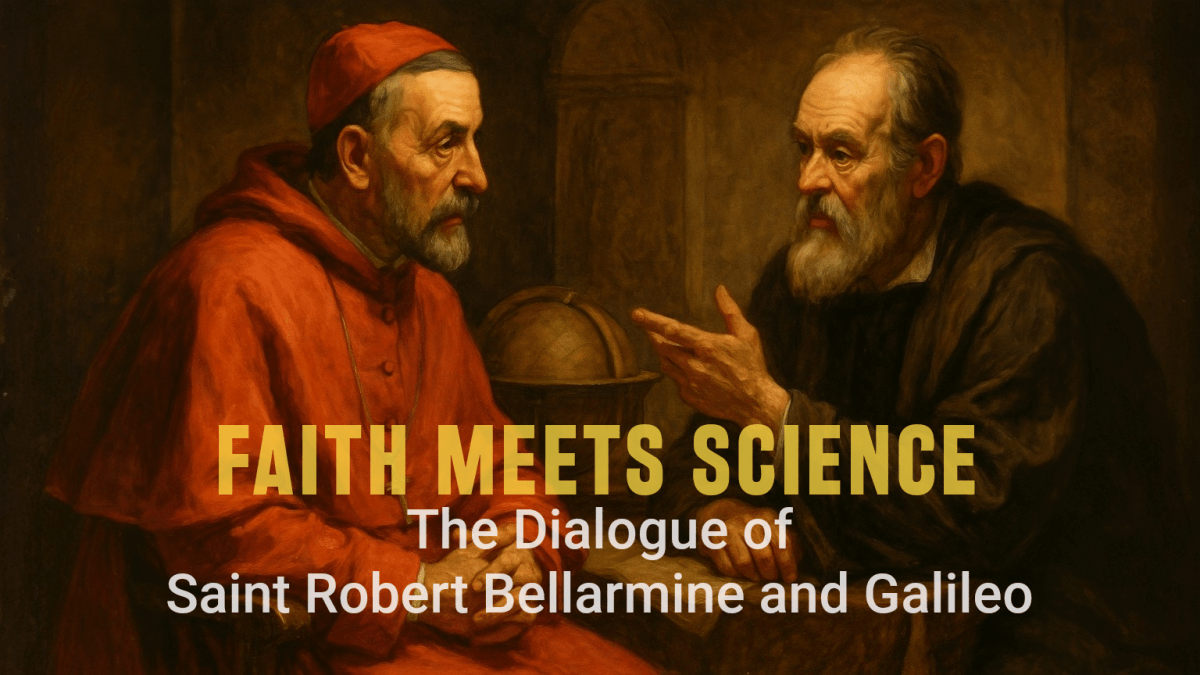
Faith Meets Science

Science challenged faith, but the response was more than resistance. A meeting of minds left a lesson the world needs today.

The Dialogue of Saint Robert Bellarmine and Galileo

When Galileo said the Earth moves around the Sun, many thought it clashed with the Bible. Cardinal Robert Bellarmine, a Jesuit and top Church thinker, was asked to respond.

In 1616, Galileo met with Cardinal Robert in Rome. Cardinal Robert wasn’t against him, but he told him: if one day science proves it true, then the Church must reread Scripture in that light. But until then, it should be treated as a theory, not as fact.

Cardinal Robert respected Galileo’s talent but wanted solid evidence before reshaping faith. He even gave Galileo a written note confirming he had not been condemned, only cautioned. After Cardinal Robert’s death in 1621, Galileo faced trial and was forced to take back his claims.

This story shows Cardinal Robert as more of a careful referee than an enemy—reminding us that faith and science can walk together, as long as we keep both humility and proof in mind.

Each year on September 17, we remember Saint Robert Bellarmine—a man with a listening ear and an understanding heart, something the world really needs today.

What Happened Next

1616 – Cardinal Robert cautioned Galileo: treat heliocentrism (the idea that the Earth moves around the Sun) as theory until proven.

1633 – Galileo was tried and forced to recant (publicly take back his claim), living under house arrest.

1822 – The Vatican allowed books teaching heliocentrism.

1835 – The Index of Forbidden Books (the Church’s official banned list) removed heliocentrism works.

1979 – Pope John Paul II opened a new study of Galileo’s case.

1992 – Pope John Paul II officially acknowledged the Church’s error and praised Galileo.

ᴛʸᵖⁱⁿᵍ ᴏᵘᵗ ᵒᶠ ᵗʰᵉ ʙˡᵘᵉ ᵈᵃʳᵉᵐ ᵐᵘˢⁱᶜ ᵇˡᵒᵍ

Traces of courage, silence, and sacrifice—this is Saints.

Listen on Apple Music, Apple Music Classical, and YouTube Music